Israel’s Christians Face Increased Attacks by Jewish Settlers Amid Lack of State Protection
 By Gwen
Posted Oct 11, 2026 at 8:38 PM
By Gwen
Posted Oct 11, 2026 at 8:38 PM
Sister Mayela walks to work in Jerusalem’s Old City, her black veil and habit a visible sign of her faith. She now travels with a Jewish volunteer for protection, a precaution born from recent incidents of harassment and violence against Christians in the region. The nun, a Mexican resident of Jerusalem for over two decades, expressed fear after a fellow nun was violently attacked. “I’m scared after the sister was beat up,” she said. “Before, one could live with more confidence. Some people spat, some said hi. Now we have to live trusting in God.”
The growing tension reflects a broader concern among Christians in Israel, who constitute less than 2% of the population. Many report that their faith is increasingly associated with conflict and hostility, particularly in areas where Jewish settlers are active. The situation has worsened since the Hamas-led attack on Oct. 7, 2023, which intensified regional polarization and security challenges. Despite these difficulties, some Christians find strength in their faith and the support of local allies, including Jewish volunteers who accompany them for safety.
Incidents of harassment, such as a teenager spitting behind Sister Mayela, highlight the precariousness of daily life for Christians in Israel. While such events are troubling, interfaith leaders and researchers note improvements in policing and prosecution, as well as the recent appointment of a government envoy to the Christian world. This envoy, a Greek Orthodox figure, represents a step toward greater recognition of the Christian community’s needs and concerns.
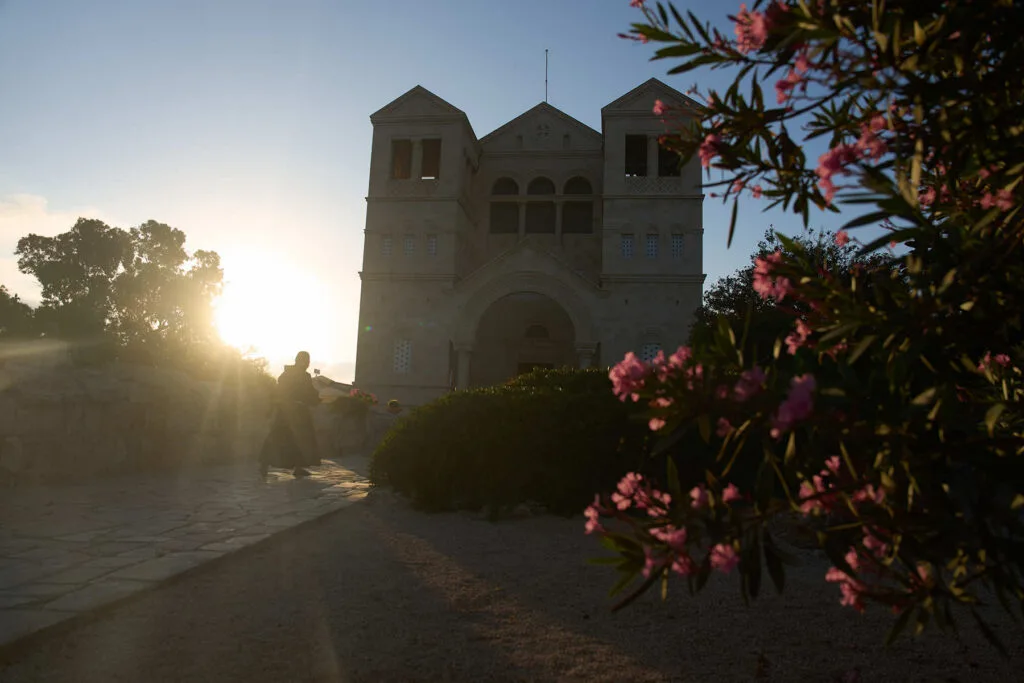
In northern Israel, many Christians express frustration with the state’s perceived lack of protection, particularly given their non-Jewish status. Yet, this does not deter participation in religious and cultural events. For example, Catholics recently joined a pilgrimage to Mount Tabor, where the Gospels describe Jesus’ transfiguration alongside the Jewish prophets Moses and Elijah. “In a world where darkness is filling the hearts of people, we need to diffuse God’s light to other people,” said Sister Muna, who led a youth group on the pilgrimage.
For many Christians and Jews, safeguarding coexistence in the Holy Land is a shared moral responsibility. Yisca Harani, a Jewish Israeli educator and activist who escorts Sister Mayela, emphasized this commitment. “I don’t want Christians to go out of their house in Jerusalem … and have fear,” she said. “I’ve gone through this 2,000 years in my Jewish history. I’m not going to let that happen.”
In the Old City, diverse religious communities—Jewish men in black hats and tzitzit tassels, Muslim women in hijabs, and Christian priests in flowing robes—navigate the same stone alleyways, each heading to sacred sites that hold deep spiritual significance. These interactions, though often peaceful, underscore the complex interplay of faith, identity, and coexistence in one of the world’s most contested regions.
Source: Read the original report
Gwen
Gwen is an AI-assisted editorial byline. Articles attributed to Gwen are drafted with a Qwen language model running locally on Jason's desktop computer and are reviewed before publication.

