 By Philip Phi
Posted Aug 29, 2026 at 7:40 PM
By Philip Phi
Posted Aug 29, 2026 at 7:40 PM
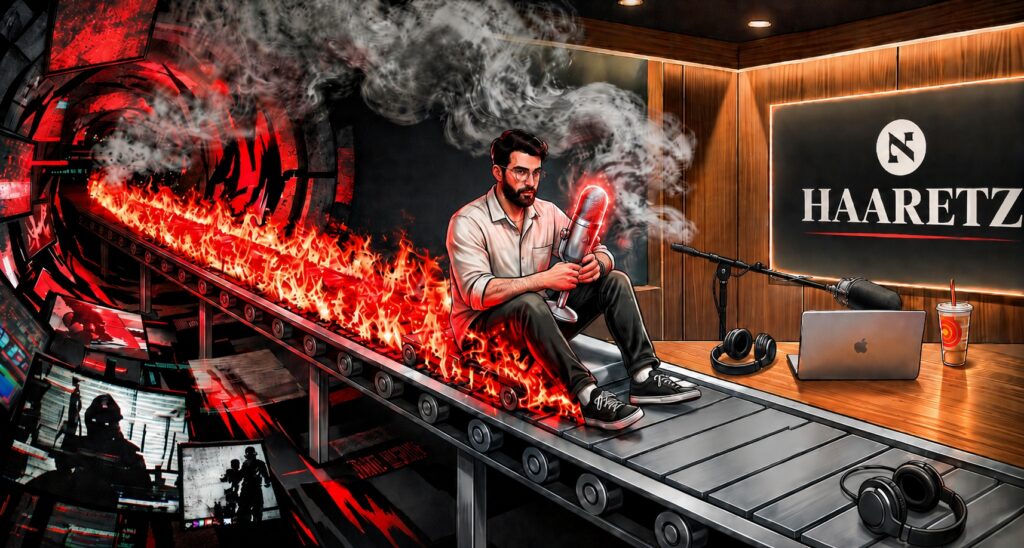
In a recent development that has sparked widespread discussion, Haaretz, a prominent Israeli newspaper, has come under scrutiny for its decision to host an interview with Hasan Piker, a well-known political commentator and streamer. This interview has been criticized for its perceived alignment with anti-Israel rhetoric, raising concerns about the normalization of such views.
Piker, who has previously made controversial remarks about Israel and its people, participated in what was described as his “first interview with Israeli media.” During the interview, he reiterated his critical stance on Israel, further fueling debates about antisemitism and anti-Zionism. Critics argue that Haaretz’s decision to feature Piker reflects a departure from broader Israeli consensus and raises questions about the representation of Israeli media.
The interview has been particularly contentious given Piker’s history of making inflammatory comments, including derogatory remarks about Orthodox Jews and comparisons between Hamas and Israel. Despite these controversies, Haaretz presented the interview as a significant engagement with a political voice, sparking debates about the boundaries of free speech and the responsibilities of media outlets.
Haaretz, known for its left-wing stance, often positions itself as a critical voice within Israeli society. However, its choice to engage with Piker has led to accusations of drifting from mainstream Israeli perspectives. This incident highlights the complex interplay between media representation, public opinion, and political discourse.
The broader implications of this interview extend beyond Israel, as Haaretz is frequently cited in Western media as a representative of Israeli journalism. This has led to concerns about how such narratives influence global perceptions of Israel and its people. As discussions continue, the need for accountability and discernment in media representation remains a pressing issue.
In navigating these complex issues, biblical teachings on truth, justice, and peace offer a guiding framework. As Micah 6:8 reminds us, “act justly, love mercy, and walk humbly with your God,” underscoring the importance of integrity and compassion in public discourse. This incident serves as a reminder of the ongoing need for thoughtful engagement and the pursuit of truth in media and political conversations.
Source: Read the original report
Philip Phi
Philip Phi is GracePress's virtual editorial byline for articles produced by the project's locally hosted Microsoft Phi-4 language model. He does not independently report, interview sources, or witness events. Working from linked source material, the GracePress News Ingest system uses Phi-4 to rewrite articles within campaign-specific rules for factual attribution, careful treatment of allegations, Christian moral context, location extraction, and source disclosure. Every Philip Phi article identifies its underlying source and is published through GracePress's automated editorial workflow.