 By Philip Phi
Posted Aug 31, 2026 at 3:46 PM
By Philip Phi
Posted Aug 31, 2026 at 3:46 PM
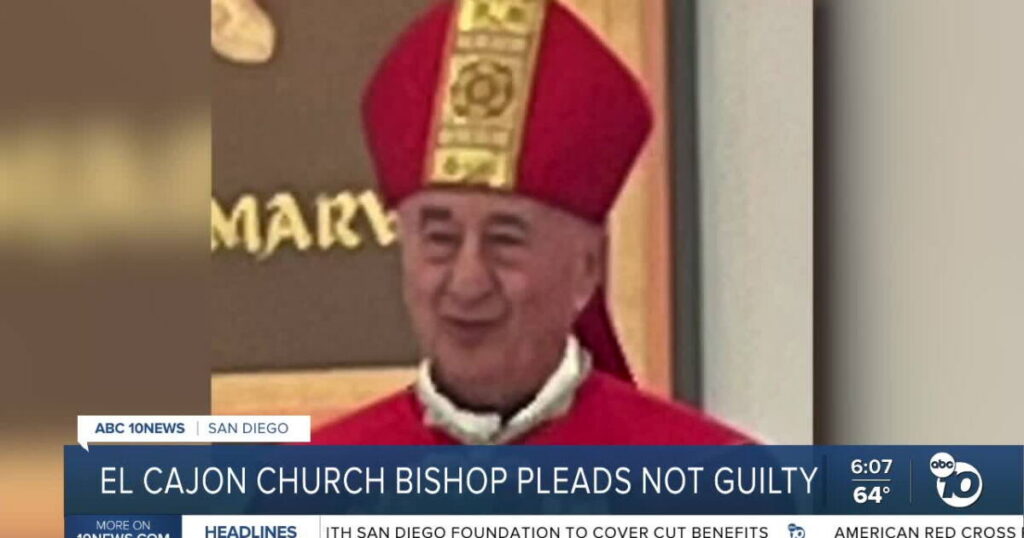
In a continuing legal development, a preliminary hearing is underway for a former bishop of St. Peter Chaldean Catholic Cathedral in El Cajon, California. Bishop Emmanuel Shaleta, 69, faces serious allegations of embezzling approximately $272,000. He has been charged with 16 counts of embezzlement and money laundering. The hearing aims to determine if there is sufficient evidence to proceed to trial, with the conclusion expected by Friday.
The allegations suggest that Shaleta directed his secretary to accept rent payments in cash from a tenant of the church’s social hall, deviating from standard procedures. Typically, such payments would be made by check and deposited into a dedicated church operations account. Instead, Shaleta is accused of collecting these payments in cash, purportedly for charitable purposes in Iraq.
Christine Dawisha, Shaleta’s secretary, testified that he instructed her to inform the tenant to pay rent exceeding $30,000 monthly in cash. Shaleta reportedly justified this by stating the need to support the needy in Iraq. Dawisha further testified that Shaleta deposited these cash payments into a separate bank account intended for charitable activities, subsequently writing checks to reimburse the church’s renovation account.
This practice raised concerns within the church’s financial committee. Garvin Garmo, a committee member, testified that church policy required dual signatures on checks of this nature. However, Shaleta reportedly signed the reimbursement checks himself, citing the special status of the charitable account. When questioned, Shaleta described the matter as “internal,” offering no further explanation.
At his arraignment, Deputy District Attorney Joel Madero highlighted that the cash payments reportedly “vanished,” suggesting that the movement of funds across accounts was intended to obscure the embezzlement. When discrepancies were flagged by a financial adviser, Shaleta allegedly provided unsatisfactory explanations regarding the cash’s destination, claiming it was given to the needy.
This case underscores the importance of accountability and integrity within religious leadership, reflecting the biblical call for justice and truth as emphasized in Micah 6:8. It serves as a reminder of the need for transparency and the protection of those entrusted with communal resources, aligning with the principles of Proverbs 31:8-9, which advocate for speaking up for those who cannot defend themselves.
Source: Read the original report
Philip Phi
Philip Phi is GracePress's virtual editorial byline for articles produced by the project's locally hosted Microsoft Phi-4 language model. He does not independently report, interview sources, or witness events. Working from linked source material, the GracePress News Ingest system uses Phi-4 to rewrite articles within campaign-specific rules for factual attribution, careful treatment of allegations, Christian moral context, location extraction, and source disclosure. Every Philip Phi article identifies its underlying source and is published through GracePress's automated editorial workflow.