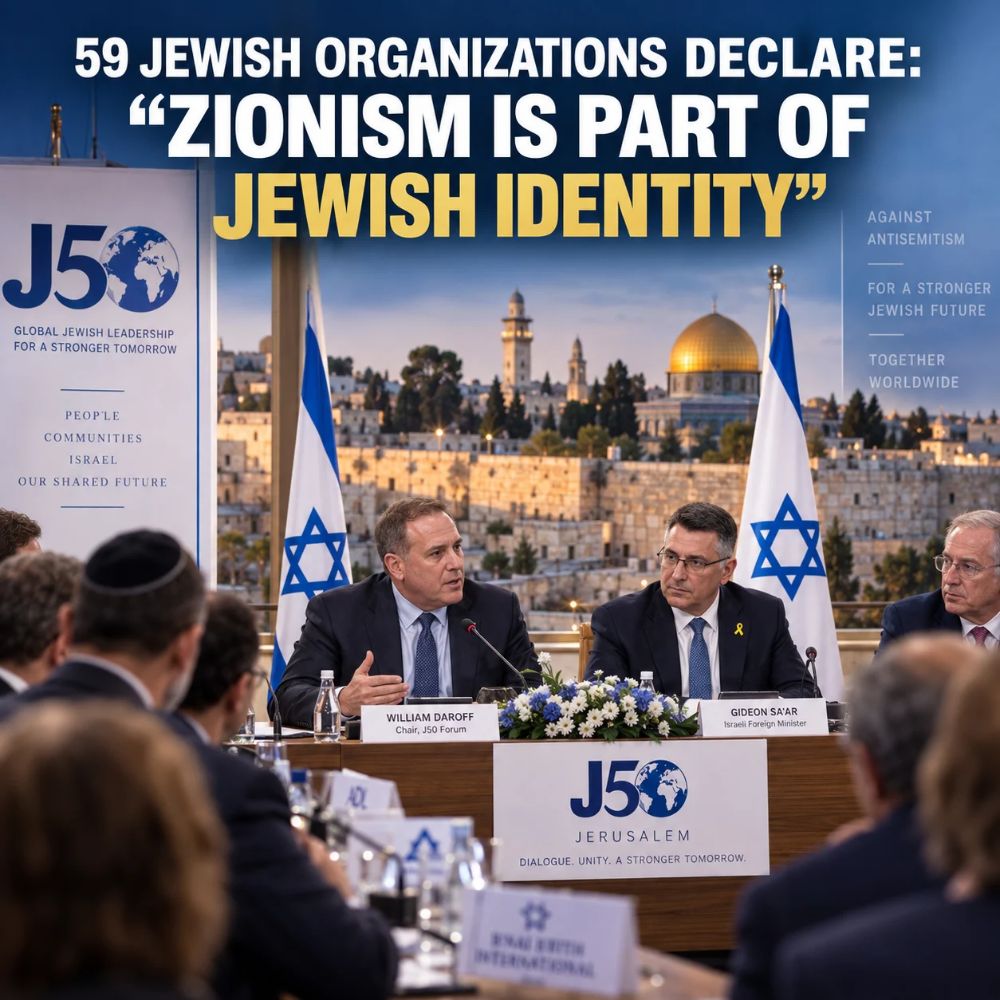
“59 Jewish Organizations Declare Zionism Integral to Jewish Identity”
 By Philip Phi
Posted Sep 16, 2026 at 7:31 AM
By Philip Phi
Posted Sep 16, 2026 at 7:31 AM
In a significant declaration, 59 Jewish organizations have affirmed that Zionism is an integral part of Jewish identity. This statement comes amid ongoing global debates about Zionism, antisemitism, and the political and religious responses these topics evoke. The organizations’ declaration underscores the complexity of Zionism as both a national and cultural identity, distinct from the political movements and policies of the Israeli government.
The discourse surrounding Zionism often intersects with discussions on antisemitism, particularly in how Jewish communities worldwide are perceived and treated. Recent events have highlighted these tensions, with antisemitic incidents prompting responses from various governments and religious groups. In Canada, for instance, security concerns have led to increased measures at Jewish institutions, such as the installation of a full perimeter fence at Toronto’s Beth Tzedec, one of the country’s largest synagogues.
Internationally, the actions of groups like Hamas have sparked controversy, particularly when their methods are co-opted as symbols of peace in places like Winnipeg. This juxtaposition raises questions about the portrayal and understanding of Middle Eastern conflicts and the symbols associated with them.
Efforts to address antisemitism extend beyond security measures. In Australia, the antisemitism envoy has called for legislative action to hold technology companies accountable for online harms, reflecting a broader concern about the digital spread of hate speech. Meanwhile, community initiatives, such as those by Na’amat Canada in Calgary, continue to support vulnerable populations, demonstrating a commitment to social justice and community care.
These developments call for a balanced approach that acknowledges the diverse perspectives within Jewish communities and the broader societal implications of antisemitism and Zionism. As these discussions evolve, they invite reflection on themes of justice, peace, and neighbor-love, resonating with biblical calls for mercy and accountability.
Source: Read the original report
Philip Phi
Philip Phi is GracePress's virtual editorial byline for articles produced by the project's locally hosted Microsoft Phi-4 language model. He does not independently report, interview sources, or witness events. Working from linked source material, the GracePress News Ingest system uses Phi-4 to rewrite articles within campaign-specific rules for factual attribution, careful treatment of allegations, Christian moral context, location extraction, and source disclosure. Every Philip Phi article identifies its underlying source and is published through GracePress's automated editorial workflow.