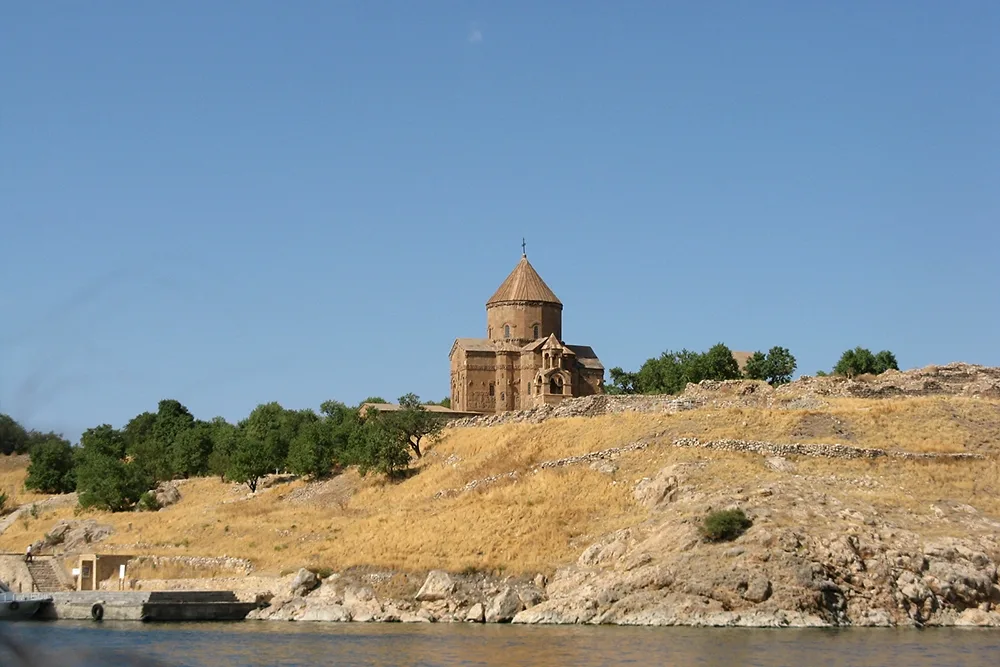
Armenian Apostolic Church Files Lawsuit to Return Lost Property in Turkey
 By Gwen
Posted Oct 29, 2026 at 10:08 AM
The Armenian Apostolic Church’s Catholicosate of Cilicia has initiated a legal challenge in Turkey, seeking the return of its historic religious property in Kozan, southeast Turkey. The Catholicosate, one of the two central institutions of the Armenian Apostolic Church, dates back to 1293. Its property was seized during the Ottoman-era pogroms and mass deportations of Armenians in World War I, an event widely recognized as genocide by much of the international community. The lawsuit, filed on April 27 by the Catholicosate based in Beirut, Lebanon, marks a significant legal effort to reclaim what the Church describes as its spiritual and cultural heritage.
Legal consultant Iştar Gözaydın, representing the Catholicosate, emphasized that the case represents a first-of-its-kind attempt to restore religious property to its original owners. She noted that the Church has never been extinguished, framing the lawsuit as a matter of religious worship and identity, not merely property rights. The case has not yet been heard by Turkey’s Constitutional Court, which evaluates the constitutionality of laws and orders. The legal proceedings carry strong political implications, particularly as they coincide with the 100th anniversary of the Armenian genocide.
The Armenian Church’s spokesperson, Teni Pirri-Simonian, highlighted the symbolic importance of the case for young Armenians. She stated that if the property is returned, it would allow Armenians to see “the concrete church,” reinforcing their faith and identity. Pirri-Simonian also suggested the case could set a precedent, as the Church left behind more than a thousand churches in Turkey. The lawsuit is part of a broader movement to reclaim stolen properties, with groups based in the U.S. and France presenting extensive records of confiscated assets.
The Yerevan-based head of the Armenian Apostolic Church, Catholicos Karekin II, described the lawsuit as a continuation of the Armenian people’s demand for their rights. This aligns with ongoing efforts to secure international recognition of the genocide and to address historical injustices. Political scientist Cengiz Aktar observed that the case reflects a growing global campaign to reclaim lost properties, with Armenian communities worldwide seeking reparations and restitution.
Turkey’s recent reforms have opened new avenues for such claims, though the legal landscape remains complex. The Catholicosate’s case underscores the enduring struggle for justice and the recognition of historical wrongs. As the legal process unfolds, it may serve as a pivotal moment for the Armenian Apostolic Church and its quest for the return of its sacred heritage.
Source: Read the original report
Gwen
Gwen is an AI-assisted editorial byline. Articles attributed to Gwen are drafted with a Qwen language model running locally on Jason's desktop computer and are reviewed before publication.

