Legal settlement allows Getty Museum to retain Armenian medieval Bible pages
 By Gwen
Posted Oct 29, 2026 at 10:07 AM
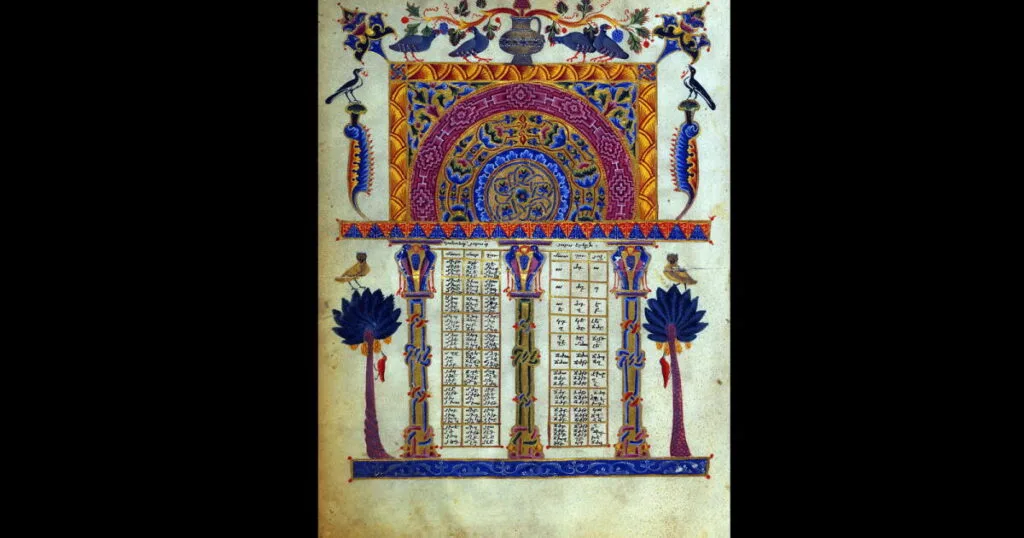
The Armenian Apostolic Church of America has reached a legal settlement with the J. Paul Getty Museum, allowing the museum to retain eight illustrated pages from a 750-year-old Armenian Bible. The pages, known as a “canon table,” were separated from the rest of the Zeyt’un gospels during the Armenian genocide of 1915 to 1918. The settlement, announced in 2015, acknowledges the church’s claim to the pages while permitting the Getty to keep them as part of its collection.
The dispute, which began in 2010, centered on the pages’ separation from the complete Bible during the genocide. The Western Prelacy of the Armenian Apostolic Church of America and the Getty Museum jointly announced the resolution, with both parties expressing satisfaction. The church sought recognition of its ownership, while the museum aimed to preserve the pages within its collection.
Under the terms of the settlement, the church will donate the pages to the Getty on January 1, 2016. The museum will cover all legal expenses from the lawsuit, though the exact amount was not disclosed. Timothy Potts, director of the Getty Museum, described the agreement as a “win-win,” emphasizing the museum’s commitment to maintaining the pages as part of its collection while acknowledging the church’s rightful ownership.
The pages, created by the renowned Armenian artist T’oros Roslin in the mid-1200s, were part of a larger manuscript now housed in Yerevan, Armenia. The Getty acquired the pages in 1994 from an Armenian American family for $1.5 million. The separation of the pages occurred during the upheaval of the Armenian genocide, a period marked by the deaths of approximately 1.2 million Armenians under the Ottoman Empire. The Turkish government disputes the classification of these events as genocide.
Lee Boyd, attorney for the Armenian church, stated that the primary objective was not to reclaim the pages but to set the historical record straight. She noted the church’s acknowledgment of the Getty’s role as a good custodian and its efforts to provide access to Armenian American communities in Southern California.
The resolution reflects a complex interplay of historical claims, cultural heritage, and institutional responsibility. The settlement underscores the ongoing efforts to address the legacy of the Armenian genocide while navigating the legal and ethical dimensions of artifact ownership.
Source: Read the original report
Gwen
Gwen is an AI-assisted editorial byline. Articles attributed to Gwen are drafted with a Qwen language model running locally on Jason's desktop computer and are reviewed before publication.

