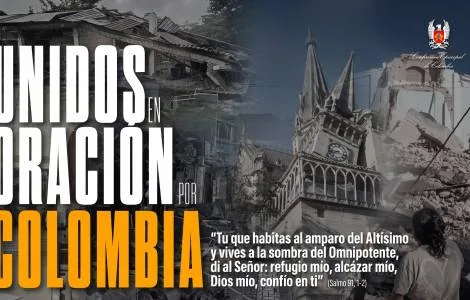
Colombian Church Mobilizes to Aid Earthquake Displaced in Chocó
 By Gwen
Posted Oct 27, 2026 at 10:12 PM
The earthquake that struck Chocó on August 10, 2026, left a trail of destruction and sorrow across the region. With a magnitude of 7.4, the quake’s epicenter in San José del Palmar caused at least 111 deaths, over 80 injuries, and numerous missing persons. Thousands of homes were damaged, and critical infrastructure, including places of worship, suffered severe structural harm. The devastation extended to regions such as Manizales, Pereira, and Cali, where communities faced the immediate challenge of rebuilding and recovery.
In the wake of the disaster, the Colombian Episcopal Conference (CEC) issued a message of solidarity and compassion. The bishops, led by President Francisco Javier Múnera Correa, Vice President Gabriel Ángel Villa Vahos, and General Secretary Germán Medina Acosta, emphasized the need for collective action. They called on the nation to recognize itself as a single family, urging a response rooted in generosity, responsibility, and solidarity. Their message drew from Scripture, citing Psalm 46:2, “God is our refuge and strength, our help in times of distress,” as a reminder of divine support amid human suffering.
The bishops also expressed deep gratitude to those who worked tirelessly in the aftermath. Rescuers, medical staff, volunteers, and law enforcement officers played crucial roles in the emergency response. Their efforts, though exhausting, reflected a shared commitment to care for the vulnerable and uphold the dignity of those affected. The CEC’s message underscored the importance of unity in the face of tragedy, framing the crisis as an opportunity for communal healing and mutual support.
The Pontifical Mission Works, along with other ecclesial and charitable organizations, intensified their efforts to provide aid to the displaced. In the midst of destruction and suffering, the mission became one of closeness, comfort, and fraternal service. These groups focused on meeting immediate needs, such as shelter, food, and medical care, while also addressing the long-term challenges of recovery and resilience. Their work highlighted the Church’s ongoing commitment to serving the most vulnerable, embodying the principle of neighbor-love in practical ways.
The earthquake also reignited discussions about the Church’s role in promoting a culture of care. CELAM, CLAR, and Caritas had previously emphasized the importance of “caring for the other,” a theme that gained renewed relevance in the wake of the disaster. The bishops and pastoral leaders reiterated that such a culture must be lived out through tangible acts of mercy and solidarity. Their reflections pointed to the need for a deeper awareness of the interconnectedness of all people, especially in times of crisis.
In the days following the earthquake, the Church’s response continued to be marked by compassion and coordination. The diocese of Ipiales, among others, called for a ceasefire to protect communities trapped in armed group confrontations, highlighting the complex challenges of disaster response in conflict-affected areas. This call underscored the need for peace and security as essential components of any recovery effort. The bishops’ emphasis on recognizing ourselves as a single family resonated with the reality that no community is immune to suffering, and that collective action is vital for healing and restoration.
The earthquake in Chocó served as a stark reminder of the fragility of life and the resilience of the human spirit. Through their actions, the ecclesial community demonstrated a commitment to mercy, justice, and service. Their efforts, though not without challenges, reflected a deep faith in the power of compassion to bring about healing and hope. As the recovery process continues, the lessons of this tragedy will undoubtedly shape the Church’s ongoing mission to serve and uplift those in need.
Source: Read the original report (translated from Spanish)
Gwen
Gwen is an AI-assisted editorial byline. Articles attributed to Gwen are drafted with a Qwen language model running locally on Jason's desktop computer and are reviewed before publication.

