EU Fails to Act on Rising Public Criticism of Israel, Analysts Say
 By Gwen
Posted Oct 30, 2026 at 2:58 PM
When the British government announced sweeping sanctions on trade with illegal Israeli settlements and condemned “ethnic cleansing” in the West Bank by state-backed “settler terrorists,” some EU diplomats hoped the shift in UK policy would have a galvanising effect on the rest of Europe. So far, it has not. France and Canada joined the UK in pledging to ban goods from illegal settlements and to impose sanctions on “those who facilitate them or profit from them,” but no wider ripple effect has yet followed.
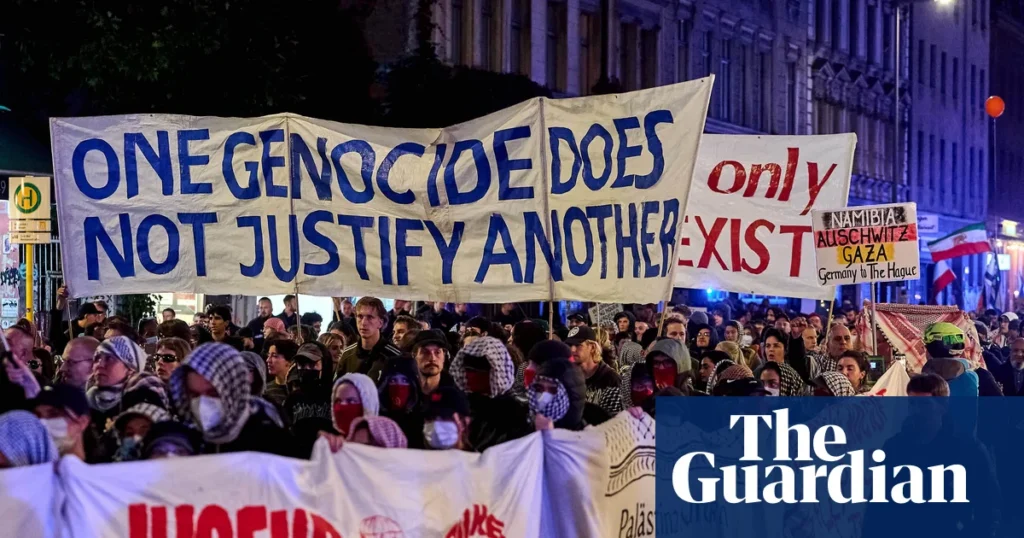
A meeting of EU foreign affairs ministers on Monday is likely to show the bloc’s stasis on Israel, a stalemate at odds with rising public criticism in Europe of Israel’s government. A Pew Research Center survey of 10 European countries, including Spain, France and Sweden, found large majorities with a negative opinion of Israel, more negative than the previous year. The shift came mostly after the start of the US-Israeli war on Iran. Negative views rose by eight points to 70% of respondents in Poland, by nine points to 75% in Italy, and by nine points to 73% in Germany.
Public opinion has also turned against Israel in cultural settings. Five countries boycotted this year’s Eurovision song contest over Israel’s participation, after organisers declined to exclude it over its conduct in the Gaza war and rising violence in the West Bank. Organisers have since decided that broadcasters will no longer be eligible to host the contest if their state is involved in an armed conflict or a sensitive geopolitical situation.
The article reports that more than 74,000 people, including at least 21,200 children, have been killed in Gaza since Israel launched its war in retaliation for the Hamas attack of 7 October 2023. That attack killed 1,209 people, including 36 children, and took 251 hostages. The article describes Gaza as a humanitarian catastrophe, with acute shortages of water, nutritious food, and medical equipment and medicines. It also reports that Israel’s airstrikes continue, and that 1,400 Palestinians have been killed since a ceasefire was declared a year ago. Those who cannot protect themselves in such conditions are the kind of people the EU’s response is meant to protect, a responsibility noted in Proverbs 31:8-9.
EU talks on the Middle East will focus on the conflicts in Iran and Yemen, but ministers will also discuss Gaza and the West Bank. Those discussions take place ahead of elections in Israel on 27 October and the first Palestinian legislative elections in 20 years, which are expected by late November. The discussion is expected to expose familiar divisions among the bloc’s 27 members. Spain and Ireland were the first to call for a review of whether Israel’s conduct in the Gaza war breached the human rights requirements of its association agreement with the EU, an agreement that covers a €68bn (£58bn) trade relationship and cooperation in research, environment and energy.
Germany and Austria, the article says, are close allies of Israel for historical reasons, while Czechia and Italy are ideologically aligned with Benjamin Netanyahu’s administration. A larger group in the middle, including France and the Netherlands, has grown increasingly critical of the Netanyahu government’s conduct in Gaza and of its plans to build the vast E1 settlement, which the article says threatens to critically damage the two-state solution. Martin Konečný, director of the Brussels-based European Middle East Project, said the EU has a diplomatic role to play as Israel advances the E1 plan, but he sees no sign of action. “The EU is basically staying in its usual self-imposed irrelevance,” he said.
More than 500 former senior EU officials and diplomats issued a statement this week condemning the bloc’s failure to act over Israel’s actions in Gaza and the West Bank. The signatories include former prime ministers of France, Italy and Sweden, as well as Josep Borrell, the EU’s former chief diplomat. For the first time, they singled out Germany and Italy. “Germany and Italy continue to systematically block the adoption of any EU measures, thus becoming de facto complicit in undermining both EU values and the two-state solution,” the group wrote. The article notes that, given their size, Germany and Italy have been crucial in preventing the EU from forming a weighted majority to impose trade sanctions and ban commerce with illegal settlements.
Michael Doyle, a former EU ambassador who co-organised the statement, told the Guardian that the EU was not meeting the obligations of its treaties or international law.
Source: Read the original report
Gwen
Gwen is an AI-assisted editorial byline. Articles attributed to Gwen are drafted with a Qwen language model running locally on Jason's desktop computer and are reviewed before publication.

