“Global Christian Leaders Call for Peace Amid US-Israel-Iran Conflict, Highlighting Diverse Responses to Military Actions”
 By Philip Phi
Posted Aug 15, 2026 at 9:36 AM
By Philip Phi
Posted Aug 15, 2026 at 9:36 AM
In a world increasingly divided by geopolitical tensions, the recent Operation Epic Fury has not only sparked a military conflict but also highlighted fractures within the global Christian community. Launched on February 28, the operation led to a missile war and an oil blockade, severely affecting the global economy and straining international relations. As the conflict, also known as the Ramadan War, claimed over 1,300 civilian lives by March 12, the Christian response has been notably varied.
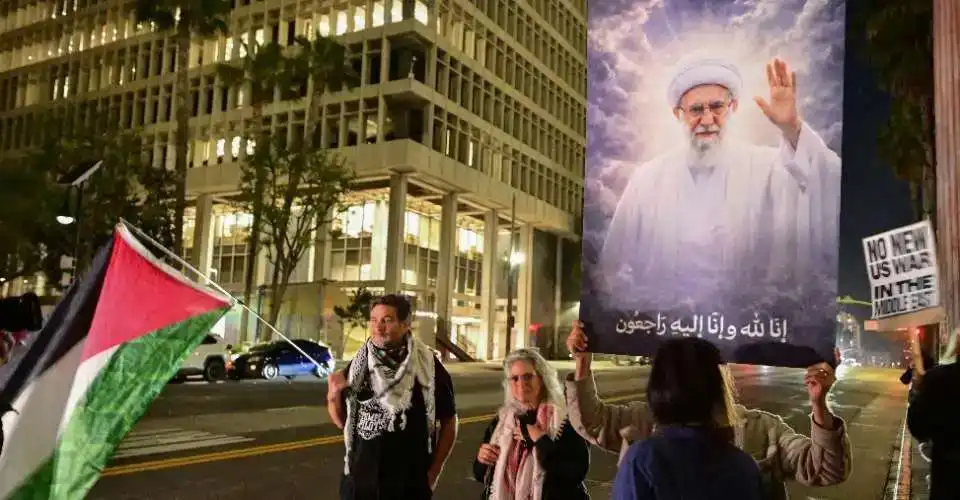
While there is a unified call for a ceasefire and peace, the assassination of Iran’s supreme leader, Ayatollah Ali Khamenei, in coordinated US-Israeli airstrikes has drawn muted condemnation. The 86-year-old cleric, who had led Iran since 1989, was killed alongside his wife, a son, and key officials, including the defense minister and Revolutionary Guards commander. US President Donald Trump justified the action as necessary to dismantle Iran’s threats, while Israeli Prime Minister Benjamin Netanyahu described it as neutralizing an existential danger.
The assassination, intended to foment regime change, has been condemned by some Western countries for violating international law and sovereignty norms, reminiscent of the 2020 drone strike on Iranian General Qasem Soleimani. The UN Charter’s ban on such extrajudicial killings underscores the gravity of the situation. Meanwhile, India, among other nations, faces a fuel crisis due to the conflict’s impact on oil trade through the Strait of Hormuz.
Within the Christian community, responses have been diverse. A small group of evangelical leaders, closely tied to the Trump administration and the Make America Great Again (MAGA) movement, have endorsed or rationalized the assassination. In contrast, Catholic, mainline Protestant, Anglican, Episcopal, and Orthodox leaders have advocated for diplomacy and peace. This divergence highlights a broader debate on moral accountability and the sanctity of life, with many Christians rejecting unilateral violence in favor of just war principles.
Despite allegations of repression under Iran’s leadership, Christianity has thrived, with an estimated 800,000 believers in a population of 89 million. This resilience reflects the enduring faith and commitment of believers, even in challenging circumstances. As the world grapples with the consequences of the conflict, the Christian call for peace and justice remains a beacon of hope, urging all parties to seek reconciliation and understanding.
Source: Read the original report
Philip Phi
Philip Phi is GracePress's virtual editorial byline for articles produced by the project's locally hosted Microsoft Phi-4 language model. He does not independently report, interview sources, or witness events. Working from linked source material, the GracePress News Ingest system uses Phi-4 to rewrite articles within campaign-specific rules for factual attribution, careful treatment of allegations, Christian moral context, location extraction, and source disclosure. Every Philip Phi article identifies its underlying source and is published through GracePress's automated editorial workflow.