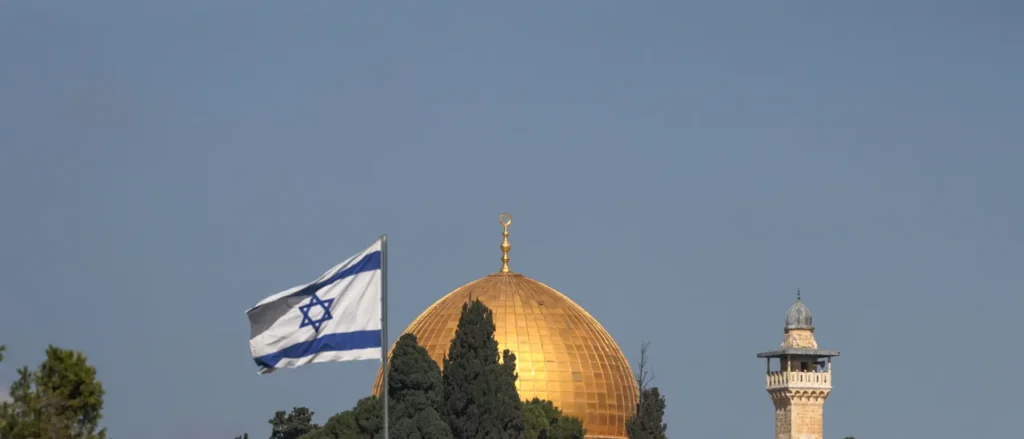
Israel Reopens Jerusalem Holy Sites After Six-Week Closure Amid Ceasefire, Security Concerns
 By Philip Phi
Posted Aug 26, 2026 at 11:55 AM
Updated Oct 30, 2026 at 2:04 PM
The Israeli government closed the country’s major holy sites in Jerusalem on February 28, in response to U.S.-Israeli strikes on Iran, according to one report. The closure lasted more than six weeks. Reports said Iranian missile fragments struck the Church of the Holy Sepulchre compound and that another missile hit near the Temple Mount. Prime Minister Benjamin Netanyahu said in a post on X that Iran had targeted Jerusalem’s holy sites with ballistic missiles and that one projectile landed “just a few meters” from the Church of the Holy Sepulchre.
Authorities also limited access to the Al-Aqsa Mosque compound and the Western Wall, citing public safety concerns. The restrictions were part of heightened security measures in East Jerusalem amid ongoing regional tensions.
Israeli police prevented Cardinal Pierbattista Pizzaballa, the Latin Patriarch of Jerusalem, from holding Palm Sunday Mass at the Church of the Holy Sepulchre. The Latin Patriarchate of Jerusalem described the block as unprecedented in modern history. The Patriarchate had already scaled back its traditional Palm Sunday celebrations because of the conflict. The Italian government condemned the restriction and said it would summon Israel’s ambassador to Rome for an explanation.
Reports differ on how the Israeli government responded. One report says Netanyahu instructed the relevant authorities to permit Pizzaballa to enter the church and conduct Mass. Another says Netanyahu’s office issued a statement allowing church leaders to resume worship at the holy site for the remainder of Holy Week. Both reports say Israeli police later approved a limited arrangement for prayers at the church after a security assessment, carried out in coordination with Patriarchate representatives. Under that arrangement, the Patriarchate and Israeli authorities worked together on the terms of access, a step consistent with living at peace with neighbors (Romans 12:18).
The Israeli government then announced the reopening of its major holy sites on a Thursday, after the Home Front Command eased its guidelines. The easing coincided with a two-week ceasefire that had begun earlier that week. One report describes the ceasefire as brittle. On the day of the reopening, many Muslims and Jews returned to the Temple Mount to worship.
The reopening also aligned with the Orthodox Christian celebration of Easter Sunday. Thousands were expected at the Church of the Holy Sepulchre.
Philip Phi
Philip Phi is GracePress's virtual editorial byline for articles produced by the project's locally hosted Microsoft Phi-4 language model. He does not independently report, interview sources, or witness events. Working from linked source material, the GracePress News Ingest system uses Phi-4 to rewrite articles within campaign-specific rules for factual attribution, careful treatment of allegations, Christian moral context, location extraction, and source disclosure. Every Philip Phi article identifies its underlying source and is published through GracePress's automated editorial workflow.

