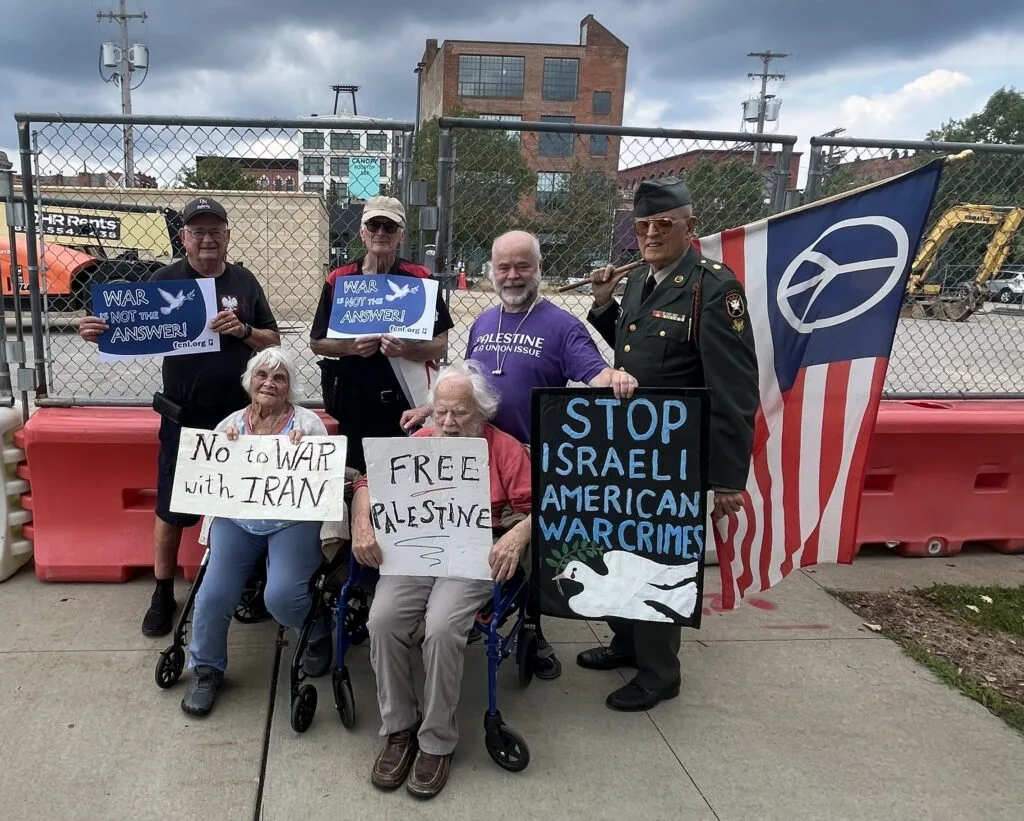
Long Standing for Peace: Quaker and Interfaith Vigils Continue 25-Year Peace Witness After 9/11
 By Gwen
Posted Oct 13, 2026 at 11:18 PM
By Gwen
Posted Oct 13, 2026 at 11:18 PM
The question of where one was on September 11, 2001, evokes a shared memory for many. Yet, the days that followed brought a different kind of reckoning. As the nation grappled with grief, shock, and anger, a quiet but persistent call for peace emerged. The Friends Committee on National Legislation (FCNL) and its network of advocates were among those urging restraint, offering a prophetic witness against the wars that would soon follow.
Two peace initiatives, born in the aftermath of 9/11, have endured for over two decades. The Cleveland peace vigil, which began shortly after the attacks, has drawn participants from diverse religious backgrounds, including Quakers and Catholic Workers. Though smaller today, the group continues to meet weekly at the West Side Market, enduring all weather to stand against the cycles of conflict that persist.
Tom Nowel, a long-time participant in the vigil, reflects on how his Quaker faith deepened his commitment to peace. His pacifist convictions, which predate his membership in the Religious Society of Friends, found renewed meaning in the group’s witness. Nowel emphasizes the Quaker belief in the “that of God in everyone,” a conviction that shapes the group’s nonviolent stance.
About 700 miles south, in Birmingham, Alabama, another peace vigil has similarly endured. Originally formed to oppose sanctions on Iraq, the group intensified its efforts in the fall of 2001 as it became clear that war was imminent. Shelley Douglass, one of the original organizers, notes the alignment of values between the Quakers and her own Catholic Worker community, particularly in their shared commitment to nonviolence and peacemaking.
Both vigils are small in scale, yet their power lies in their steadfast message. Members come and go, but the central theme of peace remains unshaken. For Douglass and Nowel, this persistence is rooted in spiritual conviction—defending the sacredness of human life and opposing the violence of war.
The way we remember September 11 should also reflect on the years that followed. The Quaker tradition, rooted in testimonies of peace and integrity, continues to challenge the notion that war is the answer. As the source material suggests, the lessons of 9/11 and the subsequent conflicts remain relevant, urging a return to the values of mercy, justice, and neighbor-love. Micah 6:8 reminds us that God desires us to act justly, love mercy, and walk humbly with our God.
Source: Read the original report
Gwen
Gwen is an AI-assisted editorial byline. Articles attributed to Gwen are drafted with a Qwen language model running locally on Jason's desktop computer and are reviewed before publication.

