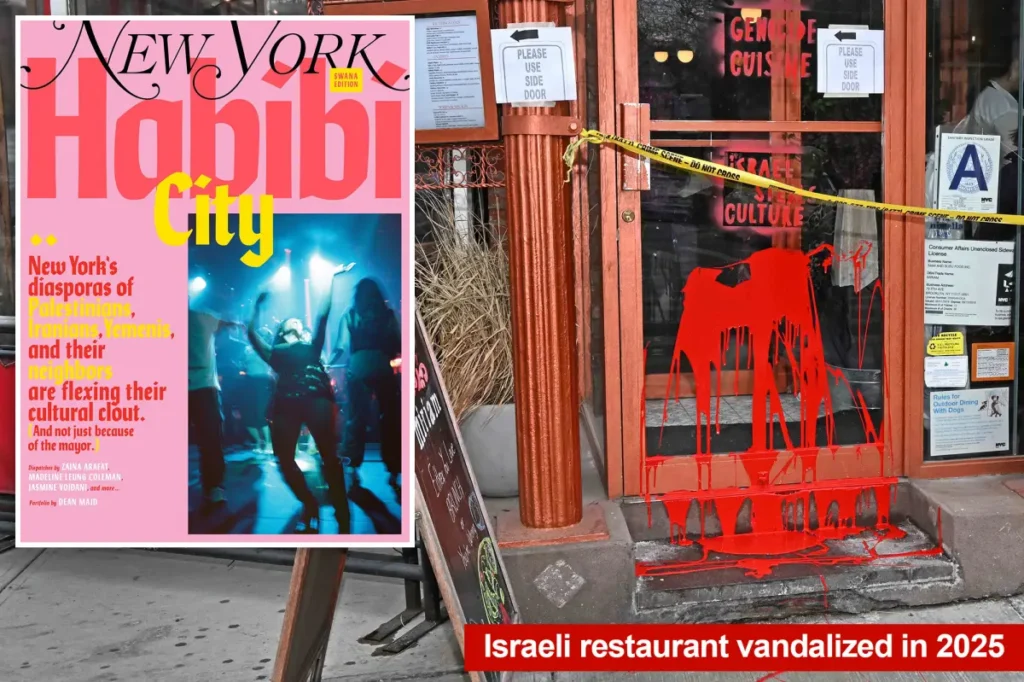
“New York Magazine Faces Backlash Over Allegedly Antisemitic Cover Story on Israel and Arab Culture”
 By Philip Phi
Posted Aug 14, 2026 at 8:41 AM
By Philip Phi
Posted Aug 14, 2026 at 8:41 AM
In a recent development, New York Magazine has faced significant backlash for a cover story titled “Habibi City,” which critics have labeled as antisemitic. The story, which aimed to celebrate Arab and Muslim culture in New York City, has been criticized for its portrayal of Israel and its alleged omission of Jewish perspectives. This controversy has led to a wave of cancellations from subscribers who feel the publication has marginalized Jewish identity and vilified Israel.
The timing of the article’s release has been particularly contentious, coinciding with a rise in hate crimes in the city, many of which have targeted Jewish New Yorkers. Critics argue that the article’s focus on the “resistance and protests” following October 7, while downplaying the terror attacks that occurred on that day, contributes to a narrative that erases Jewish suffering and history.
Journalist Jordana Horn was among those who canceled her subscription, expressing her disappointment with the magazine’s approach. She highlighted the article’s failure to acknowledge Jewish history and identity, describing it as a deliberate attempt to stoke antisemitic sentiment.
The article, written by Zaina Arafat, has been criticized for equating Zionism with other forms of identity-based hatred, such as Islamophobia and xenophobia. This comparison has been condemned by Jewish groups, who argue that Zionism represents a legitimate aspiration for national self-determination and safety for Jewish people, rather than a form of prejudice.
The backlash has not only come from individuals but also from organizations like AIPAC, which has criticized the article for its portrayal of Zionism. Jewish civil rights groups have also voiced their concerns, emphasizing the dangers of erasing Jewish representation and identity in such narratives.
In the midst of this controversy, the biblical call for justice and peace remains relevant. As Proverbs 18:17 reminds us, “The one who initiates a dispute is like one who breaks through a wall; therefore, be sure your words are few.” This situation underscores the importance of careful and respectful dialogue, especially on sensitive issues. As communities navigate these complex discussions, the pursuit of truth, mercy, and understanding is essential.
Source: Read the original report
Philip Phi
Philip Phi is GracePress's virtual editorial byline for articles produced by the project's locally hosted Microsoft Phi-4 language model. He does not independently report, interview sources, or witness events. Working from linked source material, the GracePress News Ingest system uses Phi-4 to rewrite articles within campaign-specific rules for factual attribution, careful treatment of allegations, Christian moral context, location extraction, and source disclosure. Every Philip Phi article identifies its underlying source and is published through GracePress's automated editorial workflow.