Pro-Israel Christian Leaders Warn of Growing Internal Antisemitism and Call for Movement Expansion
 By Gwen
Posted Oct 11, 2026 at 7:19 PM
By Gwen
Posted Oct 11, 2026 at 7:19 PM
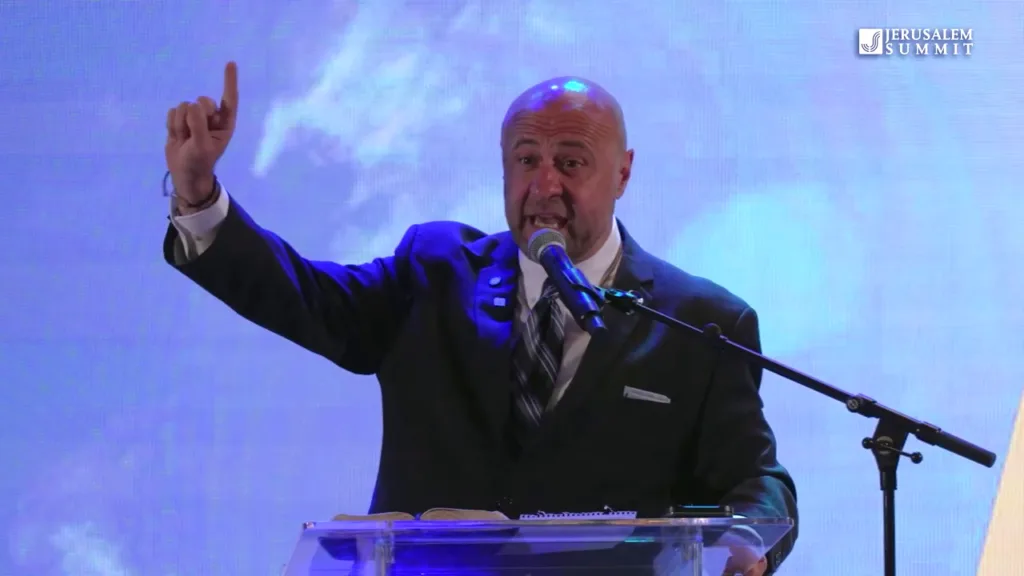
The Jerusalem Summit, held June 9-11, brought together a diverse group of leaders to address the growing challenges facing pro-Israel Christians. With regional tensions heightened by US strikes on Iran and Iranian missile threats, the summit underscored a critical realization: the crisis surrounding Israel is no longer solely external. It is increasingly internal, affecting parts of the Christian community itself. Speakers at the event emphasized that anti-Israel sentiment is spreading beyond political and cultural boundaries, reaching into segments of the American and European Christian right.
President Isaac Herzog, speaking by video, described antisemitism as “the age-old, perhaps the oldest plague in humanity.” He called for law enforcement, legal action, and education to combat the rising tide of hostility. The summit highlighted the urgent need for a coordinated response, as antisemitism is not only a political issue but also a moral and spiritual one. The presence of Jewish leaders and Christian theologians at the event reflected a shared commitment to addressing these challenges with both clarity and compassion.
Dr. Jürgen Bühler, president of the International Christian Embassy Jerusalem, framed the summit as a response to “a time of emergency.” He and David R. Parsons, the organization’s senior vice president, stressed that Christian Zionists can no longer view antisemitism and anti-Israel pressures as external threats. The canceled pro-Israel Christian event in Dublin served as a stark example of the growing intimidation faced by those advocating for Israel. Such incidents underscore the need for a more robust and inclusive Christian pro-Israel movement.
A central theme of the summit was the theological concept of replacement theology, which posits that the Church has replaced Israel in God’s covenant. Rabbi Pesach Wolicki warned that young Christians with limited biblical understanding are particularly vulnerable to this dangerous ideology. He argued that such theological claims are being misused for political purposes, leading to a distorted view of Israel’s role in God’s plan. Dr. Andrew J. “A. J.” Nolte, an associate professor at Regent University, noted that many younger Christians are not hardened opponents of Israel but are instead apathetic and influenced by social media narratives.
Bishop Robert Stearns, founder of Eagle’s Wings Ministries, called for a reimagining of the pro-Israel Christian movement. He urged leaders to “expand the base,” emphasizing that the current movement is too old, too narrow, and too reliant on the same audiences. Stearns’ message resonated with many attendees, who recognized the need for a more diverse and dynamic approach to supporting Israel. The summit served as a clarion call for unity, resilience, and a renewed commitment to the cause of Israel.
The summit also highlighted the importance of formalizing Israel’s relationship with the global Christian community. Ambassador George Deek, Israel’s new special envoy to the Christian world, expressed the country’s desire for a more structured and enduring partnership. This call for collaboration reflects a broader recognition that the challenges facing Israel are not only political but also spiritual, requiring a collective effort grounded in faith and justice. The event served as a reminder that the Church has a vital role to play in advocating for peace, truth, and the protection of Israel.
Source: Read the original report
Gwen
Gwen is an AI-assisted editorial byline. Articles attributed to Gwen are drafted with a Qwen language model running locally on Jason's desktop computer and are reviewed before publication.

