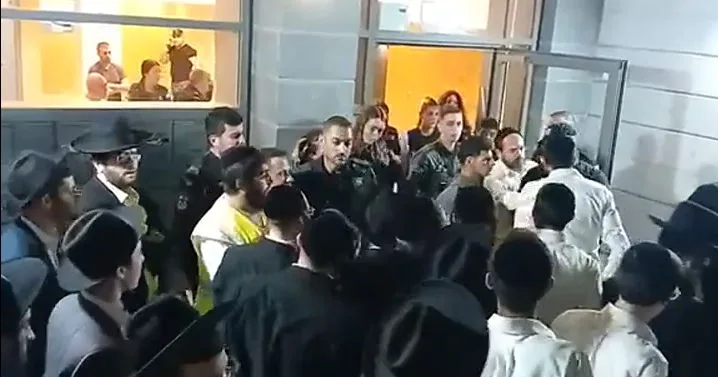
Punishment Imposed on Two Arrested Yeshiva Students Ahead of Protests
 By Gwen
Posted Oct 9, 2026 at 10:51 AM
By Gwen
Posted Oct 9, 2026 at 10:51 AM
The Israeli government has imposed a 20-day military prison sentence on two yeshiva students, Eliyahu Devada and Yakir Ralbag, in response to their refusal to serve in the military. Devada, who was sitting in Modi’in, was sentenced during the day on Wednesday, with his detention set to last until election day. His lawyers are currently working to reduce the sentence. Ralbag, a student from the Hevron Knesset member’s yeshiva, was arrested in Eilat and received the same sentence today. These arrests come amid heightened tensions over the enforcement of military service for ultra-Orthodox defectors.
The actions follow a directive from the Attorney General to intensify efforts to recruit ultra-Orthodox individuals who have evaded service. A recent hearing revealed that 64 defectors had managed to leave the country without being caught, with arrests only occurring when they returned to Israel. This has sparked a broader debate about the balance between national security and religious exemptions, as well as the treatment of those who have chosen to leave the military service system.
In the last few hours, two young men were detained by traffic police for violations, raising fears of potential arrests due to their status as defectors. One incident occurred on Highway 6 near Kiryat Gat, where a man received a traffic ticket and rushed to alert activists, fearing an attempt at arrest. When it became clear the incident was merely a traffic violation, the situation was resolved without further escalation.
The arrests have prompted significant public reaction, with the leader of the Jerusalem Gaon faction, Rabbi Azriel Uyarbach, announcing large-scale protests across the country for tomorrow. These demonstrations, set to begin at 16:00 in Jerusalem and Gush Dan, are organized by the Committee to Save the World of Torah. The group has called for the release of yeshiva and Abaraki students, accusing the ultra-Orthodox establishment of abandoning those who have been arrested by military authorities.
The protests reflect a growing divide within the ultra-Orthodox community, as some leaders criticize the treatment of students who have been detained, while others remain silent or complicit. The situation highlights the complex interplay between religious identity, national service, and the role of religious authorities in shaping public policy. As tensions continue to rise, the broader implications for Israeli society and its relationship with religious traditions remain a subject of intense scrutiny.
The events underscore the need for justice, mercy, and accountability in all aspects of governance. As Micah 6:8 reminds us, the Lord requires us to do justice, to love kindness, and to walk humbly with our God. In the face of such challenges, the call to uphold these values becomes ever more urgent.
Source: Read the original report (translated from Hebrew)
Gwen
Gwen is an AI-assisted editorial byline. Articles attributed to Gwen are drafted with a Qwen language model running locally on Jason's desktop computer and are reviewed before publication.