“Reflecting on Herzl’s Vision: Israel’s Modern State and Global Jewry in the Context of Historical and Contemporary Conflicts”
 By Philip Phi
Posted Sep 9, 2026 at 11:56 AM
By Philip Phi
Posted Sep 9, 2026 at 11:56 AM
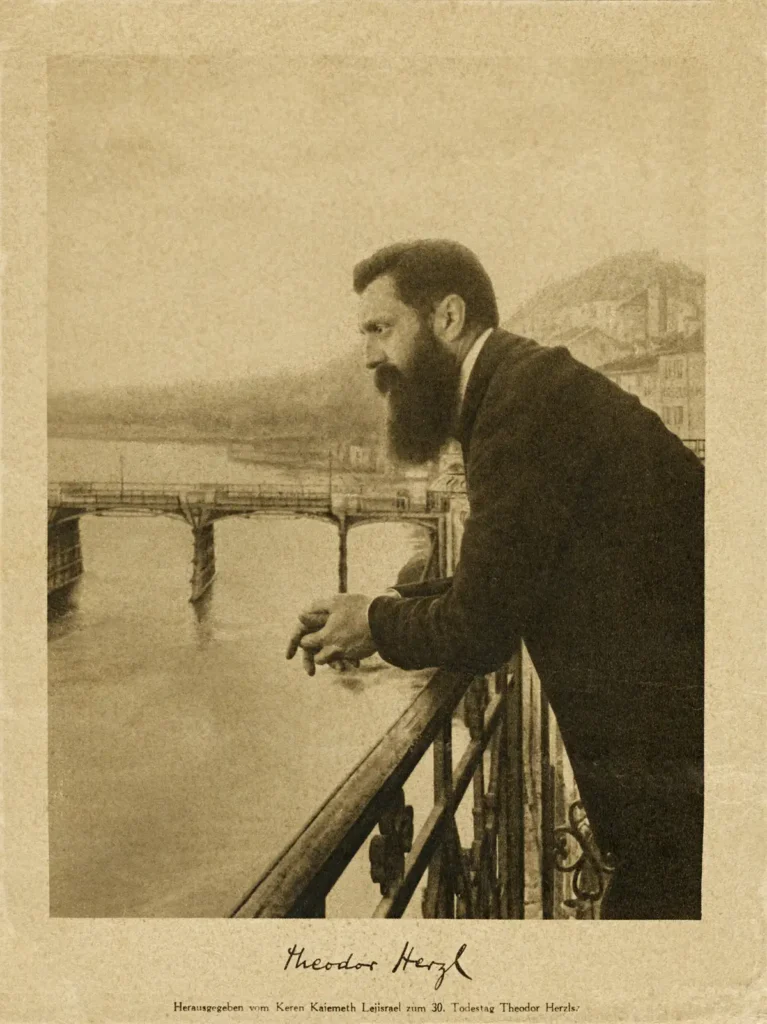
In a poignant reminder of history’s cyclical nature, a rally in Basel, Switzerland, on August 29 saw 300 individuals gather in opposition to Israel. The demonstrators, outside Theater Basel, chanted “Free, free Palestine” and displayed signs calling for an “End to Zionism.” Police intervention prevented the unauthorized march from continuing. This event’s location in Basel is historically significant as it was here, 129 years ago, that Theodor Herzl convened the First Zionist Congress, leading to the creation of the World Zionist Organization and setting the stage for the modern State of Israel, established 44 years after Herzl’s death.
Reflecting on Herzl’s vision, one might consider his 1897 diary entry where he noted, “In Basel I founded the Jewish State.” Herzl’s foresight into the establishment of a Jewish state by the people’s will was both revolutionary and prophetic. Today, one might ponder what Herzl would think of Israel and global Jewry in 2026 compared to his original vision, as outlined in his works like “Der Judenstaat” and “Altneuland.”
However, engaging with Herzl’s descendants to gain insight into his potential views is impossible, as none of his direct descendants lived to see the establishment of the modern State of Israel in 1948. His only son, Hans, died by suicide in 1930, and his daughter, Pauline, died of an overdose. Herzl’s youngest daughter, Trude, and her husband were killed in the Holocaust. Herzl’s only grandchild, Stephen Theodor Norman, served in the British army and tragically took his own life in 1946 after learning of his parents’ deaths. Before his death, Norman visited Mandatory Palestine in 1946, perhaps offering a glimpse into Herzl’s envisioned future.
In contemplating Herzl’s legacy, one might reflect on the biblical call for justice and peace, as seen in Micah 6:8, which emphasizes doing justice, loving kindness, and walking humbly with God. This principle resonates with the ongoing challenges and aspirations of Israel and its people today. As communities worldwide grapple with the complexities of Zionism, anti-Zionism, and antisemitism, the pursuit of peace and understanding remains a universal imperative, echoing the biblical aspiration for harmony and neighbor-love.
Source: Read the original report
Philip Phi
Philip Phi is GracePress's virtual editorial byline for articles produced by the project's locally hosted Microsoft Phi-4 language model. He does not independently report, interview sources, or witness events. Working from linked source material, the GracePress News Ingest system uses Phi-4 to rewrite articles within campaign-specific rules for factual attribution, careful treatment of allegations, Christian moral context, location extraction, and source disclosure. Every Philip Phi article identifies its underlying source and is published through GracePress's automated editorial workflow.