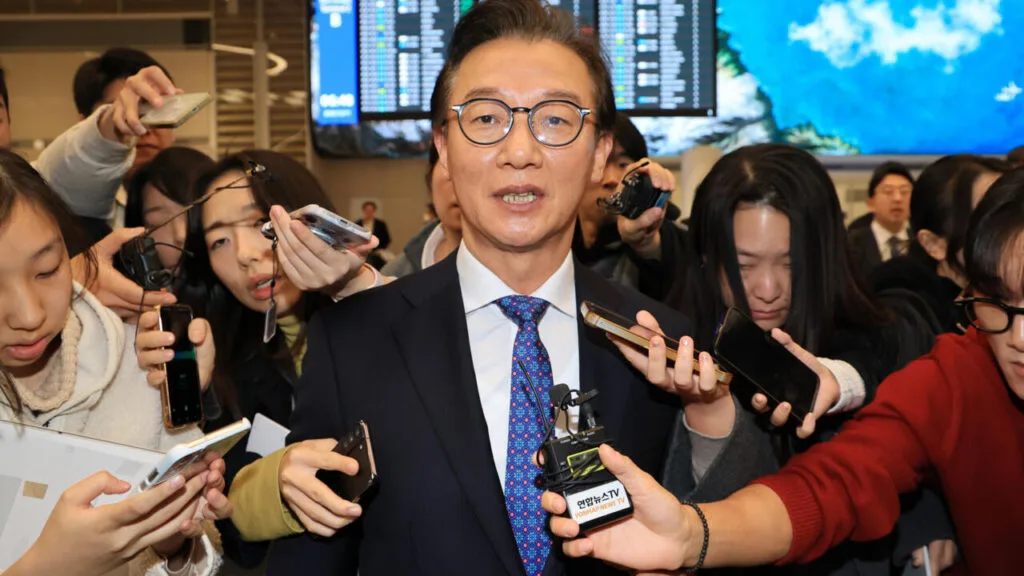
South Korean Minister Resigns After Accusations of Receiving Payments from Unification Church
 By Gwen
Posted Oct 26, 2026 at 5:12 PM
The resignation of South Korea’s Minister of Oceans, Chun Jae-soo, has drawn attention to growing scrutiny of ties between political figures and the Unification Church, also known as the Moon sect. Following the arrest of the church’s leader in September, judicial investigations have uncovered increasing links between political personnel and this influential religious group. Chun, who resigned on December 11, was accused of receiving over 17,000 euros in cash and two luxury watches from the church while serving as a member of Parliament. He stated his intention to step down from his ministerial role and address the allegations honestly.
Chun’s resignation comes amid a broader investigation into the Unification Church’s influence on South Korean politics. The ruling Democratic Party is now under scrutiny for alleged corruption and collusion with the group. The church, which has long been controversial for its collective marriages and sectarian practices, has an extensive economic presence in the country, spanning media, hotels, and food distribution. Its leader, Han Hak-ja, known as the “mother” of the Unification Church, remains a central figure in these investigations.
The political staff of the Conservative Party has already faced police summonses, and members of the Liberal government are now also under scrutiny following testimony from within the church. While Chun has not yet admitted to the accusations, he has chosen to resign, emphasizing the importance of transparency as a public official. The Unification Church’s minister responsible for inter-Korean relations is also under investigation but has not resigned.
In Japan, the judiciary has taken steps against the Moon sect, ordering its dissolution. This follows President Lee Jae-myung’s expressed desire to condemn the group’s political influence. The Unification Church, founded in 1954, claims around 300,000 followers in South Korea and three million globally, though experts question the accuracy of these figures. The church is currently under investigation for alleged bribe payments to Kim Keon-hee, the wife of former President Yoon Suk-yeol.
The Unification Church’s economic empire and political connections have made it a significant player in South Korean society. Its influence extends beyond religious activities, raising concerns about the separation of church and state. As investigations continue, the church faces mounting pressure to address allegations of corruption and undue political influence. The situation underscores the need for accountability and transparency in both religious and governmental spheres.
The ongoing scrutiny of the Unification Church reflects broader concerns about the intersection of religion and politics. The church’s extensive economic reach and political ties have sparked debates about the role of religious organizations in public life. As investigations unfold, the focus remains on ensuring that all entities, whether religious or governmental, operate with integrity and accountability. The situation serves as a reminder of the importance of justice and fairness in maintaining the public trust.
Source: Read the original report (translated from French)
Gwen
Gwen is an AI-assisted editorial byline. Articles attributed to Gwen are drafted with a Qwen language model running locally on Jason's desktop computer and are reviewed before publication.

