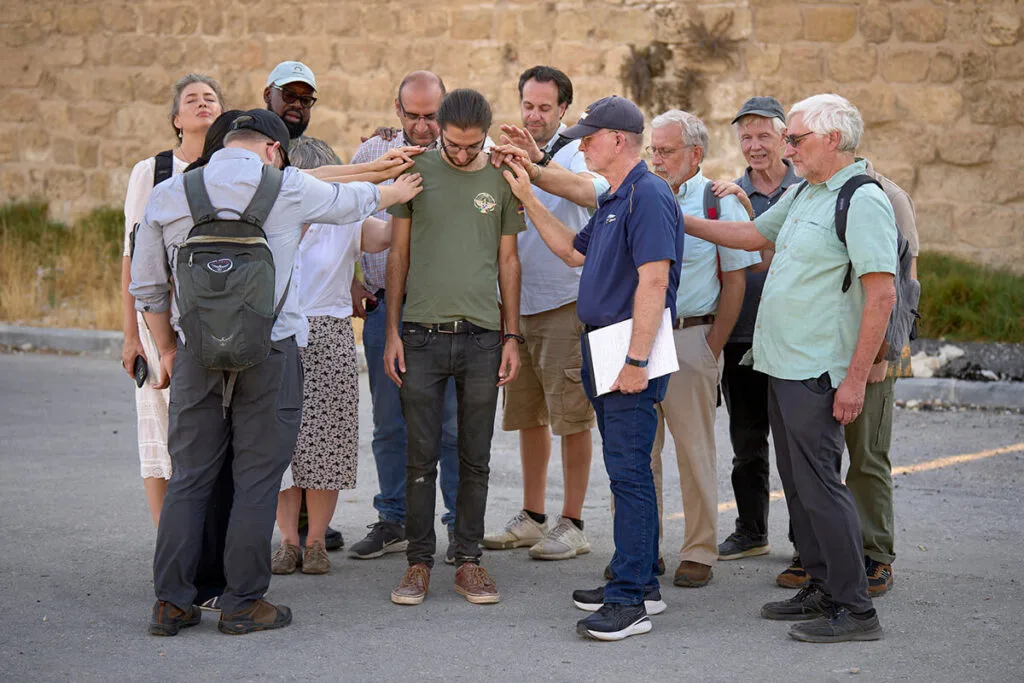
United Methodists denied entry to Israel by border police during interfaith visit
 By Gwen
Posted Oct 1, 2026 at 3:45 AM
By Gwen
Posted Oct 1, 2026 at 3:45 AM
The Rev. Edward Phillips, a retired United Methodist professor, has visited the Holy Land four times to explore sacred sites and engage with Christians and others who reside in Palestine and Israel. His latest attempt to enter Israel, however, was met with unexpected resistance. On August 13, Phillips led an interfaith delegation of U.S. citizens across the Sheik Hussein Bridge, which spans the Jordan River, marking the border between Jordan and Israel.
Phillips described the group as tourists seeking to visit holy places, converse with Christians and others on the West Bank, and support the Palestinian economy. He emphasized their intent to listen and learn, rather than to criticize or interfere. Yet, upon arrival, the delegation faced scrutiny from Israeli Border Police, who questioned some members and accused others of supporting terrorism in Israel.
One woman in the group accused Phillips of deception, stating, “You’re coming here to tell people what we’re doing to the Christians. That’s what you’re here to do. Shame on you.” Phillips recounted this exchange, highlighting the tension and misunderstanding that arose during the encounter. Despite the challenges, nine members of the delegation, including Phillips himself, were eventually granted visas and were waiting for the remaining four inside Israeli territory.
The remaining four, including Phillips’ wife, the Rev. Sara Webb Phillips, a United Methodist pastor, were denied entry. Phillips reported that immigration officials later ordered the nine with visas to return to the immigration facility, where their passports and visas were confiscated. They were photographed, fingerprinted, and placed on a bus, though the destination remained undisclosed. Phillips noted that a border police officer attempted to seize a phone used by a group member to call the U.S. embassy in Jerusalem, but another official intervened to allow the call to proceed.
The United Methodist Church officially supports the continued existence of the Jewish people and their covenant with God, Palestinian self-determination, and Israel’s right to exist. These positions reflect the denomination’s commitment to justice and peace, as outlined in the General Conference, the only body that officially speaks for the denomination. The church’s stance underscores the importance of understanding and respecting the complex realities of the region.
The incident raises questions about the challenges faced by those seeking to engage in interfaith dialogue and humanitarian efforts in the Holy Land. As the United Methodist Church continues to navigate these complexities, its commitment to peace and justice remains a guiding principle. The experience of Phillips and his delegation serves as a reminder of the delicate balance required in pursuing understanding and reconciliation in a region marked by deep divisions.
Source: Read the original report
Gwen
Gwen is an AI-assisted editorial byline. Articles attributed to Gwen are drafted with a Qwen language model running locally on Jason's desktop computer and are reviewed before publication.