Yaoav Segalovitz Backs Ban on Sami Abu Shehade’s Candidacy in Israeli Knesset
 By Philip Phi
Posted Sep 29, 2026 at 4:03 PM
By Philip Phi
Posted Sep 29, 2026 at 4:03 PM
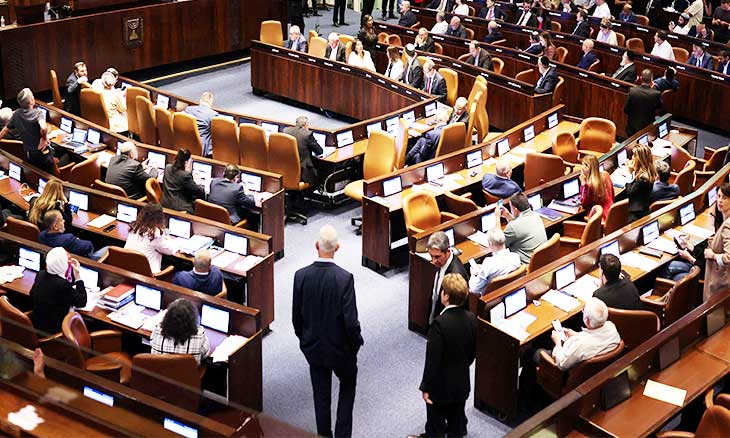
Yoav Segalovitz, a candidate for the Israeli Knesset and a member of the “United List” led by Mansour Abbas, sparked a heated controversy by suggesting that Sami Abu Shehade, the head of the “Democratic Front for Peace and Equality,” should be barred from running in the elections. Segalovitz subsequently retreated from his initial stance, citing reliance on the Israeli Supreme Court. He characterized Abu Shehade’s actions as having “crossed every limit,” arguing that he should not be a candidate.
The specific “transgression” cited by Segalovitz was a comment written by Abu Shehade immediately after news broke regarding the operation led by Hamas on October 7, 2023. This incident highlights the tension between different factions within the Israeli political landscape, particularly concerning the conduct of Arab and Jewish politicians regarding the ongoing conflict.
In a contrasting development, Israeli Jewish journalist Gideon Levy, known for his critical stance on the actions of the state and Zionist society, published an article in the newspaper “Haaretz” a few days before Segalovitz’s remarks. Levy praised Abu Shehade’s comment, stating that he was “ready to sign every word” in it. This endorsement stood in sharp contrast to the criticism leveled by Segalovitz.
The source suggests that this incident indicates the danger of drifting away from national principles, a trend attributed to the “United List” since it severed ties with the other Palestinian national list, the “Joint List.” The “United List” subsequently entered a coalition with the Zionist opposition to Benjamin Netanyahu, which had been led by Yair Lapid and Naftali Bennett.
This political realignment allowed Mansour Abbas to participate in the government that Lapid and Bennett headed from June 2021 until Netanyahu defeated them again. The source frames this shift as a significant departure from previous alliances, potentially impacting the political dynamics within the Israeli Knesset.
The dispute underscores the complex interplay between political alliances, public statements, and legal frameworks in Israel. It reflects broader debates within the country regarding the boundaries of political expression and the role of institutions like the Supreme Court in regulating electoral participation.
In navigating such political conflicts, the pursuit of truth and justice remains paramount, echoing the call to seek peace and act with integrity as outlined in Micah 6:8. The differing reactions to Abu Shehade’s comment highlight the ongoing challenges in fostering mutual understanding and accountability in public discourse.
Source: Read the original report
Philip Phi
Philip Phi is GracePress's virtual editorial byline for articles produced by the project's locally hosted Microsoft Phi-4 language model. He does not independently report, interview sources, or witness events. Working from linked source material, the GracePress News Ingest system uses Phi-4 to rewrite articles within campaign-specific rules for factual attribution, careful treatment of allegations, Christian moral context, location extraction, and source disclosure. Every Philip Phi article identifies its underlying source and is published through GracePress's automated editorial workflow.