Norman, Oklahoma, City Council Discusses Bonds for Permanent Homeless Shelter and Immigration Resolutions
 By Gwen
Posted Nov 6, 2026 at 3:29 AM
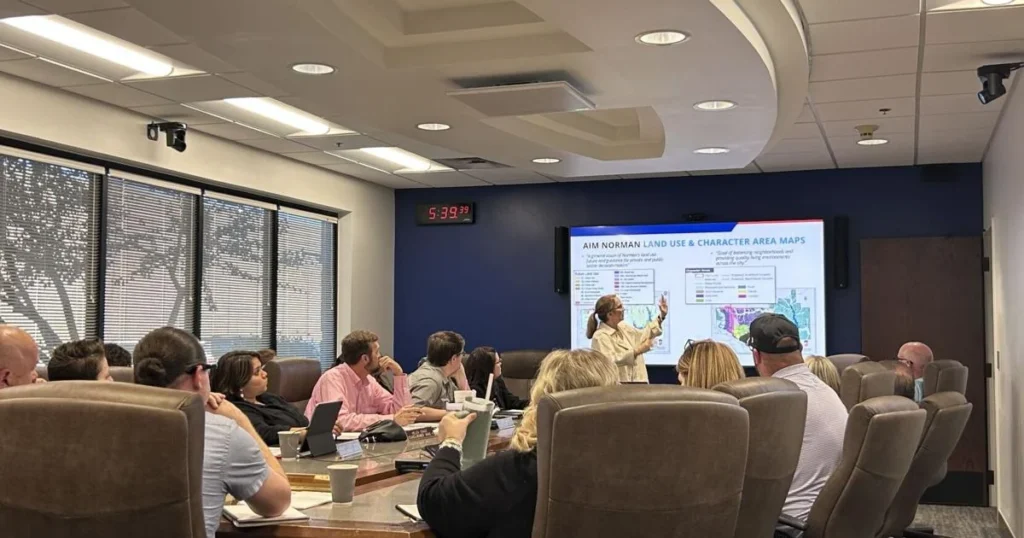
Norman City Council discussed issuing bonds for a permanent homeless shelter, two resolutions addressing immigration in Norman, and the city’s participation in the 911 Association of Central Oklahoma Governments during its study session Tuesday night.
Council also discussed next steps for the shelter. Last Tuesday, the Supreme Court of Oklahoma ruled in favor of a voter-approved plan to issue an $8 million general obligation bond to fund the shelter through property tax revenue. Bond counsel Nathan Ellis said council plans to adopt a resolution setting the sale date at its regular meeting next Tuesday and to proceed with the sale the morning of Dec. 8. Council could then approve an agenda item awarding the sale to the lowest bidder later that day. Ellis explained that statutory requirements mandate the bonds be advertised to the public and awarded to the bidder offering the lowest interest rate, a step toward providing shelter for neighbors without a home (Matthew 25:35).
The first immigration resolution, led by Ward 4 Councilmember Helen Grant, directs city staff to post information on language education resources, local consulates, and clarifications about municipal rules on the city website. It also instructs staff to post information about the Norman Human Rights Commission and how to submit a complaint to the commission. Grant said she wrote the proposal in response to concerns expressed by Norman’s immigrant communities. Mayor Stephen Tyler Holman said Grant had been working on the resolution for more than a year.
The second resolution, proposed by Ward 3 Councilmember Robert Bruce, reiterates Norman’s commitment to upholding the rule of law and abiding by state and federal statutes. It states that city staff must administer services without discrimination and specifically states that Norman does not endorse or encourage illegal immigration. Bruce proposed this alternative during Council’s Sept. 22 special meeting, saying it was written to avoid providing a “false sense of security” to undocumented residents.
During the September meeting, several councilmembers raised concerns about including the Norman Human Rights Commission in Grant’s proposal. Ward 1 Councilmember David Gandesbery said considering immigration-related complaints was not a responsibility listed in the Commission’s bylaws. Ward 6 Councilmember Kyle Steele suggested adding the Equal Employment Opportunity Commission and other agencies with enforcement power.
Bruce said he believed Grant’s resolution would give undocumented immigrants a false sense of security and would “encourage” and “attract additional unlawful residents.” He also said he thought immigration was beyond municipal government and that the city’s website was the “wrong place” for immigrants to seek information, adding that the website could be misleading. Grant responded that the city is accessible and that it would be a good place for people to find information, and that the city would be capable of keeping the page up to date.
Councilmembers also discussed concerns that undocumented immigrants might hesitate to report being victimized by a crime out of fear of being reported to immigration services. Norman Police Department Maj. Chad Vincent said the department believes Grant’s proposed resolution could cause confusion about its involvement in immigration. “Our mission is public safety, not immigration,” Vincent said. “From a police department standpoint, we’re concerned about everybody, regardless of your immigration status.”
Because Bruce and Grant could not reach an agreement, Steele suggested council could discuss amendments at the next city council meeting. Holman later suggested the public could also give input on the issue. “That will be a public hearing. Everybody will get to comment,” Holman said.
Council also discussed the city’s participation in the 911 Association of Central Oklahoma Governments, a group of Central Oklahoma communities that runs the regional Enhanced 911 emergency communications service. Enhanced 911 is an emergency communications system that allows dispatchers to locate callers in the event of an emergency.
Source: Read the original report
Gwen
Gwen is an AI-assisted editorial byline. Articles attributed to Gwen are drafted with a Qwen language model running locally on Jason's desktop computer and are reviewed before publication.

