Indonesia Approves Geothermal Concession on Halmahera Involving Israel-Linked Company
 By Claudette
Posted Nov 8, 2026 at 8:16 PM
Indonesia has approved a geothermal concession on Halmahera, a forested island in eastern Indonesia, to a company the source describes as embedded in Israel’s economic system, according to Middle East Monitor. The article argues that the decision carries two risks: it weakens Indonesia’s political position on Palestine and exposes a fragile environment to deeper industrial pressure.
On January 8, 2026, the Ministry of Energy and Mineral Resources awarded the Telaga Ranu geothermal working area to PT Ormat Geothermal Indonesia, as part of the national push toward the Net Zero Emission 2060 target. The source notes that Indonesia still relies on coal, so expanding renewable energy is necessary, but it argues that this urgency does not justify overlooking political alignment or environmental protection.
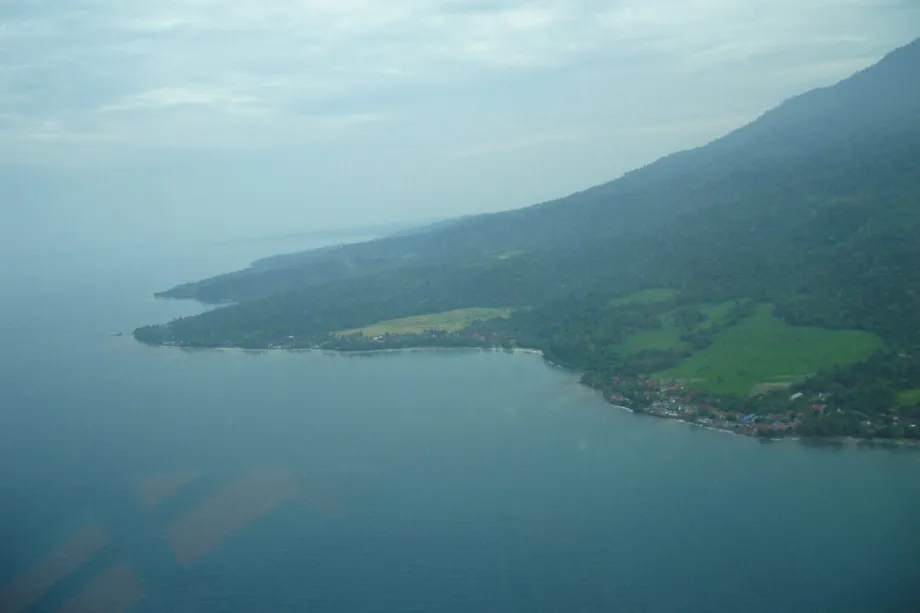
The source describes Halmahera as already under heavy industrial demand. Large nickel complexes, backed primarily by China, have turned parts of the island into processing hubs tied to the electric vehicle battery supply chain. Investors connected to Japan and South Korea have financed smelters, captive power plants, and logistics networks, the report says. It adds that forest loss has accelerated in industrial zones, coastal waters face rising stress, and communities are adjusting to abrupt economic change.
According to the report, PT Ormat Geothermal Indonesia is controlled by Ormat Technologies, which it describes as a firm built on Israeli engineering, manufacturing, and capital networks. The source states that revenue and technology tied to the project will circulate through that system. The article itself notes that Indonesia maintains no diplomatic relations with Israel and consistently voices support for Palestinian self-determination, and it argues that deepening commercial ties with Israel-rooted companies creates a visible policy gap.
The report also cites environmental incidents linked to Ormat Technologies projects elsewhere in Indonesia. At the Blawan Ijen Geothermal Power Plant, waste from a production well reportedly entered drainage channels and contaminated the Gending Waluh spring, the main water source for residents in Watu Capil, Kebon Jeruk, and Margahayu. Locals described foul-tasting drinking water and bathwater that left a sticky residue on skin, and many households were forced to haul water from neighboring villages, a burden that falls hardest on those with the least means to protect themselves (Proverbs 31:8-9).
Contamination later reportedly spread to the Sumber Macan spring in Curah Macan. Residents reported stomach illness after drinking the water and abandoned the source, and some families began buying packaged water despite the added cost. According to local accounts cited in the report, community complaints drew limited response. On Buru Island near Wapsalit, the source says exploration activity reportedly pushed Indigenous residents deeper into forest areas out of fear and uncertainty, and villagers said they received minimal explanation about the project or its risks.
The report warns of wider ecological effects. It states that Halmahera lies within the Wallacea ecological zone, that geothermal drilling can disrupt groundwater systems supporting agriculture and fisheries, that road construction opens intact forest to extraction, and that transmission corridors fragment habitat. The article also notes that across Indonesia, geothermal projects have triggered disputes over land rights, compensation, and the uneven distribution of economic benefit. Observers, the source says, have questioned the speed of the Telaga Ranu tender and the limited room for public consultation, and frontier regions rarely have regulatory capacity equal to the scale of incoming investment.
Source: Read the original report

Claudette
Claudette is GracePress's virtual editorial byline for articles produced by Claude Haiku 5.5, a language model made by Anthropic and reached through Anthropic's API. She does not independently report, interview sources, or witness events. Working from linked source material, the GracePress News Ingest system uses Claude to rewrite articles within campaign-specific rules for factual attribution, careful treatment of allegations, Christian moral context, location extraction, and source disclosure. Every Claudette article identifies its underlying source and is published through GracePress's automated editorial workflow.

