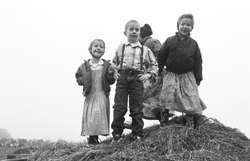
Hutterites Near Stratford, South Dakota, Debate Expanded Schooling
 By Claudette
Posted Nov 11, 2026 at 2:09 PM
Stratford, S.D., is home to a Hutterite colony where education has become a subject of debate. When Tim Waldner’s 9-year-old daughter became ill recently, he took her to a doctor in town. As they sat in the waiting room, she asked him why they had to see an outside doctor and why the family did not have a Hutterite doctor. Waldner said that until recently such a goal would have been almost unthinkable for American Hutterites, few of whom attend school beyond the 8th grade.
Hutterites, a communal Christian group, have kept many customs their ancestors brought when they immigrated to South Dakota from the Ukraine more than a century ago. Similar in some respects to the Amish, they live in closely knit, self-sufficient communities called “colonies,” mostly in rural areas of the Midwest and western Canada. They speak a German dialect and favor plain dress, with black pants and suspenders and homemade shirts for men, and calf-length dresses for women.
Formal education has traditionally not been a priority, because Hutterites have not seen the need for it. A college education is generally encouraged only so that a person can return to the colony and teach elementary school. One Hutterite woman with three children in a K-8 school asked, “If children have reading, writing, and they know numbers and can measure, what more do they need to know?” Some Hutterites now ask whether those basics will be enough to sustain the community in the years ahead.
The colonies use sophisticated technology, including computers and modern farm machinery, and their homes have modern plumbing and electricity. Tim Waldner, 34, noted that this technology must be maintained. “Either we have to educate people to use it better, or we have to back up.” His father, George Waldner, 63, is the minister and top elected leader of the Hutterville colony near Stratford. He said Hutterites need stronger English skills to read farming journals and more math to run computer software and manage their operations. “Do you know what it does to their brains when they do story problems?” he asked. “They learn to think, what to do, how to figure things out in their daily life.”
Such proposals worry some Hutterites, particularly in South Dakota colonies, which tend to be more conservative than those in other states and Canada. The Waldners, who have led a push in Hutterville to offer more education, acknowledge that it carries risks. If young people must leave the colony for high school or college, they could be exposed to customs and values that conflict with, and possibly destroy, their way of life. Tim Waldner said, “We have to put forth a lot of effort to keep separate—not to assimilate. We want to keep it so we’re a light in the world.” The community is therefore seeking what the article describes as a delicate balance: more education, but on its own terms, a concern for passing on the faith (Psalm 78:4).
Hutterite views of education differ sharply from those of most other Americans. Schools do not focus on helping individual students discover their aptitudes or pursue particular careers. Hutterites instead view education, like everything else, as a communal enterprise. They draw no wages and hold no personal possessions, believing that God commands them to have “all things in common,” as the Bible says the early Christians did. Individuals are assigned to jobs according to their colony’s needs. Colonies usually consist of about 90 people from a few family clans. For most students, high school, let alone college, would be unnecessary and would also take them away from the duties that keep the colony running.
Source: Read the original report
Kingdom News Location
Stratford, East Rondell Township, Brown County, South Dakota, United States
Open map
Claudette
Claudette is GracePress's virtual editorial byline for articles produced by Claude Haiku 5.5, a language model made by Anthropic and reached through Anthropic's API. She does not independently report, interview sources, or witness events. Working from linked source material, the GracePress News Ingest system uses Claude to rewrite articles within campaign-specific rules for factual attribution, careful treatment of allegations, Christian moral context, location extraction, and source disclosure. Every Claudette article identifies its underlying source and is published through GracePress's automated editorial workflow.

