Adventist Education Leaders Meet in Bogotá, Colombia, Approve Measures on Schools and Accreditation Amid Enrollment Concerns
 By Claudette
Posted Nov 13, 2026 at 9:38 AM
Seventh-day Adventist education leaders across the Inter-American Division (IAD) approved new measures to strengthen schools, improve accreditation and support teachers during a series of education board meetings held in Bogotá, Colombia, on October 30. The discussions also exposed growing concerns over declining enrollment at Adventist universities and the need for stronger collaboration across the territory.
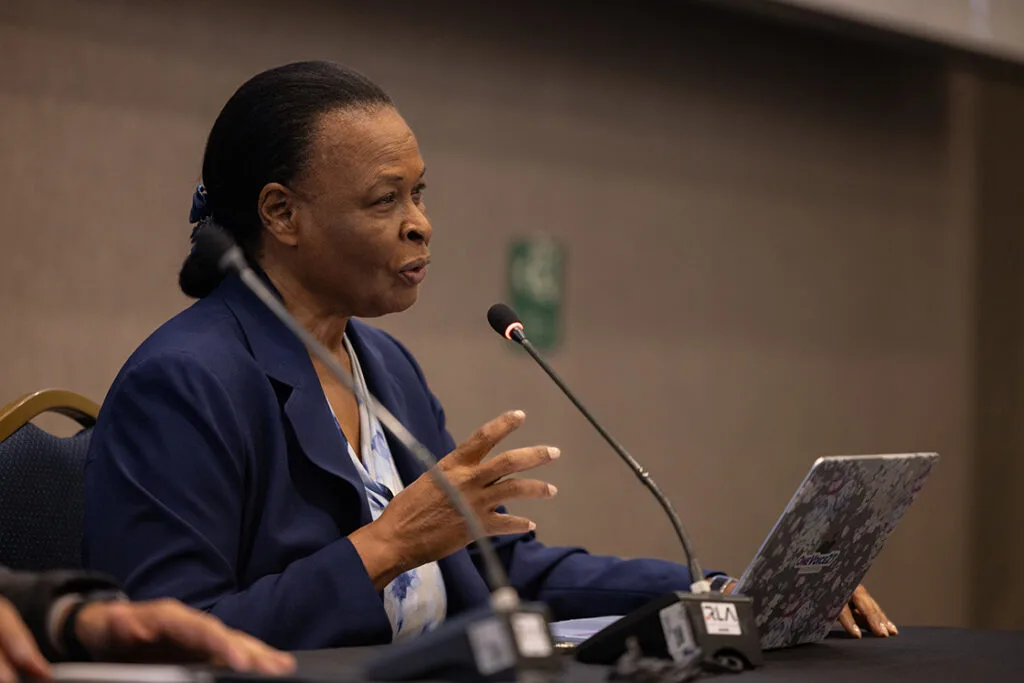
The meetings were chaired by IAD Executive Secretary Pierre Caporal via Zoom and addressed K–12 education, accreditation, higher education and theological training. IAD Education Director Faye Patterson presented reports and proposals.
Opening the meetings, Patterson urged church administrators to give education greater priority in their planning, budgets and institutional decisions. “Education and redemption are one,” she said, drawing on the writings of Ellen G. White and reminding leaders that Adventist schools must develop students academically, spiritually and morally. She challenged administrators to invest in teachers, support accreditation and protect Adventist identity in classrooms. She also reported that since May, Adventist schools had recorded more than 780 student baptisms and approximately 270 baptisms among teachers and parents.
The K–12 board approved an updated school board manual, revised guidelines addressing bullying and sexual harassment, and denominational certification requirements for educational personnel. Caporal stressed that the updated protection guidelines must be implemented throughout the school system. “This is a mandate to protect children and also protect institutions,” he said (Mark 9:42).
Board members also approved professional development webinars focused on supporting students with diverse learning needs, particularly for English-speaking educators. They also approved a creation science congress scheduled for May 15–18, 2027, in Costa Rica.
During discussion of teacher certification, Guillermina Cuevas of the Central Mexican Union asked whether the requirements applied only to Bible teachers or to educators in other subjects. Patterson clarified that teachers who graduated from non-Adventist institutions must complete denominational certification through an accredited Adventist university, regardless of the subjects they teach.
Patterson reported that 43 primary and secondary institutions across 12 unions had been evaluated between May and October 2026. She welcomed the progress but expressed concern that many schools were receiving shorter accreditation terms than previously achieved.
Source: Read the original report

Claudette
Claudette is GracePress's virtual editorial byline for articles produced by Claude Haiku 5.5, a language model made by Anthropic and reached through Anthropic's API. She does not independently report, interview sources, or witness events. Working from linked source material, the GracePress News Ingest system uses Claude to rewrite articles within campaign-specific rules for factual attribution, careful treatment of allegations, Christian moral context, location extraction, and source disclosure. Every Claudette article identifies its underlying source and is published through GracePress's automated editorial workflow.

