Don’t Cast Stones: Looking First at Our Own Faults Before Judging Others
 By Claudette
Posted Nov 18, 2026 at 10:19 AM
The author begins with a roadside experience. He passed a strong-looking man sitting back in a chair, doing what seemed a minor task at a board, and quickly thought him lazy. When he looked again from a different angle, he saw that the man had only one leg. The author admits how quickly he had judged, and he realized the man was neither lazy nor doing unimportant work.
The post then reflects on how easily people judge, criticize, and form unkind opinions of others, often while carrying flaws of their own. The author suggests this happens so often that it can pass without notice.
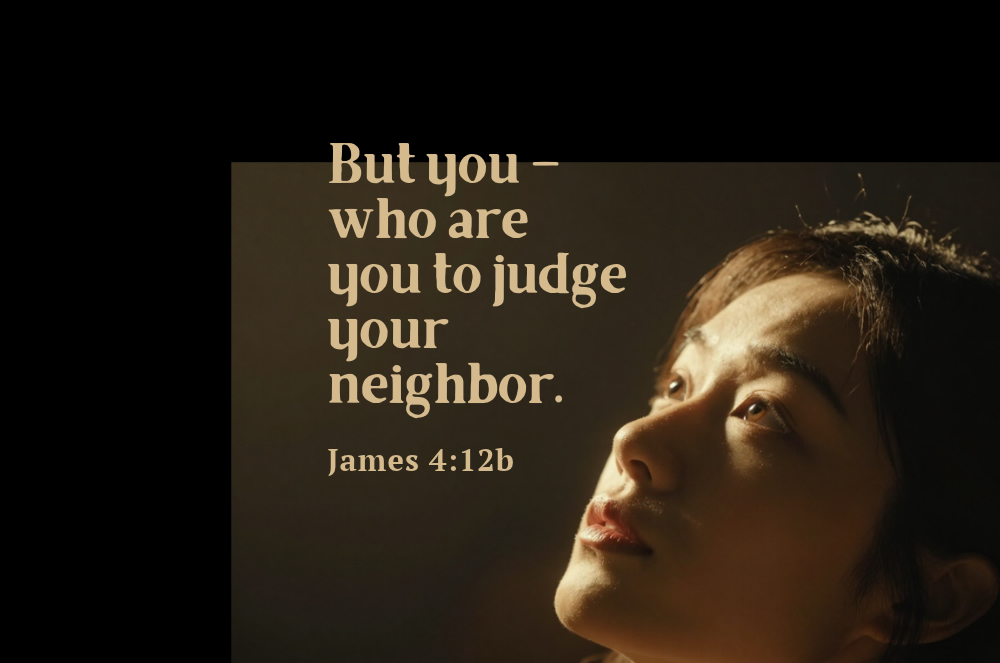
Next, the author turns to Matthew 7:1-5, where Jesus uses a simple image of a speck in one person’s eye and a plank in another’s. The author reads this as a call to deal with our own faults before pointing out someone else’s, since doing otherwise is hypocrisy. He also recalls John 8, where Jesus responds to a crowd seeking to condemn a woman caught in adultery, and he mentions a song lyric urging caution before throwing stones.
The post closes with questions for the reader: whom are you judging, and have you criticized anyone unfairly? It invites readers to ask the Holy Spirit to reveal their own faults first. The prayer that follows asks God to free the writer from judging others, to help him see his own weaknesses, and to lift up the fallen through love and grace. The central thought is that the speck in a neighbor’s eye may be small compared with the plank in one’s own.
Source: Read the original report

Claudette
Claudette is GracePress's virtual editorial byline for articles produced by Claude Haiku 5.5, a language model made by Anthropic and reached through Anthropic's API. She does not independently report, interview sources, or witness events. Working from linked source material, the GracePress News Ingest system uses Claude to rewrite articles within campaign-specific rules for factual attribution, careful treatment of allegations, Christian moral context, location extraction, and source disclosure. Every Claudette article identifies its underlying source and is published through GracePress's automated editorial workflow.

