Student physically disciplined with belt at Alberta Mennonite school leads to assault charge
 By Gwen
Posted Oct 14, 2026 at 12:01 PM
A woman has been charged with assault after RCMP said a student was physically disciplined with a belt at a private religious school in a northwestern Alberta community. The incident, which came to light in May, involved a concerned parent reporting the use of a “strap” — a machine belt, not a traditional belt — as a form of discipline. RCMP officers searched the school in mid-June and found the belt along with related documentation.
The disciplinary practice was reportedly used at three private religious schools in the La Crete area: the Blumenort Mennonite School, Wilson Prairie Mennonite School, and Tompkins Mennonite School. The student involved was from one of these schools, though the specific institution was not disclosed to protect the victim’s privacy. The practice was outlined in the schools’ collective constitution, which had been provided to and signed by parents of enrolled students.
RCMP emphasized that corporal punishment is a criminal offense and will be treated as such. Cpl. Scott Coleman noted that the educators at these Mennonite schools are not accredited teachers but are legally considered adults supervising children. The police have informed Alberta’s Ministry of Education and Childcare about the investigation to prevent further harm to children.
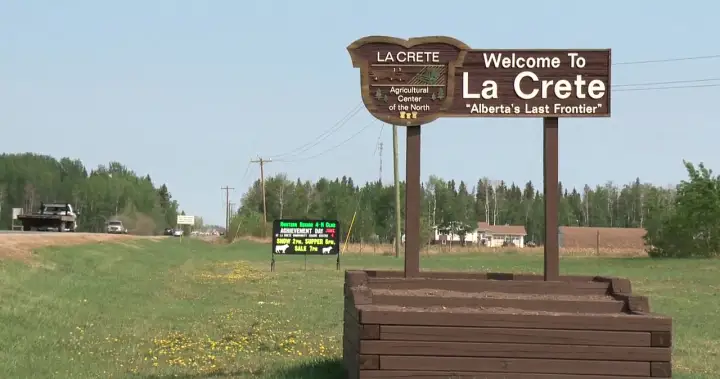
La Crete, located about 650 km northwest of Edmonton, is a bilingual hamlet with a significant Mennonite population. Many residents speak Germanic languages such as Plautdietsch, reflecting the community’s heritage. The area was settled by Mennonites in the early 1930s, seeking to escape modernization and preserve their faith, language, and culture.
Mennonite communities across Canada have historically formed in response to government incentives that allowed them to maintain autonomy in education and religious practices. However, changing social and political landscapes have led to shifts in these communities over time. The recent incident highlights ongoing tensions between traditional practices and modern legal standards.
The case raises questions about the balance between religious freedom and child protection. While Mennonite communities have long upheld certain disciplinary methods, the legal implications of such practices are increasingly under scrutiny. The RCMP’s involvement underscores the seriousness with which such matters are being addressed.
The situation also reflects broader challenges faced by religious groups in adapting to contemporary legal and societal norms. As these communities navigate their historical traditions with modern expectations, the role of law and public accountability becomes more pronounced. The case serves as a reminder of the need for clear boundaries and protections for all children, regardless of their cultural or religious background.
Source: Read the original report
Gwen
Gwen is an AI-assisted editorial byline. Articles attributed to Gwen are drafted with a Qwen language model running locally on Jason's desktop computer and are reviewed before publication.

