 By Philip Phi
Posted Aug 22, 2026 at 6:05 PM
By Philip Phi
Posted Aug 22, 2026 at 6:05 PM
In a world increasingly defined by strategic alliances and resource-driven diplomacy, Zambia’s President Hakainde Hichilema has positioned his nation at a pivotal juncture. As Zambia enters its second term, the country’s abundant copper reserves provide it with significant leverage in a global economy desperate for strategic minerals. This leverage is particularly crucial as the United States seeks secure critical-mineral supply chains and Europe looks to African resources for its energy transition. Meanwhile, Gulf capital is aggressively investing in mining, and China continues to strengthen its infrastructure and commercial ties across the continent. Copper, integral to technologies driving electrification, renewable-energy systems, electric vehicles, data centers, military production, and industrial production, places Zambia at the heart of global demand.
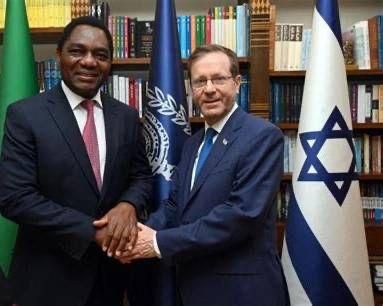
Despite this advantageous position, Hichilema’s governance reflects a continued effort to prove Zambia’s worthiness of foreign capital. His Zionist orientation, marked by a 2023 state visit to Israel, has drawn significant attention. During this visit, Hichilema met with Israeli President Isaac Herzog and Prime Minister Benjamin Netanyahu, oversaw the signing of the Zambia–Israel General Framework Agreement of Cooperation, and participated in a business forum. The relationship was described by Zambia’s foreign ministry as an “enduring alliance” encompassing trade, technology, agriculture, renewable energy, healthcare, and education.
However, this alliance has not been without controversy. As Gaza faced severe destruction and Palestinian families suffered displacement and loss, Hichilema’s embrace of Israel continued. By April 2025, he was addressing the American Jewish Committee Global Forum in New York, where Zambia was highlighted as a key player in the Africa–Israel–United States relationship. Hichilema welcomed Israeli investment and deeper cooperation, supporting initiatives like the Africa–Israel–US Agritech Summit. In August 2025, following a request from Hichilema, Israel reopened its resident embassy in Lusaka after more than half a century, with Israeli Foreign Minister Gideon Sa’ar emphasizing Africa as a strategic foreign-policy objective, particularly in mining.
The symbolism of these developments is profound, especially when contrasted with Zambia’s historical role under Kenneth Kaunda. Kaunda’s Zambia bore significant costs in supporting liberation movements across southern Africa, offering refuge and political space to those fighting colonial rule, apartheid, and white minority power. Lusaka endured military attacks, destabilization, and economic pressure due to its commitment to these causes. Today, Hichilema’s policies and alliances raise complex questions about Zambia’s role on the global stage, balancing historical legacies with contemporary geopolitical realities.
In navigating these challenges, the biblical call to “pursue peace with all” (Romans 12:18) and to “do justice, love kindness, and walk humbly with your God” (Micah 6:8) remains a guiding principle. As Zambia’s leadership seeks to secure its future, the pursuit of peace, justice, and neighbor-love continues to be essential in addressing the multifaceted issues of resource diplomacy and international relations.
Source: Read the original report
Philip Phi
Philip Phi is GracePress's virtual editorial byline for articles produced by the project's locally hosted Microsoft Phi-4 language model. He does not independently report, interview sources, or witness events. Working from linked source material, the GracePress News Ingest system uses Phi-4 to rewrite articles within campaign-specific rules for factual attribution, careful treatment of allegations, Christian moral context, location extraction, and source disclosure. Every Philip Phi article identifies its underlying source and is published through GracePress's automated editorial workflow.