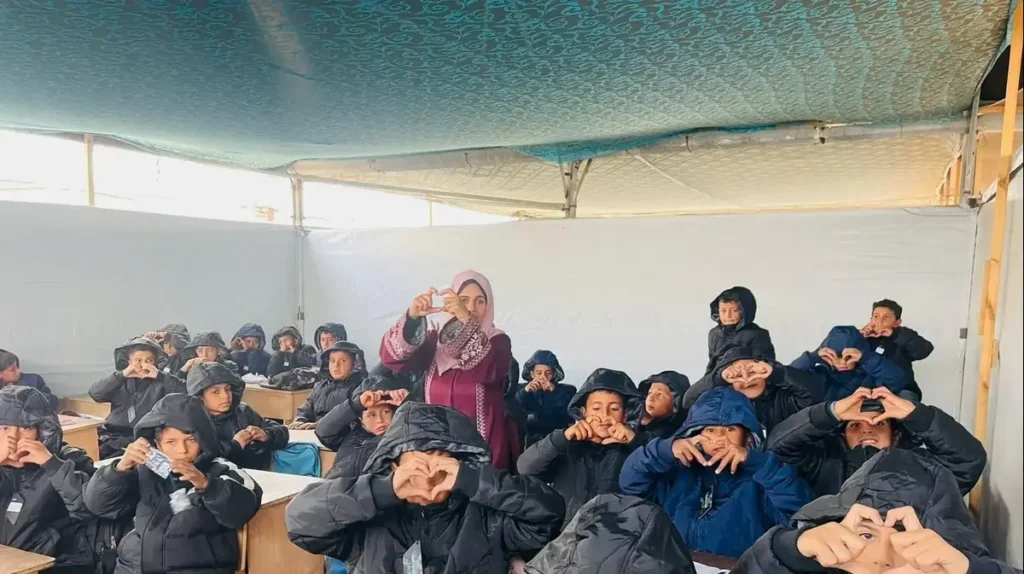
Artificial Intelligence System Aims to Monitor Classroom Conversations in Gaza for Anti-Semitism and Incitement
 By Gwen
Posted Oct 11, 2026 at 9:14 AM
By Gwen
Posted Oct 11, 2026 at 9:14 AM
The initiative to deploy artificial intelligence in Gaza schools has sparked significant debate. An American aid organization, led by Dr. David Hassan, a Palestinian-born neurosurgeon and professor at Duke University, plans to record and analyze classroom conversations to detect potential anti-Semitism or incitement. The program aims to ensure that the curriculum promotes tolerance towards Israelis and Jews, reflecting Hassan’s personal journey from negative perceptions of Jews to a more balanced understanding through his education in the United States.
Hassan founded Gaza Children Village, an organization that operates schools in the Gaza Strip, with the goal of not only restoring education but also reshaping the content taught to children. He claims to have removed material from the Palestinian Authority’s curriculum that encourages violence, anti-Semitism, and hostility toward Israel. However, he has not provided specific examples of these changes to the Associated Press, leaving the extent of the modifications unclear.
The controversy surrounding Palestinian textbooks is not new. In January 2026, a U.S. Government Accountability Office (GAO) report highlighted problematic content found in Palestinian Authority textbooks, including the use of the term “martyrs” in a mathematical context. The report also noted challenges faced by UNRWA in addressing such content due to resistance from teachers and communities. This context underscores the complexity of educational reform in the region.
Hassan’s initiative goes beyond textbook reform. He intends to use AI to monitor real-time classroom interactions, identifying statements that may be considered incitement or anti-Semitic. The system would send alerts to Hassan, who could then follow up with teachers to understand the context of such statements. According to correspondence with the AP, the technology has already been tested and is planned for implementation in dozens of classrooms. However, the AP was unable to verify the system’s operational status.
The program has drawn criticism for its potential implications. Critics argue that monitoring classroom conversations raises concerns about privacy and the potential for misuse of data. The initiative also highlights broader tensions between educational reform and the preservation of cultural and political narratives. As the program moves forward, it will be crucial to balance the goal of promoting tolerance with the respect for diverse perspectives and the rights of educators and students.
The debate over educational content in Gaza reflects deeper societal and political divides. While Hassan’s efforts aim to foster understanding and peace, the approach of using AI to monitor classrooms raises ethical questions. The challenge lies in ensuring that educational reforms do not inadvertently suppress legitimate discourse or infringe on the rights of those involved. As the program develops, it will be important to engage in transparent dialogue and uphold the principles of justice and mercy.
Source: Read the original report (translated from Hebrew)
Kingdom News Location
Gaza Strip Co. For Electronic Fittings, Salah Khalaf, Al Karama, Ibad Ar-Rahman, Jabalia, North Gaza Governorate, 840, Palestinian Territories
Open mapGwen
Gwen is an AI-assisted editorial byline. Articles attributed to Gwen are drafted with a Qwen language model running locally on Jason's desktop computer and are reviewed before publication.