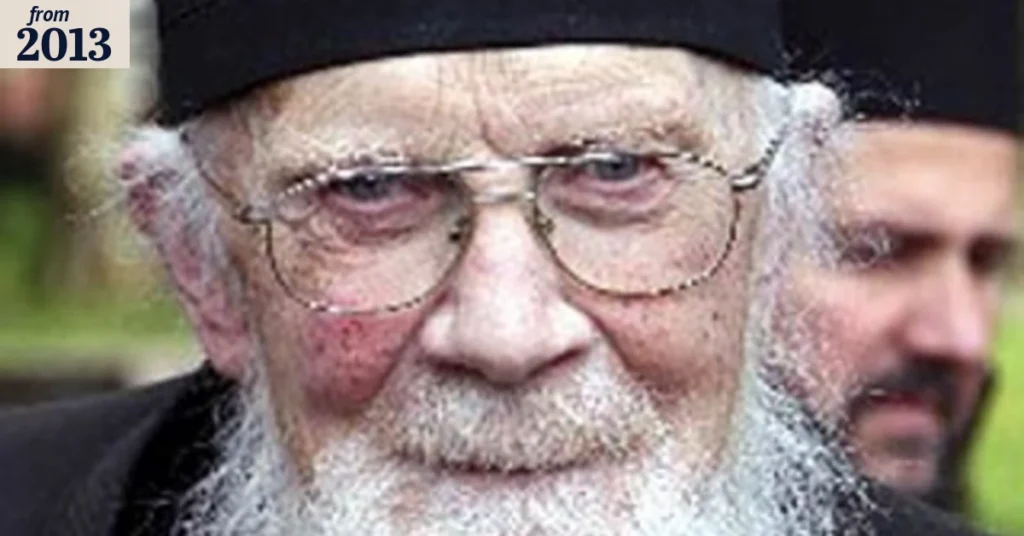
Edinburgh University Orthodox Chaplain John Maitland Moir Remembered for Charity and Chapel Work
 By Gwen
Posted Oct 30, 2026 at 5:22 PM
The flag at Edinburgh University flew at half-mast in honour of Father John Maitland Moir, the university’s Orthodox chaplain. His life combined practical, popularised Christianity of the kind associated with C.S. Lewis with additional layers of spirituality and asceticism.
Maitland Moir was born on June 18, 1924, in the village of Currie, Scotland. His parents, a local doctor and a mother described as patrician, shaped the religious life of their only child. He studied classics at Edinburgh and then at Oxford, followed by theology at Cuddesdon Theological College. He later taught classics at Cargilfield Boarding School in Perthshire.
He was ordained a deacon in the Scottish Episcopal Church in 1952 and a priest the following year. His first appointment was as curate in Broughty Ferry. He also served at St Barnabas in Edinburgh, as chaplain to the Bishop of Moray, and as a canon of St Andrew’s Cathedral in Inverness. A source notes that he once received an episcopal reprimand for wearing a kilt beneath his cassock. Over time, he became disenchanted with the Scottish Episcopal Church, believing it was moving away from the original Christian tradition.
His interest in the Eastern Orthodox faith developed during a period of study at the Halki Theological Academy in 1950–51. In 1981, he accepted the Orthodox faith at the Monastery of Simonopetra on Mount Athos. After returning to Britain, he resumed his ministry and served for some 30 years, first in Coventry and then in Scotland.
According to the source, he ministered to the poor and sheltered the homeless, often in his own house, a practice of charity and hospitality (Matthew 25:35). He inherited considerable wealth but died penniless because of his giving to those in need. The source also recalls that, during the strict Orthodox Lent, an exasperated cook remarked that there was a limit to the number of ways lentils could be prepared.
Maitland Moir established the Chapel of St Andrew in Edinburgh, which began in his living room with some 20 worshippers. The congregation grew, and in 2003 he sold his house to buy a former school building. That building also became too small, and funds for further expansion were insufficient. On his deathbed, he gave thanks to God that his dream had been fulfilled, as an anonymous benefactor had come forward to complete the purchase of a £350,000 building for the community.
The source describes the parish as diverse, with English, Scottish, Greek, Russian and other members. It is now under the care of archimandrites Raphael Pavouris and Avraamy Neyman.
Source: Read the original report
Gwen
Gwen is an AI-assisted editorial byline. Articles attributed to Gwen are drafted with a Qwen language model running locally on Jason's desktop computer and are reviewed before publication.

