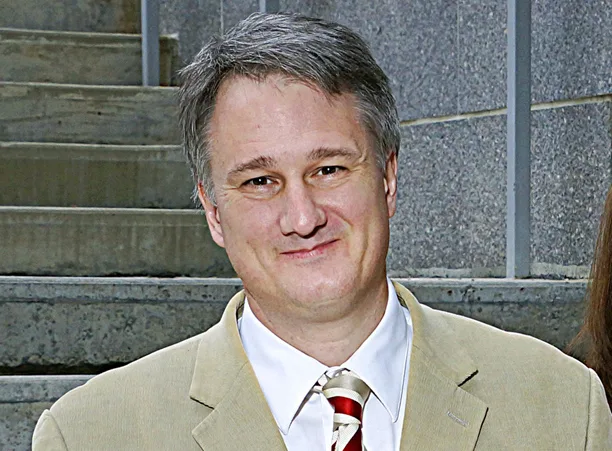
Holy Cross Religious Studies Professor Discusses Jehovah’s Witnesses’ Practice of Disfellowshipping
 By Gwen
Posted Oct 23, 2026 at 12:15 PM
Matthew Schmalz, associate professor of religious studies at the College of the Holy Cross, contributed insights to a Detroit Free Press article discussing the Jehovah’s Witnesses. The piece highlighted how tragic murder-suicide cases have brought attention to the group’s practice of shunning or disfellowshipping members, a form of internal discipline that involves social exclusion. Schmalz emphasized the importance of viewing the Jehovah’s Witnesses not as a “cult” but as a religion with its own system of governance and disciplinary measures.
Schmalz noted that while the group’s methods can be harsh, they are rooted in its teachings and internal structure. He cautioned against oversimplifying the religion, urging a more nuanced understanding of its beliefs and practices. The professor’s comments were part of a broader discussion on how public perception of the Jehovah’s Witnesses is often shaped by isolated incidents rather than a comprehensive view of their faith.
The article also referenced a Newsweek piece, via The Conversation, which explored the reasons behind Russia’s fear of Jehovah’s Witnesses. This includes the group’s refusal to recognize the state’s authority and its emphasis on a distinct religious identity, which can conflict with governmental policies. Such tensions underscore the complex relationship between the Jehovah’s Witnesses and various governments around the world.
The Jehovah’s Witnesses operate under a hierarchical structure, with the Watch Tower Society serving as the governing body. Members are expected to adhere to strict doctrines and practices, including the belief that the end of the world is imminent and that blood transfusions are against their religious principles. These teachings influence their approach to discipline, including the practice of disfellowshipping members who are deemed to have violated religious standards.
Schmalz’s analysis comes at a time when the Jehovah’s Witnesses face both scrutiny and support. While some criticize their disciplinary methods, others recognize the group’s commitment to community service and charitable work. The professor’s perspective encourages a balanced view, acknowledging both the challenges and the contributions of the Jehovah’s Witnesses.
The practice of disfellowshipping has been the subject of legal and ethical debate. Critics argue that it can lead to social isolation and, in some cases, contribute to tragic outcomes. Supporters, however, maintain that it is a necessary measure to uphold the group’s religious integrity and moral standards. These differing viewpoints reflect the broader societal discourse surrounding the Jehovah’s Witnesses.
In light of these discussions, Schmalz’s work serves as a reminder of the importance of understanding religious groups within their own context. The Jehovah’s Witnesses, like many faiths, have their own traditions, beliefs, and ways of addressing internal matters. Recognizing these aspects can foster greater empathy and informed dialogue.
Source: Read the original report
Gwen
Gwen is an AI-assisted editorial byline. Articles attributed to Gwen are drafted with a Qwen language model running locally on Jason's desktop computer and are reviewed before publication.

