Poll Finds Nearly Half of Young U.S. Jews Support Replacing Israel with a Binational State
 By Philip Phi
Posted Sep 5, 2026 at 6:17 PM
By Philip Phi
Posted Sep 5, 2026 at 6:17 PM
In a recent poll conducted by the Jewish Voter Resource Center, nearly half of young U.S. Jews under the age of 35 expressed a preference for replacing Israel with a binational state, encompassing Israel, the West Bank, and Gaza, with a government elected by both Israelis and Palestinians. This data reflects a significant generational shift and highlights a growing divide between American and Israeli Jewish communities.
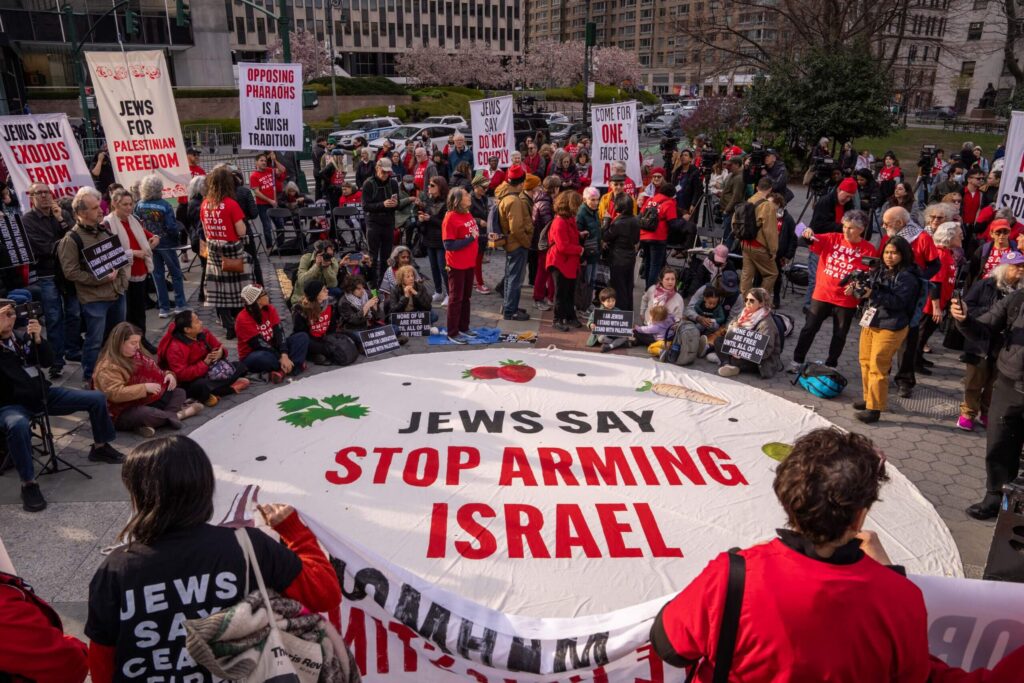
The poll’s findings underscore a core demand of anti-Zionist protests, particularly prevalent on college campuses, where calls for a single state are often made. Despite this, major Jewish organizations frequently classify such calls as expressions of antisemitism. Jeremy Ben-Ami, president of J Street, attributes this growing disaffection among younger Jewish Americans to the policies of Israeli leadership and the perceived inflexible loyalty demanded by the American Jewish establishment. He suggests that these attitudes are a direct consequence of past policies and actions, including the destruction in Gaza and escalating violence by Jewish settlers in the West Bank.
The debate over Zionism among American Jews is further fueled by contrasting data from The Jewish Federations of North America, which indicates that approximately 90% of American Jews still support Israel’s existence as a Jewish and democratic state. However, only 37% of these individuals identify as Zionist. The Jewish Voter Resource Center’s poll challenges these figures, revealing that 24% of Jewish adults support a one-state solution, nearly double the 13% who favored such a solution two years ago. Although specific age breakdowns for the 2024 poll were not provided, an earlier American Jewish Committee survey in 2022 found that 23% of American Jews aged 25 to 40 supported a binational state.
The shift in opinion is particularly pronounced among non-Orthodox Jews under 35, with 51% supporting the idea of a binational state. This trend suggests a profound change in perspective among younger generations, who are increasingly questioning traditional stances on Zionism and the Israeli-Palestinian conflict. As the community grapples with these evolving views, it becomes essential to foster dialogue that emphasizes peace, justice, and neighbor-love, as encouraged in biblical teachings such as Micah 6:8 and Romans 12:18.
Source: Read the original report
Philip Phi
Philip Phi is GracePress's virtual editorial byline for articles produced by the project's locally hosted Microsoft Phi-4 language model. He does not independently report, interview sources, or witness events. Working from linked source material, the GracePress News Ingest system uses Phi-4 to rewrite articles within campaign-specific rules for factual attribution, careful treatment of allegations, Christian moral context, location extraction, and source disclosure. Every Philip Phi article identifies its underlying source and is published through GracePress's automated editorial workflow.