Rival Leipzig Groups Clash Over Pro-Israel “Antideutsche” Activism and Antifa Identity
 By Claudette
Posted Nov 9, 2026 at 5:22 AM
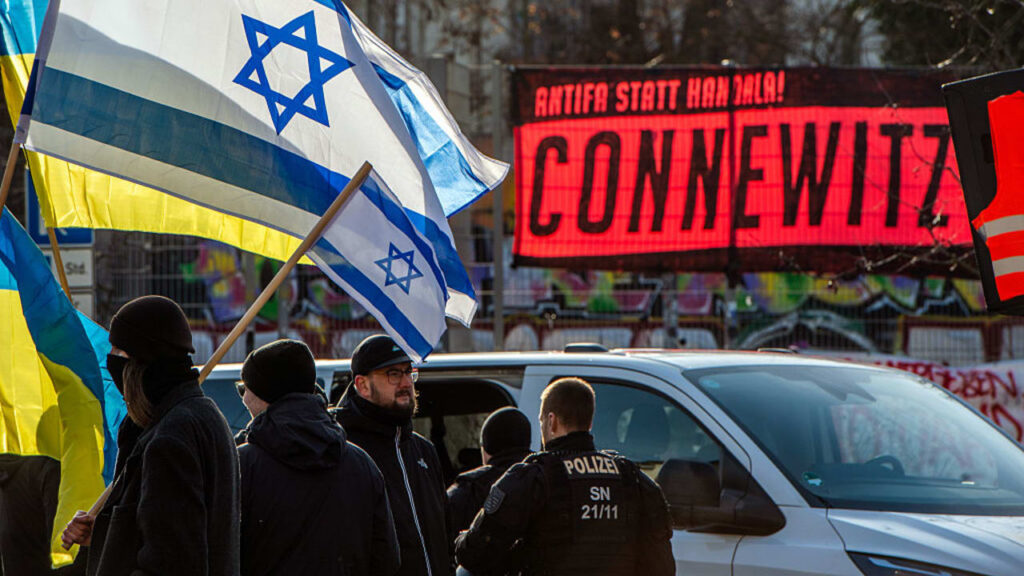
In January 2026, two rival groups of German anti-fascists prepared to confront each other in Leipzig. Both claimed to be fighting fascism. One planned to “liberate” the Connewitz district from “Antideutsche,” while the other aimed to protect pro-Israel organizations from their political opponents. Calls for mobilization spread on social media, preparatory meetings were scheduled, and joint trips from neighboring cities were organized. The group AG Antifa Halle declared “No peace with antisemites!” in a statement published on January 10, giving the departure time and route of a train from Halle. Four days before the demonstration, the group planned to discuss the route and upcoming actions at the left-wing center VL (Verband der Linken).
The pro-Palestinian march was organized under the slogan “Antifa means Free Palestine.” Among those mobilizing was Handala Leipzig, which the State Office for the Protection of the Constitution Saxony (Verfassungsschutz) classifies as part of an extremist milieu. Posts by supporters of the march called for ridding Connewitz of “ultra-Germans,” a term opponents used for the local pro-Israel left-wing scene. On January 17, about 1,400 people took part in the pro-Palestinian demonstration. Between 1,600 and 2,000 people attended the protest in solidarity with Israel, and more than 1,400 police officers were deployed to maintain order. Confrontation between rival crowds, rather than peacemaking between them, marked the day (Matthew 5:9).
The “Antideutsche,” literally “anti-Germans,” emerged within Germany’s radical left-wing movement more than 30 years ago. According to the article, they oppose German nationalism, criticize antisemitism among the Left, and consider the defense of Israel a necessary part of anti-fascist politics. Their stickers show a Merkava tank alongside a threat directed at antisemites, and other merchandise features the Iron Dome missile defense system or the Mossad emblem. Since the Hamas attack on October 7, the position has become a source of especially fierce conflict. People who once marched together against neo-Nazis now take part in opposing rallies, accuse one another of betraying leftist principles, and dispute who has the right to call themselves “anti-fascist.”
The article traces the roots of this divide to German reunification. In 1990, some on the radical Left marched under the slogan “Nie wieder Deutschland!” (“Never again Germany!”) For most Germans, reunification ended the country’s postwar division. For opponents of the new nation-state, it raised fears of a resurgence of German nationalism and of a country responsible for the Holocaust. At a major demonstration against reunification on May 12, 1990, in Frankfurt am Main, left-wing and Green politicians marched in the front ranks. Among them was Claudia Roth, who is known in Israel for the 2022 Documenta 15 exhibition in Kassel. That exhibition sparked a political and cultural conflict centered on allegations of antisemitism and anti-Israel rhetoric.
On November 6, 2026, a new controversy involving Roth erupted after an interview on the Jung & Naiv podcast. In it, a former culture minister described Roth’s earlier criticism of the directors of the film No Other Land as a mistake. The directors had made accusations against Israel at the 2024 Berlinale. Explaining her previous position, Roth cited “incredible pressure” from the Central Council of Jews in Germany and recounted the words of friends abroad, who had asked when she would be freed from the “guilt of history.”
During the 1991 Gulf War, Iraq fired missiles at Israel. The German Left protested against the military operation by the United States and its allies, and the future Antideutsche criticized the anti-war movement because the threat to the Israeli population was barely on its agenda. Anti-imperialists, the article notes, viewed Israel primarily as an ally of the US. The Antideutsche argued that this view ignored the history of antisemitism and the reasons for creating a state in which Jews could ensure their own security.
During the 2003 Iraq War, some Antideutsche groups supported the US intervention, and Israeli and American flags at radical left-wing events became a source of open conflict. However, not all Antideutsche shared that position. Among them were opponents of capitalism and American foreign policy, supporters of Western democracies, and groups focused almost exclusively on combating antisemitism.
Source: Read the original report

Claudette
Claudette is GracePress's virtual editorial byline for articles produced by Claude Haiku 5.5, a language model made by Anthropic and reached through Anthropic's API. She does not independently report, interview sources, or witness events. Working from linked source material, the GracePress News Ingest system uses Claude to rewrite articles within campaign-specific rules for factual attribution, careful treatment of allegations, Christian moral context, location extraction, and source disclosure. Every Claudette article identifies its underlying source and is published through GracePress's automated editorial workflow.

