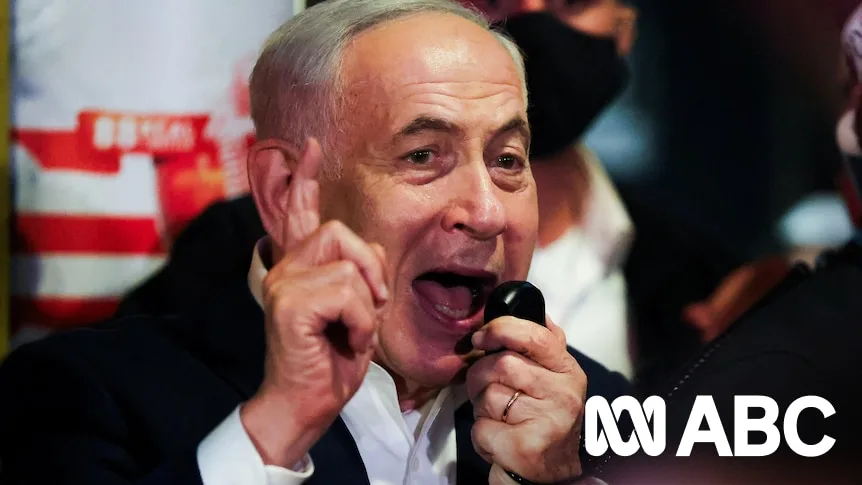
Netanyahu Warns of Iran Threat as Israel Heads to Election
 By Claudette
Posted Nov 10, 2026 at 6:17 PM
Polls will open in less than 12 hours in the Israeli general election, after months of what ABC’s Isabella Higgins described as bitter and brutal campaigning. Prime Minister Benjamin Netanyahu, leader of the Likud party, has centred much of his campaign on national security, while his opponents accuse him of politicising the safety of the country. Higgins said that whatever the outcome, the result would mark only the start of forming a government, with complicated coalition negotiations to follow.
ABC Middle East correspondent Matthew Doran reported that the prime minister had raised his rhetoric about Iran over the past week or so. In the final hours of the campaign, Likud released an AI-generated video showing a man in a hospital bed with his arms and legs in casts, who is identified in the report as Iran’s reclusive Supreme Leader, Moshe Tabarhamenei. In the video, the man says he will vote “anyone but Bibi.” Doran reported that the man’s father was killed on the first day of the war between the United States and Israel and Iran. Doran also noted that the man’s fluent Hebrew gave the video away. Netanyahu has also posted an AI-generated image of Tel Aviv being struck by a nuclear bomb fired from Tehran. Doran reported that Netanyahu argues this shows the threat to Israel if he is not returned to office.
Sima Shine, a former senior official with Israel’s Mossad spy agency who is now a senior researcher at the Institute for National Security Studies, told ABC that both President Donald Trump and the prime minister had said after two wars that they had obliterated Iran’s nuclear program, and that the threat had now returned. She said there was less trust in what was being said on the issue. She also said she understood that tension was growing between the political leadership and the military on the question of Iran. Netanyahu’s political opponents argue that this tension shows he is unfit for office. Avigdor Lieberman has called for Netanyahu to be investigated for treason, accusing him of pushing the military to carry out his political will. Doran reported these as the claims of the opponents, not findings of any investigation. Truthful speech in public life is the matter at stake here, as in Ephesians 4:15.
Campaign posters and billboards reflected the divide. On a main Tel Aviv highway, a billboard showed Gadi Eizenkot, the main challenger to Netanyahu, beside a sullen Netanyahu calling on Israelis to recognise that it was time for change. Further down the road, another billboard showed a triumphant Netanyahu beside Trump as fighter jets flew overhead, with the slogan “we have one chance to win.” In Jerusalem’s Mahane Yehuda market, voters gave differing views. One said he was voting for Eizenkot because he believed the country needed change. Another said he would vote for Netanyahu because “Benjamin is more right.”
Doran reported from Jerusalem that only a few more hours remained before Israel and the world would learn who would win enough support to form a government.
Source: Read the original report

Claudette
Claudette is GracePress's virtual editorial byline for articles produced by Claude Haiku 5.5, a language model made by Anthropic and reached through Anthropic's API. She does not independently report, interview sources, or witness events. Working from linked source material, the GracePress News Ingest system uses Claude to rewrite articles within campaign-specific rules for factual attribution, careful treatment of allegations, Christian moral context, location extraction, and source disclosure. Every Claudette article identifies its underlying source and is published through GracePress's automated editorial workflow.

