Shelters Across U.S. Ill-Equipped to Serve People with Disabilities, Report Finds
 By Claudette
Posted Nov 18, 2026 at 9:13 AM
As homelessness continues to grow across the United States, the accessibility of emergency shelters has become more critical in guiding vulnerable people toward appropriate care. Individuals with physical or cognitive disabilities or mental illnesses are disproportionately more likely to experience homelessness. Giselle Routhier, a research assistant professor and co-director of the Health x Housing Lab in the Department of Population Health at New York University, says homelessness also contributes to premature aging, and research shows that eviction can negatively affect birth outcomes and the health of young children.
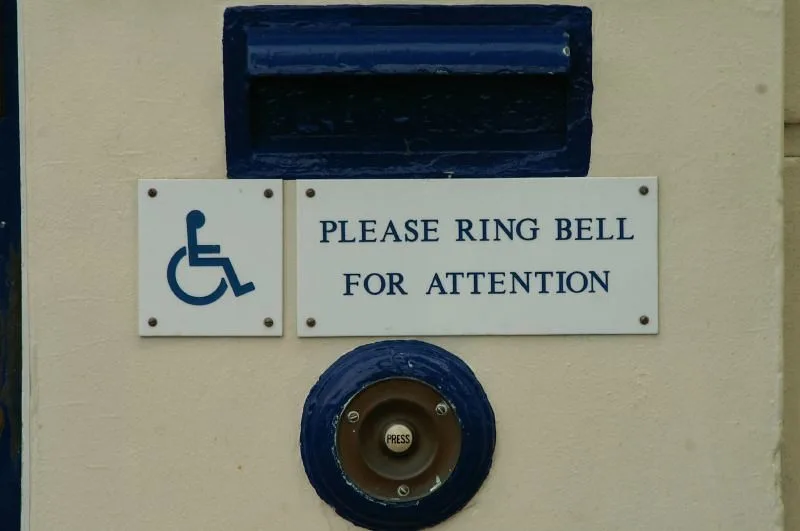
The shelter system is a critical social safety net for people experiencing homelessness, but its physical layout often falls short. Most shelters lack appropriate space or accommodations for people with disabilities, if they have them at all.
In 2017, New York City’s Department of Homeless Services agreed to do more to accommodate unhoused individuals with disabilities as part of a settlement. The settlement followed Butler v. City of New York, a class action lawsuit filed by disability advocates to press the city to better meet these needs and to be able to accommodate any disabled person within five years. The department found that about two-thirds of the single adults using New York City shelters needed such accommodations. Sharon McLennon-Wier, executive director of the Center for Independence of the Disabled, NY, one of the groups that filed the lawsuit, says that a person with multiple disabilities will find it very challenging to have full access in the shelter program. She says that little has changed in the state of shelter accessibility in the city since the settlement.
Challenges also appear outside large cities. In York County, Pennsylvania, a area with a population of about 460,000 living in a mix of rural, suburban, and urban communities, Kelly Blechertas, program coordinator for the York County Coalition on Homelessness, says one of the biggest challenges is the composition of the physical space available. Shelter buildings are often inaccessible to people with disabilities. Blechertas says the county’s older buildings have many stairs and cover large areas, and that only one emergency shelter room in York County is handicap accessible. That room is in a family shelter, so a single man needing that accessibility would not have it available. The lesson is that welcome must reach people with disabilities as well (Matthew 25:35).
McLennon-Wier says some older buildings in New York City are not equipped with ADA showers or grab bars, and that some have elevators while others do not. Many buildings also lack electrical outlets readily accessible to people who need oxygen or other medical devices that must be plugged in. McLennon-Wier also points to what she calls “hidden disabilities,” which have no obvious identifier such as a cane or wheelchair. She describes people with developmental disabilities, Tourette’s, or tic disorders who may vocalize unexpectedly, and says that in a crowded shelter others may assume something is wrong. She says universal design, meaning that newly built or renovated shelters are designed to a standard that accommodates both physical and mental disabilities, could be a solution.
Once inside, disabled individuals often find shelters difficult to cope with. Tina Murray, senior director of crisis engagement programs at Together, an Omaha-based organization that operates a non-congregate shelter, says some people with disabilities do not do well in settings with many people, noise, and altercations. Most shelters operate as congregate shelters, with varying restrictions on who may access them. Congregate shelters often use bunk beds to maximize space, which can leave people with disabilities unable to climb in and out of what may be their only bed for the night. Limited hours of operation can also be restrictive. Murray says, “It’s hard to be told that you have to be in your bunk at 9 and get up at 6 and then pack up your bunk and then take your stuff with you all day.”
Many shelters also restrict the types of households they accept, whether individuals, families, or couples. Murray describes a recent case: “There was a man who was in a wheelchair, and his caregiver was the female he had with them and they had to be separated, so we put them in a hotel because there’s no shelter that will take them as a couple.”
Source: Read the original report

Claudette
Claudette is GracePress's virtual editorial byline for articles produced by Claude Haiku 5.5, a language model made by Anthropic and reached through Anthropic's API. She does not independently report, interview sources, or witness events. Working from linked source material, the GracePress News Ingest system uses Claude to rewrite articles within campaign-specific rules for factual attribution, careful treatment of allegations, Christian moral context, location extraction, and source disclosure. Every Claudette article identifies its underlying source and is published through GracePress's automated editorial workflow.

