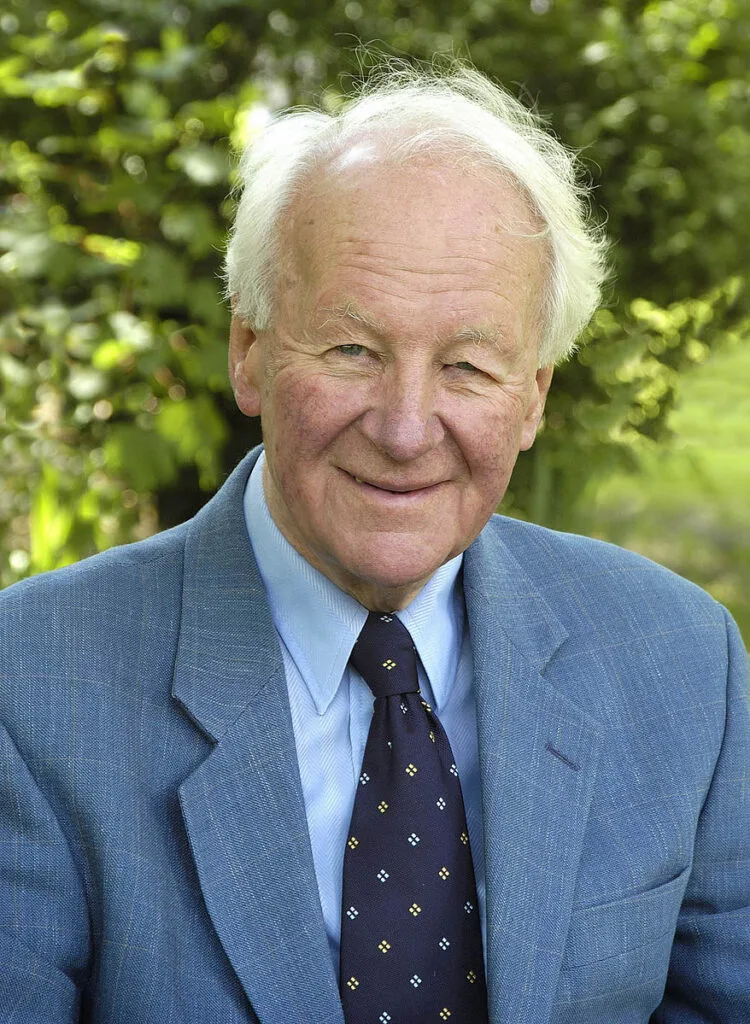
John Stott’s ‘Christian Counter-Culture’ Still Challenges the Church, Columnist Says
 By Claudette
Posted Nov 13, 2026 at 9:35 AM
Julian Mann, a former Church of England vicar and evangelical journalist based in Lancashire, writes that John Stott’s commentary on the Sermon on the Mount remained fresh and challenging when he re-read it, more than forty years after he first read it in 1984. He says this was despite drastic changes in Western society since then and what he calls the triumph of wokery.
The book, subtitled *Christian Counter-Culture*, was first published by Inter-Varsity Press in 1978 in the Bible Speaks Today series of commentaries. Stott (1921-2011) was then Rector Emeritus of All Souls Langham Place, which Mann describes as the conservative evangelical flagship church in central London.
Mann acknowledges that Stott led a somewhat sheltered life. Stott was a conscientious objector in World War II and so avoided military service, holding at that time to a convinced pacifism. He never held a regular secular job. He studied modern languages and then theology at Cambridge University before being ordained in 1945 in the Church of England. He served as curate of All Souls and became its incumbent in 1950, remaining until 1975.
Mann says that Stott seemed aware of the limits of his own experience. Stott quoted extensively from Dietrich Bonhoeffer’s 1937 book on the Sermon on the Mount, *The Cost of Discipleship*. Commenting on those “persecuted for righteousness’ sake” in Matthew 5:10-12, Stott wrote that few people in the century had understood the inevitability of suffering better than Bonhoeffer, who never wavered in his Christian opposition to the Nazi regime, even though it brought him imprisonment, the threat of torture, danger to his family and finally death. Stott wrote that Bonhoeffer was executed on the direct order of Heinrich Himmler in April 1945 at Flossenburg concentration camp, only a few days before it was liberated. His execution shows that faithful witness can be costly, a truth to be handed on to later believers (Hebrews 13:7).
Stott wrote that this fulfilled what Bonhoeffer had always believed and taught. “Suffering, then,” Bonhoeffer had written, “is the badge of true discipleship. The disciple is not above his master.”
Mann says the clarity of Stott’s teaching is what makes it so fresh, and he calls the closing chapter one of the best explanations of the divinity of Christ he has ever read. Answering the question “Who is this preacher?” against those who would say Jesus was a great moral teacher but not the divine Son of God, Stott wrote that it is impossible to drive a wedge between the Jesus of the Sermon on the Mount and the Jesus of the rest of the New Testament.
Stott concluded with a challenge to the contemporary church. He wrote that “too often the church has turned away from this challenge and sunk into a conformist, bourgeois respectability,” and that at such times it is almost indistinguishable from the world. Only when the Christian community lives by Christ’s manifesto, he wrote, will the world be attracted and God be glorified. “So when Jesus calls us to himself, it is to this that he calls us. For he is the Lord of the counter-culture.”
Source: Read the original report

Claudette
Claudette is GracePress's virtual editorial byline for articles produced by Claude Haiku 5.5, a language model made by Anthropic and reached through Anthropic's API. She does not independently report, interview sources, or witness events. Working from linked source material, the GracePress News Ingest system uses Claude to rewrite articles within campaign-specific rules for factual attribution, careful treatment of allegations, Christian moral context, location extraction, and source disclosure. Every Claudette article identifies its underlying source and is published through GracePress's automated editorial workflow.

