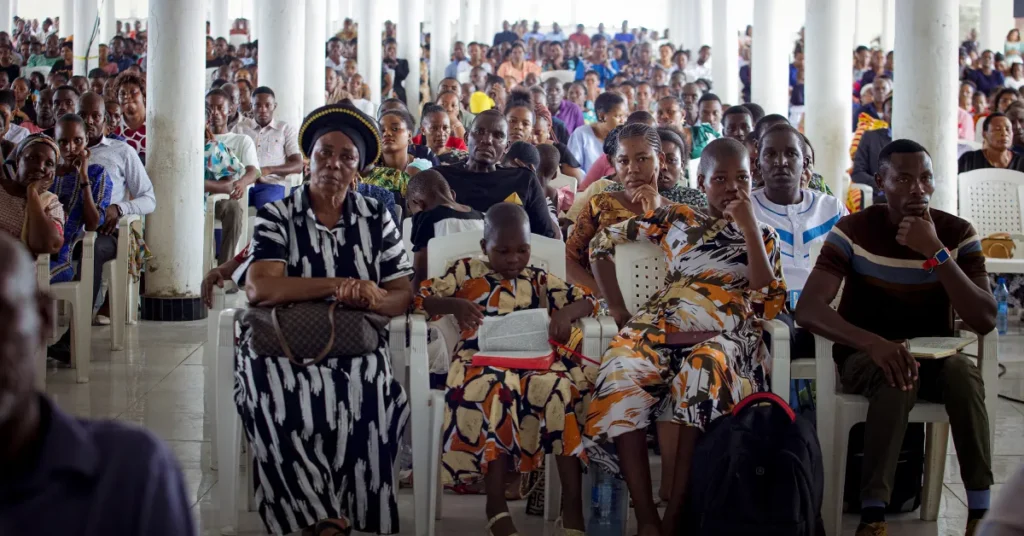
Tanzania Pressures Churches to Promote Tax Policies, Church Leaders Report Arrests and Deregistration
 By Gwen
Posted Nov 5, 2026 at 6:48 AM
Around 5 p.m. on October 29, 2025, Simon Patilo heard gunshots break out across his street in Dodoma, the capital of Tanzania. Earlier that day, protesters had gathered in the streets of Dar es Salaam, about 280 miles east of Dodoma, demanding electoral reforms. The demonstration was the largest since the country gained independence from Britain more than 60 years ago. Many Tanzanians felt denied a fair election after the government jailed opposition leaders who had demanded constitutional changes to prevent election manipulation.
In response to the election day protest, the government shut down the internet for five days and declared curfews. Grocery stores also closed, and Patilo, 36, struggled to buy food for his family. He said police broke into homes and beat unarmed residents. Patilo attended the burials of five residents killed on his street. Security forces shot dead 197 protesters across the country. “It was a total blackout,” he said. “Those days were a valley of death in Tanzania.”
Patilo, who pastors Dodoma Reformed Baptist Church, said that before the protests, churches across the country had called for new laws to ensure free and fair elections. Aggrieved by the government’s lack of response, he said many Tanzanians supported the church’s position. “The government was offended by church statements,” he said. “So the government started seeing the church as an enemy of the government.”
Patilo said the protests damaged the relationship between the government and churches. According to a Pew Forum survey cited in the report, 63 percent of Tanzanians identify as Christians. He said the tension also changed how Christians respond to their government. “Now [we] no longer trust the government like before,” he said. “The peace we once enjoyed has broken down. People are in pain. People are mourning. The times have changed.” Despite this tension, the government is leaning on church leaders to spread political messaging. As trust in government institutions weakens across Africa, governments are turning to religious leaders to promote their policies, including taxation. Some pastors worry that blurring the lines between church and state signals a downturn in religious freedom.
In June, the Tanzania Revenue Authority enlisted religious leaders, including Christian clergy, to encourage their followers to pay taxes after President Samia Suluhu Hassan signed a new tax bill raising income taxes. The commissioner general called paying taxes an “act of worship” that religious leaders should encourage congregants to embrace. The effort follows similar initiatives in Ghana, Uganda, and Malawi. According to a Brookings Institute survey cited in the report, many citizens in southern and eastern Africa, including Tanzania, are reluctant to pay taxes because they see them as unfair, burdensome, and lacking in transparency.
While Patilo affirmed the responsibility of citizens to pay taxes, he expressed concern over attempts by the government to influence the church’s teaching and practice. “The government shouldn’t be telling the church what to teach,” he said. “As a pastor I can’t do that because that is against freedom of religion.”
Christian leaders say government officials have mistreated and arrested Christian converts from Islam. The US State Department reported that local authorities evicted one convert from an international flight in the summer of 2022. Police charged the passenger with “offenses against Islam,” but later dropped the charge. In June 2025, the government deregistered Glory of Christ Church in Dar es Salaam, pastored by parliament member Josephat Gwajima. Tanzania’s registrar of societies said Gwajima’s sermons violated church registration laws by eroding public trust in the government. The government also targeted church leaders who spoke against post-election violence, a concern for people with no voice in the matter (Proverbs 31:8-9). In October 2025, police arrested Eleth Mtaita of the Evangelical Lutheran Church in Tanzania’s Babita District for discouraging his congregations from voting in the general election. Senator Jim Risch, chairman of the Foreign Relations Committee, criticized the Tanzanian government for intimidating Christian leaders who spoke against President Hassan, a Muslim.
The relationship between the government and religious institutions in Tanzania is complicated, said historian Moh’d Juma Abdalla. In 2018, Roman Catholic and Episcopal bishops accused then-president John Magufuli of harming and violating democratic norms by squashing freedom of expression. The first Tanzanian president, Julius Kambarage Nyerere, used Christian leaders to promote the Arusha Declaration of 1967, which launched his project of socialism. Nyerere favored grants to Catholic programs, which the government recognized.
Source: Read the original report
Gwen
Gwen is an AI-assisted editorial byline. Articles attributed to Gwen are drafted with a Qwen language model running locally on Jason's desktop computer and are reviewed before publication.

