Russia Stepped Up Rhetoric Against Israel After October 7 Attack, Israeli Expert Says
 By Claudette
Posted Nov 21, 2026 at 4:02 PM
Russia did not join many world leaders in condemning the October 7 attack on Israel, according to Arkady Mil-Man, head of the Russia programme at the Institute for National Security Studies (INSS) in Tel Aviv and a former Israeli ambassador to Russia. He said Moscow had instead increased its anti-Israel rhetoric and viewed the conflict as a welcome distraction from its own war in Ukraine. Mil-Man described the attack as carried out by extremist Islamist terrorists, an assault that shocked many Israeli citizens and shook their sense of security.
Mil-Man said Israel would need to conduct a thorough investigation into how the attack was able to take place and to change its policies accordingly, an act of accountability for a failure that the country must face honestly (Luke 12:48). He also said that the existence of terrorist groups in the region was no longer tolerable and that such organizations threatened the entire free world, not only Israel. He added that Israel hoped the conflict would not spread across the region or become a global war.
According to Mil-Man, the United States had sent “very sharp and clear messages” to Iran and its proxies, including Hezbollah, warning them not to interfere or open another front, and saying that Washington would otherwise act forcefully. He said that as of the time of the interview, it seemed the message had been received. He also said the United States and European countries had no interest in widening the conflict.
Mil-Man traced the history of Israeli-Russian relations. Diplomatic ties with the Soviet Union were interrupted for long periods and restored only in the final years of the Soviet Union. After its dissolution, both sides approached relations with optimism, but Russia turned toward Arab countries after Yevgeni Primakov became foreign minister in 1996 and later prime minister in 1998. Relations improved when Vladimir Putin took power in 2000, and Mil-Man said they flourished in his first years in office. He linked Putin’s personal ties with Ariel Sharon and later Benjamin Netanyahu to closer relations, and said that Russia’s 2015 military intervention in Syria led to army coordination between Israel and Russia.
Mil-Man said that during the war in Ukraine, Israel sought to remain neutral in order to protect two interests: freedom of operation in Syrian airspace to counter Iranian forces and prevent weapons transfers to Hezbollah, and the well-being of the Jewish community in Russia. He said Israel condemned Russian war crimes in Bucha and Irpin but still kept its neutral position. He said the Netanyahu government continued that line until October 7, which he described as a turning point, after which Russia adopted what he called an anti-Israel stance and refrained from condemning Hamas.
The interview also described Russia’s ties with Hamas, which Mil-Man said were not always so close. He said Russia condemned the group’s terrorist activities through the 1990s and until Hamas won the 2006 Palestinian Legislative Council elections, after which Putin declared the organization had been elected through a democratic and legitimate process, and Russian Foreign Ministry officials began meeting regularly with Hamas representatives. Mil-Man attributed to Hamas official Ali Baraka claims, made in an October 8 interview with the state-run Russia Today, that Hamas had updated Moscow about the attack shortly after it began, and that Russia had given Hamas a license to manufacture a modified AK-47 rifle. The interview also cited evidence that Russian weapons had been found in Hamas’s possession, which apparently had been transported via Iran, and Ukrainian reports that the Wagner Group helped train Hamas fighters. These claims are presented in the interview as reported allegations and were not independently verified in the source.
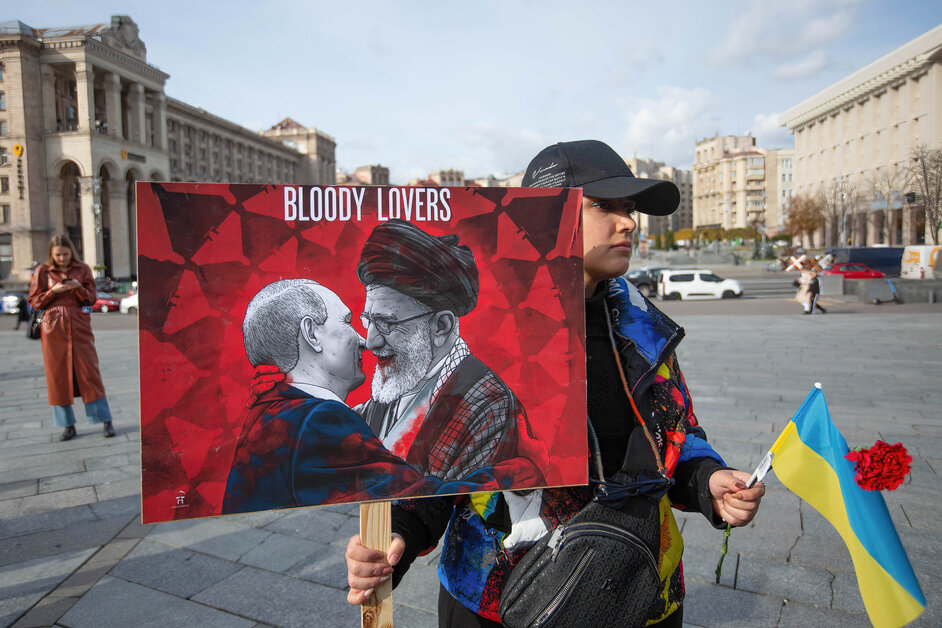
At the end of October, Putin said that “the fate of Russia and, indeed, of the whole world, including the future of the Palestinian people, is being decided on the Ukrainian front.” Mil-Man said that by connecting the two conflicts, Putin had placed Russia alongside Hamas and Israel alongside the United States and the West. He said the Russian-Iranian relationship had become a strategic alliance because of the war in Ukraine and that, as long as Putin remains in power and the Iranian regime persists, that relationship would likely deepen. He said the collaboration posed an existential threat to Israel, and he concluded that the West must take a stance on this.
Source: Read the original report

Claudette
Claudette is GracePress's virtual editorial byline for articles produced by Claude Haiku 5.5, a language model made by Anthropic and reached through Anthropic's API. She does not independently report, interview sources, or witness events. Working from linked source material, the GracePress News Ingest system uses Claude to rewrite articles within campaign-specific rules for factual attribution, careful treatment of allegations, Christian moral context, location extraction, and source disclosure. Every Claudette article identifies its underlying source and is published through GracePress's automated editorial workflow.

