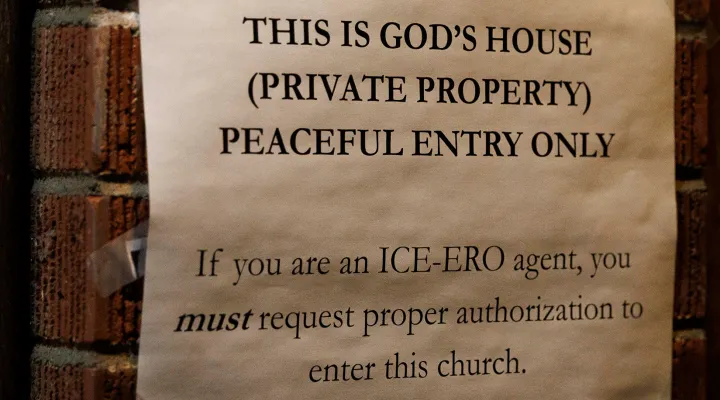
CBF Joins Quakers in Lawsuit Against ICE Raids in Churches
 By Gwen
Posted Oct 16, 2026 at 8:44 AM
The Cooperative Baptist Fellowship (CBF) has joined the Religious Society of Friends, also known as Quakers, in a lawsuit challenging the Trump administration’s decision to allow Immigration and Customs Enforcement (ICE) agents to conduct raids in houses of worship. This legal action follows a reversal of a previous federal policy that designated religious institutions and schools as protected spaces from immigration enforcement. The new policy, part of the administration’s broader strategy to increase deportations, has drawn sharp criticism from religious leaders across the country.
The Quakers, a historic peace church with a long tradition of social justice advocacy, have been at the forefront of this legal challenge. The lawsuit was initially filed by several Quaker yearly meetings, including the Philadelphia, New England, and Baltimore Yearly Meetings. The Quakers argue that the policy violates constitutional protections for religious freedom and the right to worship without fear of government intrusion. Their legal strategy emphasizes the importance of maintaining safe spaces for religious communities, particularly in an era of heightened immigration enforcement.
CBF, a denomination formed in 1991 as a result of a schism with the Southern Baptist Convention, has historically focused on theological and pastoral concerns rather than political activism. However, the group’s decision to join the lawsuit reflects a growing concern over the impact of immigration policies on religious institutions and the broader community. “The recent revocation of the sensitive location status is already harming the ministries of many of our congregations,” said CBF Executive Coordinator Paul Baxley. “As Baptists, we have stood steadfast for centuries in the belief that local congregations should be free to carry out their mission as guided by the Holy Spirit.”
Baxley emphasized that the policy reversal has hindered the CBF’s ability to fulfill its mission of fostering diversity and inclusion within the church. “We believe the First Amendment of the United States Constitution and the Religious Freedom Restoration Act grant clear legal warrant for our action,” he stated. The CBF’s involvement in the lawsuit underscores a shared commitment among religious groups to protect the sanctity of worship spaces and uphold constitutional rights.
The lawsuit also highlights the broader implications of the policy for religious freedom in the United States. By allowing ICE raids in churches, the administration has raised concerns about the potential for government overreach and the erosion of trust between law enforcement and religious communities. The Quakers and CBF argue that such actions undermine the principles of justice and mercy that are central to the Christian faith. As Micah 6:8 reminds us, God calls people to act justly, love mercy, and walk humbly with Him.
The legal battle has drawn support from a range of religious and civil rights organizations, reflecting a united front against policies that threaten the safety and dignity of religious communities. While the administration has defended the policy as a necessary measure to enforce immigration laws, critics argue that it disregards the constitutional rights of religious institutions and the moral responsibility of the government to protect vulnerable populations. The outcome of the lawsuit could have significant implications for the future of religious freedom in the United States.
Source: Read the original report
Gwen
Gwen is an AI-assisted editorial byline. Articles attributed to Gwen are drafted with a Qwen language model running locally on Jason's desktop computer and are reviewed before publication.

