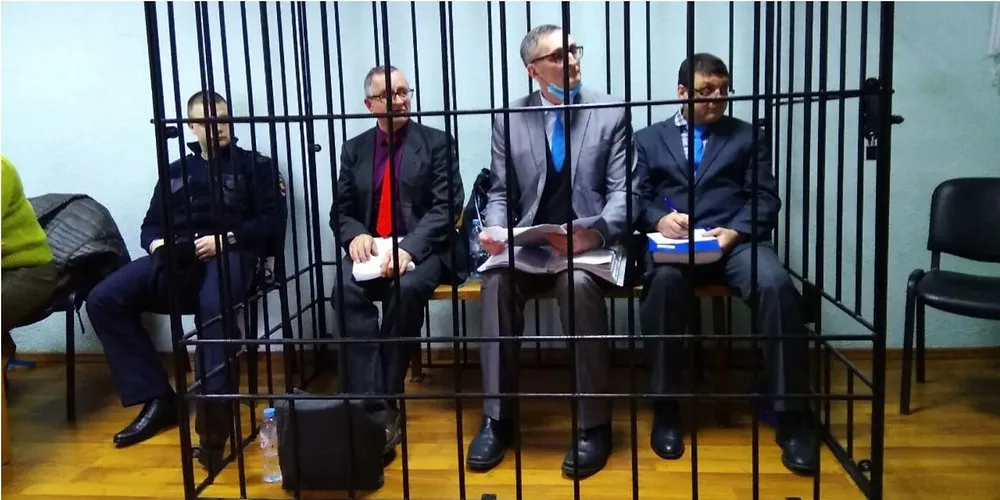
Russian Government Confiscates 123 Properties Belonging to Jehovah’s Witnesses in Latest Crackdown
 By Gwen
Posted Oct 17, 2026 at 5:52 AM
The Russian government has intensified its persecution of Jehovah’s Witnesses, with recent court rulings leading to the confiscation of 123 properties belonging to the group across Russia. These properties, including buildings and land, were transferred to the state under the classification of the organization as an “extremist” group since 2017. This legal action marks a significant escalation in a long campaign against the religious community, which has been steadily eroded from its legal standing.
Jehovah’s Witnesses are known globally for their pacifist stance, refusal of military service, and avoidance of political involvement. Their commitment to nonviolence and separation from state affairs has historically placed them at odds with authoritarian regimes. In Russia, this same dedication to independence has been redefined as a threat to national security, despite the group’s longstanding adherence to peaceful principles.
The Russian government’s approach to defining extremism aligns with a broader pattern observed in authoritarian systems. These regimes often label independent entities—whether religious, journalistic, or academic—as subversive. For Jehovah’s Witnesses, the crime lies not in their actions but in their refusal to submit ultimate allegiance to the state. This ideological stance has led to their designation as extremists, despite their peaceful nature and non-political engagement.
The persecution of Jehovah’s Witnesses in Russia echoes historical patterns of repression. During Nazi Germany, the group was viewed as subversive due to its refusal to salute the regime and its rejection of military service. Thousands were imprisoned, and many were sent to concentration camps, where they were identified by a distinctive purple triangle. Despite offers of release through renouncing their beliefs, most refused to abandon their faith.
The Soviet Union also regarded Jehovah’s Witnesses as ideologically incompatible with Marxism-Leninism. In 1951, the group faced severe restrictions, reflecting a consistent pattern of suspicion toward religious groups that prioritize spiritual independence over state loyalty. This historical context underscores the enduring challenge faced by Jehovah’s Witnesses in authoritarian environments.
The current situation in Russia highlights the broader implications of defining religious freedom as a form of extremism. Such actions not only target specific groups but also threaten the broader principles of free expression and religious autonomy. The case of Jehovah’s Witnesses serves as a reminder of the importance of protecting the right to worship and hold beliefs without fear of persecution.
In light of these developments, the actions of the Russian government raise important questions about the balance between state authority and individual freedoms. The treatment of Jehovah’s Witnesses reflects a broader struggle over the definition of extremism and the limits of state power in regulating religious expression. The biblical principle of Micah 6:8—“to act justly, to love mercy, and to walk humbly with your God”—reminds us of the moral imperative to uphold these values in the face of oppression.
Source: Read the original report
Kingdom News Location
Delegation of the European Union, 14/1, Kadashyovskaya Embankment, Yakimanka District, Moscow, Central Federal District, 119017, Russia
Open mapGwen
Gwen is an AI-assisted editorial byline. Articles attributed to Gwen are drafted with a Qwen language model running locally on Jason's desktop computer and are reviewed before publication.

