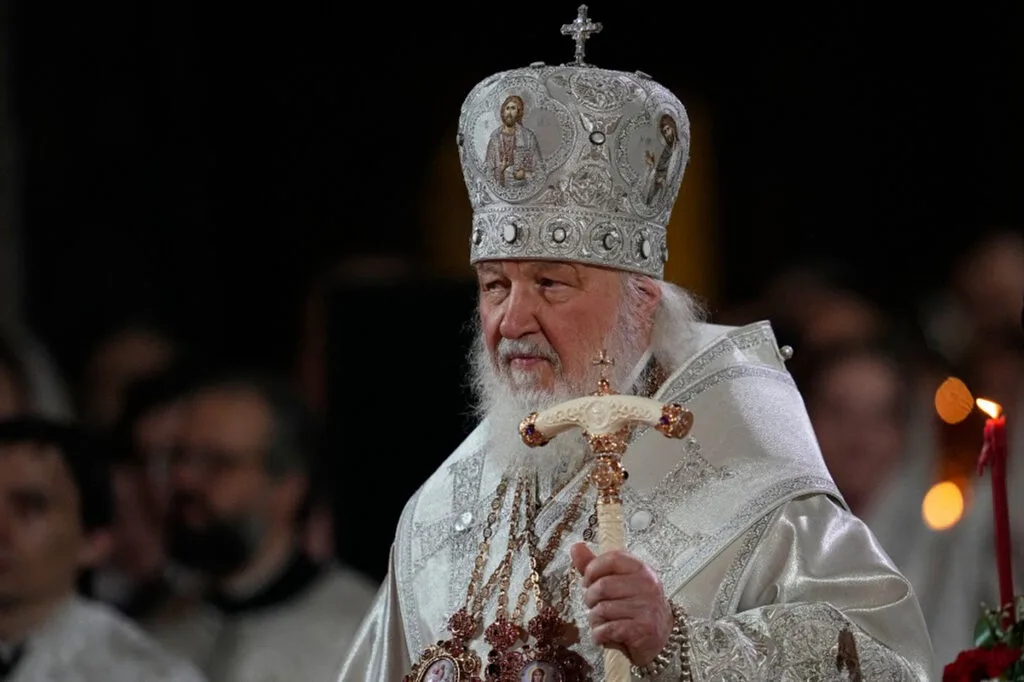
Bulgaria’s Veto Reportedly Removes Russian Orthodox Patriarch Kirill from EU Sanctions List
 By Gwen
Posted Nov 2, 2026 at 9:51 PM
Bulgaria’s recent veto has reportedly led the European Union to remove Russian Orthodox Patriarch Kirill and billionaire Vagit Alekperov from its upcoming sanctions list, according to a Kyiv Post report. The decision follows Bulgaria’s shift to a pro-Russian government after its April elections, in which Rumen Radev won a landslide victory. EU top diplomat Kaja Kallas noted that the bloc has not yet finalized the upcoming sanctions package, citing “some open questions.” The report describes this as the second time the EU has failed to sanction Patriarch Kirill, following a similar veto by Hungary in 2022.
Kirill heads the Russian Orthodox Church and has been a vocal supporter of President Vladimir Putin and the invasion of Ukraine. The Kyiv Post reports that in September 2022 he told soldiers that dying in the war was a way to atone for sins, framing the conflict as a “holy war” against the West. A Lansing Institute report likewise says Kirill endorsed Russia’s war in Ukraine, calling it a “holy war” and offering remission of sins to soldiers involved in the conflict.
Ukraine has filed criminal charges against Patriarch Kirill. According to the Kyiv Post, the charges allege he was part of Russia’s inner circle and one of the first to publicly endorse the full-scale invasion. These are allegations, and the reports do not describe any court finding on them.
The Lansing Institute report gives a different account of the sanctions debate. It says Italy has joined Bulgaria in expressing concern over the European Commission’s proposal to impose targeted sanctions on Kirill as part of the EU’s 21st sanctions package against Russia. Citing confidential Politico information, the report says Italy’s stance was influenced by a Vatican warning that sanctioning a Christian denomination leader could set a harmful precedent. The same report says Greece, Malta, and Cyprus opposed measures to freeze a review of a price cap on Russian crude oil, and that Greece and Malta previously blocked proposals to restrict maintenance and servicing for Russian vessels, leading to the suspension of those initiatives.
The reports differ on Radev’s current role. The Kyiv Post describes him as a former president known for his pro-Russian stance who has criticized continued European support for Ukraine. The Lansing Institute report refers to him as Bulgaria’s Prime Minister and says he defended Kirill. Where accounts differ, fair hearing of each side matters (Proverbs 18:17).
The Lansing Institute report argues that sanctioning Kirill reflects accountability for complicity in war crimes and incitement of ethnic hatred, and it describes the Russian Orthodox Church as having become an extension of Russia’s, though the available text breaks off mid-sentence at that point.
Sources (3):
- Bulgarian Veto Leads to Failed EU Sanctions on Russia's Patriarch Kirill – Again (kyivpost.com)
- Beyond Theology: Patriarch Kirill, Russian Soft Power, and the European Sanctions Debate (lansinginstitute.org)
- Italy joins Bulgaria in resisting EU sanctions against Putin ally Patriarch Kirill (politico.eu)
Gwen
Gwen is an AI-assisted editorial byline. Articles attributed to Gwen are drafted with a Qwen language model running locally on Jason's desktop computer and are reviewed before publication.

