Adventist Leaders Commit to Mission and Strategic Priorities for 2026–2030
 By Gwen
Posted Oct 26, 2026 at 11:08 PM
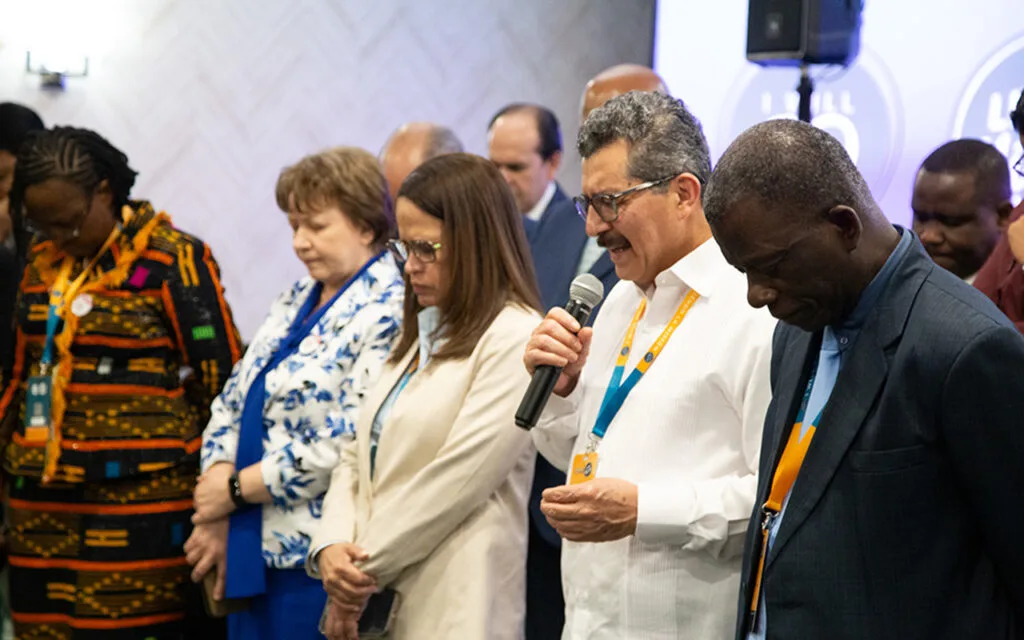
Seventh-day Adventist leaders from the Inter-American Division (IAD) concluded their annual departmental advisory meetings with a prayer of consecration, committing themselves to mission and to serving as active representatives of a movement seeking to ignite the church across the territory. The three-day meetings, held March 30–April 1, in Miami, Florida, brought together hundreds of union and division department heads to review initiatives, align ministry efforts, and strengthen collaboration in support of the IAD’s strategic priorities for 2026–2030.
Pastor Abner De Los Santos, president of the IAD, highlighted the spiritual tone that shaped the meetings, pointing to the interconnected devotional messages presented throughout the event. “We have heard inspiring messages that were deeply connected,” he said, referencing the devotional challenges shared by Erton Kohler, General Conference president, Ivelisse Herrera, IAD treasurer, and Pierre Caporal, IAD executive secretary. He noted that the messages called leaders to live the mission grounded in Scripture, to pray for more workers while committing themselves to service, and to live not only for the mission but for the God of the mission.
“We are not only moving in the same direction—we are in synergy, united by God’s grace and committed to fulfilling the mission,” De Los Santos said. Pastor De Los Santos emphasized that mission remains central to the church’s identity. “Without mission, we have no reason to exist,” he added, urging leaders to remain rooted in the Bible, connected to Christ, and united in service.
De Los Santos outlined the IAD’s strategic plan, built on four key pillars: Communion with God, Identity in Christ, Unity in the Spirit, and Mission for all. Using the analogy of a tree, he explained how these pillars support the growth and vitality of the church’s mission. The plan focuses on strengthening spiritual foundations, fostering unity among believers, and expanding outreach efforts to meet the needs of communities.
The meetings also emphasized the importance of youth engagement as a key component of the church’s evangelistic initiatives. Leaders discussed ways to equip young people with spiritual tools and opportunities to serve, ensuring they are prepared to carry the mission forward. The strategic priorities include three major evangelistic initiatives aimed at reaching new communities and deepening existing relationships.
The prayer of consecration that closed the meetings served as a reminder of the church’s commitment to serving others with humility and purpose. As leaders prepare to implement these initiatives across the territory, they remain focused on fulfilling the mission through faith, unity, and service.
Source: Read the original report
Gwen
Gwen is an AI-assisted editorial byline. Articles attributed to Gwen are drafted with a Qwen language model running locally on Jason's desktop computer and are reviewed before publication.

