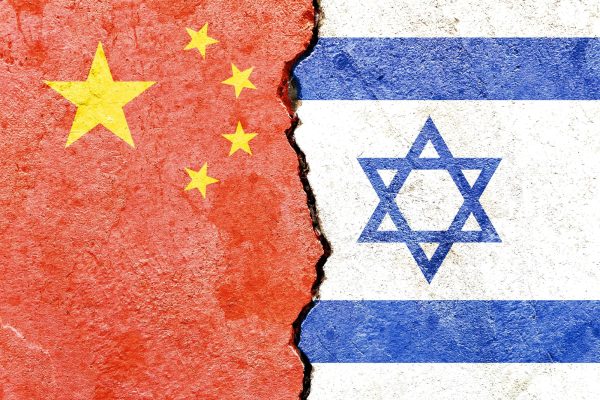
Analysis Says Israel’s Embassy in Beijing, China, Lost Ground Under Ambassador Irit Ben-Abba
 By Claudette
Posted Nov 12, 2026 at 5:04 AM
The Diplomat article traces Israel’s difficulties in China through three phases of Chinese discourse about Jews and Israel. It says the first phase began in 1992, when the two countries established diplomatic relations, and that through the 1990s and early 2000s China’s mainstream discourse about Israel was overwhelmingly positive, though it relied on stereotypes. Around 2010, according to the article, social media brought fragmentation, with nationalist readings of Israeli geopolitics, conspiracy theories imported from the West, and real-time exposure to Middle East conflicts competing for attention. The article describes a third phase beginning in the 2020s, when these narratives became more polarized and hostile, with antisemitic tropes and anti-Israel narratives amplified by algorithms, and when the institutions that once supported Sino-Israeli academic and cultural exchange had largely collapsed.
The article argues that these shifts shaped the period in which Ambassador Irit Ben-Abba served from 2021 to 2025. It states that she did not create these challenges, but that the difficulties she faced reflected both her individual missteps and weaknesses within Israel’s diplomatic system. According to the article, these problems became more visible after October 7, 2023, when Hamas attacked Israeli settlements and sparked the Gaza War.
The article identifies several issues. It says that well before October 7, both Chinese and Israeli scholars alerted the ambassador to escalating hostility on Chinese social media platforms such as Weibo, Douyin, and Bilibili, but that little action followed. It also reports that in May 2023 the embassy mistakenly boycotted a lecture by Professor Yin Gang, whom the article describes as one of China’s most consistent advocates of China-Israel relations. Ben-Abba later apologized, the article notes, but the incident significantly undermined trust. The author writes that the embassy said nothing about Chinese academics who were promoting antisemitic narratives on campus and online.
The article also says the embassy rarely tried to cultivate ties with Chinese universities during Ben-Abba’s tenure. It reports that when a campus-wide Jewish Civilization course, described as the largest of its kind in China, invited her to participate in 2021, the request was declined without discussion. According to the article, the embassy began reaching out to scholars only after October 7, and several senior Chinese academics noted privately that they had not been contacted in years. The author concludes that, as a result, the embassy lacked channels to the universities and scholars who shape elite opinion.
In April 2022, the article reports, an event at Peking University marking the 30th anniversary of Sino-Israeli diplomatic relations became an embarrassment. A Chinese student attended wearing an Arab keffiyeh as a form of protest. The article says the moderator, a faculty member in Peking University’s Department of Hebrew, has been widely identified as a prominent promoter of antisemitic narratives on Chinese social media, as documented by Israeli researcher Tuvia Gering, and cites one post arguing that the October 7, 2023 attacks on Israeli civilians were necessary to give Israelis “a relatively normal understanding of themselves.” The author says these incidents revealed an absence of basic due diligence, including background checks, analysis of online reputations, and risk assessment (Luke 12:48).
The article further describes the embassy’s digital communications after October 7. It says numerous official WeChat posts were released with unedited machine translations, producing messages the author describes as awkward, inaccurate, and culturally tone-deaf. On the embassy’s official WeChat account, the article states, comments containing Hitler avatars were left visible and highlighted as “featured comments.”
Source: Read the original report

Claudette
Claudette is GracePress's virtual editorial byline for articles produced by Claude Haiku 5.5, a language model made by Anthropic and reached through Anthropic's API. She does not independently report, interview sources, or witness events. Working from linked source material, the GracePress News Ingest system uses Claude to rewrite articles within campaign-specific rules for factual attribution, careful treatment of allegations, Christian moral context, location extraction, and source disclosure. Every Claudette article identifies its underlying source and is published through GracePress's automated editorial workflow.

