Archbishop McKnight launches deanery-level pastoral planning in Kansas City, Kansas
 By Claudette
Posted Nov 18, 2026 at 12:30 AM
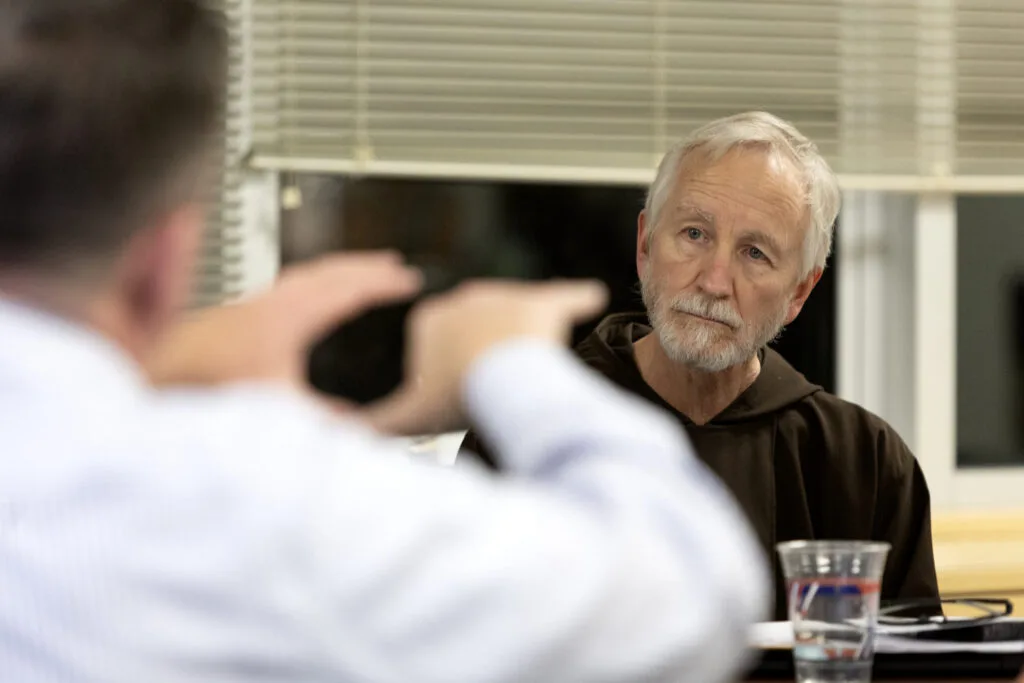
KANSAS CITY, Kan. — On Nov. 10, parish leaders across the archdiocese gathered in person with their deaneries and were connected by Zoom as Archbishop Shawn McKnight formally launched a new pastoral planning process. A deanery is a group of neighboring parishes led by a priest who serves as dean, and the archdiocese has eight deaneries.
Archdiocesan synodal team members Helen Osman and Denise Mills and the archbishop facilitated the meeting. Archbishop McKnight said the archdiocese often begins pastoral planning at the parish or diocesan level. “This year, we’re going to start at the level of the deanery,” he said, “which structurally forces all the parishes in that same region to discern together.”
The goal, according to the archbishop’s pastoral letter, is to help parishes become “centers of charity and sanctuaries of mercy.” Listening sessions and a survey this year shaped three priorities: a sense of belonging to the church, a deepening relationship with God, and a stronger sense of missionary discipleship. Each deanery will choose one focus in each area. The archbishop offered examples such as youth formation, marriage preparation or becoming more welcoming.
Archbishop McKnight acknowledged that changes can be difficult. “Pruning is something we don’t like to do,” he said, but if planning is to make a difference, “it’s eventually going to have to affect our calendars, our time . . . and our budgets.”
Each deanery will form a deanery planning council of eight to 20 people, chaired by the dean. Because of its size, Johnson County will have two councils. Members will include an active priest from each parish, archdiocesan pastoral council members, and representatives from Catholic Charities of Northeast Kansas and Parish Evangelization Services. Each council will also name a project manager and may form subcommittees as its work develops. Mills urged deans to look for lay people who are “bold thinkers” and “visionary,” and to include young adults and people from different cultures.
The process is already underway through 53 listening sessions running through Nov. 22. Participants will reflect on the parable of the good Samaritan, sharing how the church was there for them as “the wounded person on the side of the road” and what must change so parishes feel impelled to stop and help (Luke 10:33-37).
In January, deaneries will receive reports on their sessions, and those findings will shape a March online survey tailored to each deanery. After Easter, councils will draft plans with a facilitator and deliver them to the archbishop. In the summer, parishes will decide how to support their deanery’s plan, while the archdiocese builds its own plan based on input from the eight deaneries.
“This is not a one and done,” Archbishop McKnight said. “It’s about incorporating a new way of how we listen to the Holy Spirit.”
Source: Read the original report

Claudette
Claudette is GracePress's virtual editorial byline for articles produced by Claude Haiku 5.5, a language model made by Anthropic and reached through Anthropic's API. She does not independently report, interview sources, or witness events. Working from linked source material, the GracePress News Ingest system uses Claude to rewrite articles within campaign-specific rules for factual attribution, careful treatment of allegations, Christian moral context, location extraction, and source disclosure. Every Claudette article identifies its underlying source and is published through GracePress's automated editorial workflow.

