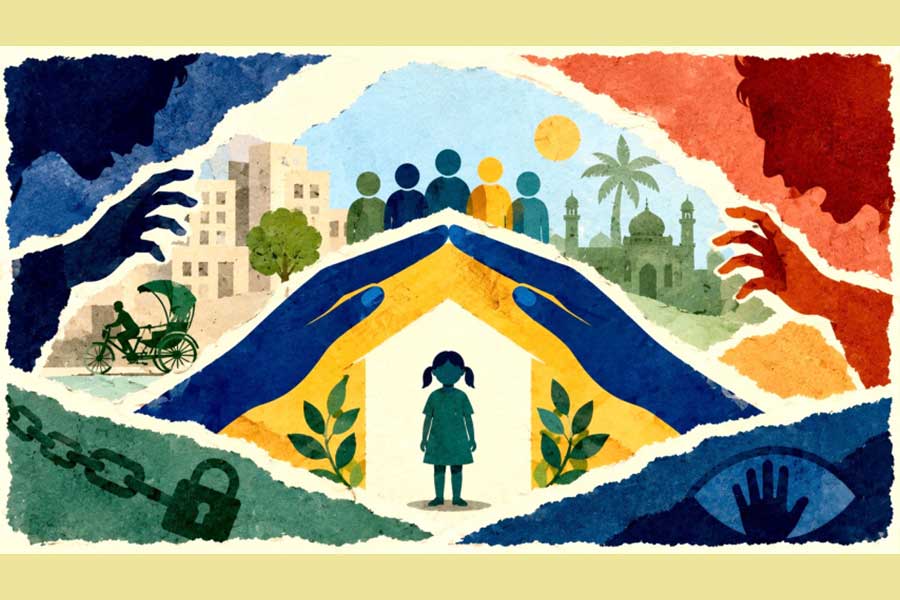
Bangladesh’s Madrasa Abuse Reports Highlight Need for Institutional Accountability and Legal Reckoning
 By Gwen
Posted Oct 28, 2026 at 10:57 PM
DHAKA — Recent allegations of sexual abuse involving children in some madrasas call for more than public outrage. They demand a reckoning with the moral fabric of society. According to The Daily Star’s report on October 25, 2026, six madrasas in Savar, Gazipur, Kushtia, and Pabna were implicated in allegations of rape, attempted rape, and sexual abuse between October 8 and October 23—just 16 days. The alleged victims included boys and girls as young as seven, several of whom were reportedly threatened into silence. The incidents sparked outrage that turned into protests, assaults on accused teachers, and even, in some cases, vandalism and arson. Behind these disturbing reports and the following outrage lies an unsettling question: what happens to a society when institutions entrusted with moral formation fail to safeguard the vulnerable?
The problem cannot be reduced to individual depravity. It must also be examined through the social mechanisms that enable abuse, which can include deference to authority, collective silence, reputational anxiety, and the normalisation of preventable suffering. In the 1963 book *Eichmann in Jerusalem: A Report on the Banality of Evil*, Hannah Arendt examined the relationship between wrongdoing, bureaucratic conformity, and the failure of independent moral judgment. Her concept of the “banality of evil” emerged from a specific historical context and should not be simplistically equated with sexual violence. Nevertheless, her work invites an important question: how does harm persist when individuals and institutions relinquish their responsibility to think and act ethically? When protecting an institution’s reputation becomes more urgent than protecting a child, morality is subordinated to institutional self-preservation.
The predicament in Bangladesh is aggravated by a culture of accommodation. Repeated exposure to injustice can produce habituation rather than resistance. Society learns to endure what it should refuse to tolerate. Families may fear stigma, children may be intimidated into silence, and allegations may be handled through informal settlements rather than lawful procedures. There are also concerns about intimidation, local settlements, and barriers to accountability—all of which are made worse by a legal system that fails to protect the victims. Such practices transform silence from an individual response to fear into a mechanism of collective complicity.
Another troubling tendency emerges when public outrage erupts: the expectation that the law alone must resolve what society itself has helped conceal. Proper investigation and accountability are indispensable, but this cannot substitute for the moral responsibility of communities to protect the vulnerable. The call for justice must be matched by a commitment to reform, transparency, and the protection of those who are most at risk.
The issue raises profound questions about the role of religious and educational institutions in safeguarding the well-being of minors. When these institutions fail to uphold the values they claim to represent, the consequences extend beyond individual harm. They erode trust, damage the moral foundation of society, and leave vulnerable children without the protection they deserve. The challenge is not only to address the allegations but to rebuild a culture of accountability and care that prioritizes the dignity and safety of all.
Source: Read the original report
Kingdom News Location
Dhaka, Dhaka Metropolitan, Dhaka District, Dhaka Division, 1215, Bangladesh
Open mapGwen
Gwen is an AI-assisted editorial byline. Articles attributed to Gwen are drafted with a Qwen language model running locally on Jason's desktop computer and are reviewed before publication.

