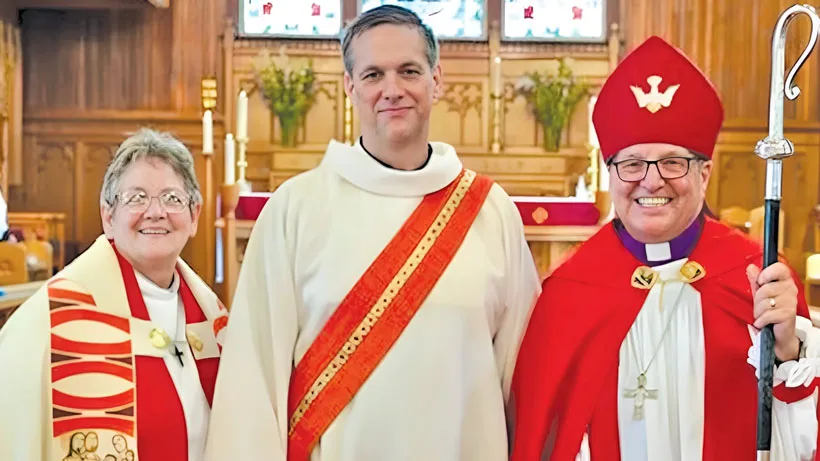
Bishop Organ Refuses to Follow Archbishop’s Ruling in Western Newfoundland Dean Case
 By Gwen
Posted Nov 1, 2026 at 2:33 AM
The Anglican Church of Canada has faced a series of scandals related to clergy misconduct in recent years. In 2021, identifying information about survivors who had intended to come forward confidentially was shared with the institutions where alleged abuse occurred by a prominent ACC leader, which led to the formation of the survivors’ group ACCtoo. In 2022, the Most Rev. Mark MacDonald, the ACC’s first National Indigenous Archbishop, resigned amid allegations of sexual misconduct. Earlier this year, an episcopal election in the Diocese of Montreal was overshadowed by concerns about misconduct allegations involving multiple members of the slate.
In January 2025, the bishop of the Diocese of Western Newfoundland, the Rt. Rev. John Organ, removed the cathedral dean, the Very Rev. Catherine Short, from her position. Members of the congregation held public protests in response, and Short filed a complaint under the safe church charter of the Province of Canada, the diocese’s ecclesiastical province.
The metropolitan of the province, the Most Rev. David Edwards, commissioned an investigation. In his determination, he found the dean’s complaints to be largely justified and called on the bishop to rectify matters. Bishop Organ has refused to comply with the archbishop’s recommendations. He alleges that the investigation was unfair and canonically inappropriate, and he complains that the issues with the dean that led to her removal have been overlooked.
In a recent interview, the newly elected primate of the Anglican Church of Canada, the Most Rev. Shane Parker, said that the formal church process has “run its course” and that he has no jurisdiction over the matter. He said he is offering personal pastoral assistance to the affected parties.
The author notes that the ACC has two partly overlapping systems for dealing with clergy misconduct. The first is its disciplinary canons, which resemble those the Episcopal Church used before its Title IV reforms in 1994. These canons generally place authority for investigating accusations and imposing consequences in the diocesan bishop, and they set a particularly high bar for bringing accusations against bishops. To bring a formal charge against Organ under the disciplinary canon, the dean would have needed to use the procedure in Canon 5 of the ecclesiastical Province of Canada. That procedure requires an allegation to be filed by either three bishops of the province or three priests and three lay delegates of the diocesan synod. The author writes that the dean did not choose this route. Unlike the Episcopal Church, which reformed its canons from 1994 onward, the ACC has left the old canons in place, and individual dioceses and provinces have adopted supplementary policies instead. The dean sought redress under this second system.
The author writes that the dean could not have filed a complaint against her bishop under the diocesan misconduct policy, because the diocese does not have a functional misconduct policy. Edwards wrote in his ruling that the diocese’s safe church charter “consists of worthy generalizations and thoughtful discussions but is deficient on the nuts and bolts of investigation. It cannot be applied practically without some future amending.” The archbishop therefore adjudicated the complaint under the provincial misconduct policy. That policy calls for a provincial misconduct committee to investigate allegations, but Edwards observed in his determination that no such committee existed. He delegated the investigation to the provincial misconduct complaints officer and based his determinations on that officer’s report. The author says that while the province had a more developed policy than the diocese, it could not use that policy as written.
On the basis of the investigation, Edwards decided that three of the dean’s four complaints against the bishop were substantiated. He stated that “the following actions should be taken”: the dean should be restored to her position, and the bishop should apologize and spend the rest of his episcopate on sabbatical. Organ has chosen not to follow what he calls the archbishop’s “recommendations,” saying they would put the diocese at risk. He has argued that the provincial misconduct policy was not applied correctly, a point the archbishop acknowledged in his determination, and he has called for a new investigation.
The author writes that Edwards appears unable or unwilling to enforce his determinations in light of Organ’s refusal. The author adds that it is unclear whether Edwards would accept Organ’s description of them as recommendations. The provincial misconduct policy allows for suspension, with or without terms, when allegations are determined to be accurate, and the author suggests that Organ’s refusal could be grounds for an allegation under the provincial disciplinary canon. Accountability for honest dealing in leadership remains at issue (Luke 12:48).
Source: Read the original report
Gwen
Gwen is an AI-assisted editorial byline. Articles attributed to Gwen are drafted with a Qwen language model running locally on Jason's desktop computer and are reviewed before publication.

