Black LGBTQ Christians Question Black Church’s Prophetic Voice on Rights
 By Gwen
Posted Oct 24, 2026 at 8:47 AM
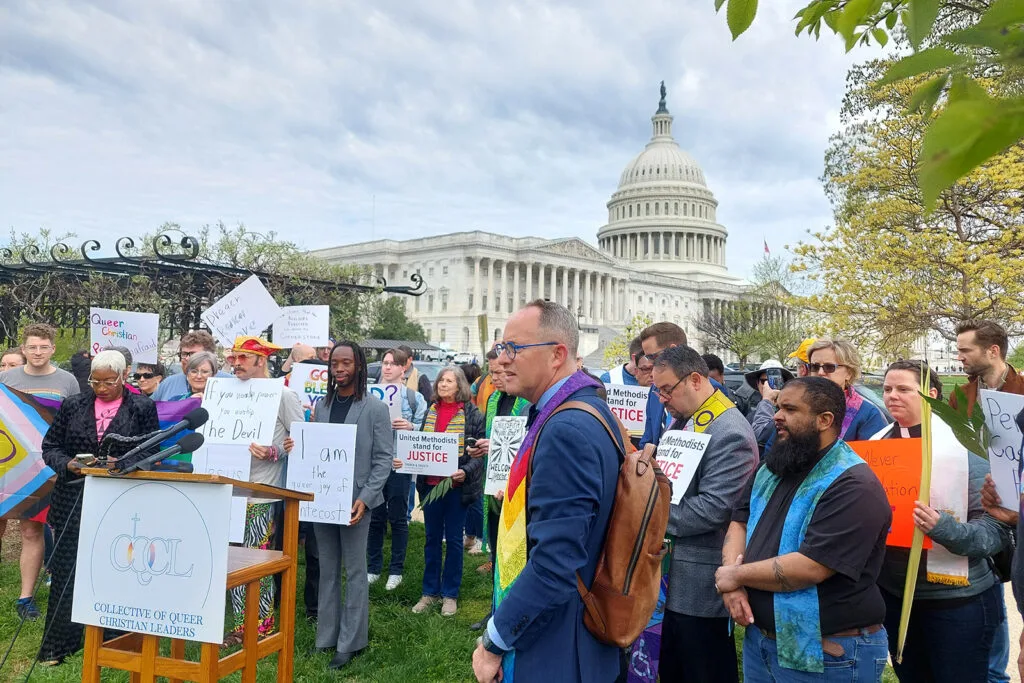
The Rev. Don Abram stood outside the U.S. Capitol during a rally on April 14, 2025, where clergy from diverse backgrounds gathered to advocate for LGBTQ+ rights. Abram, founder and CEO of Pride in the Pews, emphasized the need for Black churches to embrace a prophetic voice in public advocacy, similar to their involvement in other social justice issues. He called for greater inclusion of LGBTQ+ individuals within Black congregations and urged churches to align their public stance with their historical role in social activism.
Abram, who identifies as a queer church leader from Chicago, highlighted the growing acceptance of LGBTQ+ people among Black Protestants, with Pew Research Center noting an increase of over 20 percentage points in two decades. However, major historically Black denominations, including the African Methodist Episcopal Church, the AME Zion Church, the Christian Methodist Episcopal Church, and the National Baptist Convention, have not officially affirmed LGBTQ+ rights. These institutions remain largely opposed or silent on same-sex marriage.
In August 2024, the African Methodist Episcopal Church rescinded a bill that would have removed a ban on same-sex marriage. The denomination’s rule book explicitly states that “unions of any kind between persons of the same sex or gender are contrary to the will of God.” Bishop Reginald Jackson, leader of the AME district covering mid-Atlantic churches, clarified that the ban specifically addresses clergy performing same-sex weddings, while allowing LGBTQ+ individuals, including married same-sex couples, to participate within the denomination.
The Black church has long been a force for social justice, advocating for civil rights and community welfare. Its historical role in public advocacy raises questions about its current stance on LGBTQ+ rights. Abram and others argue that the church’s prophetic voice should extend to all marginalized communities, including LGBTQ+ people. The Collective of Queer Christian Leaders, which organized the rally, seeks to bridge the gap between the Black church’s public activism and its internal policies regarding LGBTQ+ inclusion.
While some Black denominations have made incremental progress in welcoming LGBTQ+ individuals, none have taken an official position affirming their rights. This silence contrasts with the church’s historical engagement in other social issues, prompting calls for greater transparency and inclusion. The debate reflects broader tensions within the Black church about how to balance tradition with evolving societal values and the need for a more inclusive vision of Christian community.
Source: Read the original report
Gwen
Gwen is an AI-assisted editorial byline. Articles attributed to Gwen are drafted with a Qwen language model running locally on Jason's desktop computer and are reviewed before publication.

