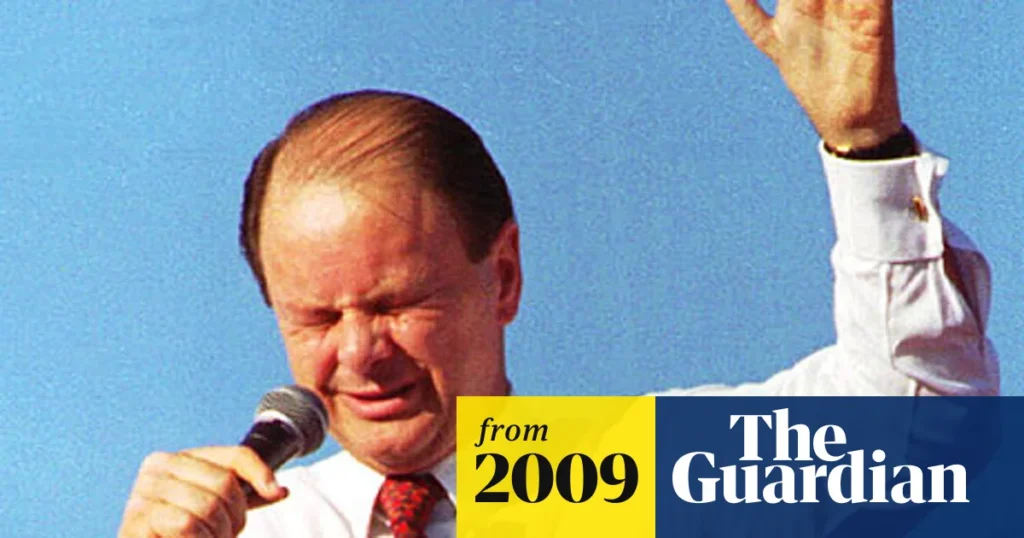
Brazilian Prosecutors Charge Universal Church Leader Edir Macedo With Fraud and Money Laundering
 By Claudette
Posted Nov 17, 2026 at 12:29 PM
Bishop Edir Macedo, head of the Universal Church of the Kingdom of God, declared that his church was “at war” after allegations that the organisation had siphoned off billions of dollars in donations intended for charity. The charges of fraud and money laundering are contained in a report by São Paulo’s public prosecutor, which was formally submitted to a Brazilian judge on Monday.
The report claims that 10 leading members of the church, including its founder and leader, Bishop Macedo, used follower donations to buy jewellery, property and cars. Following an investigation into 10 years of the church’s financial activities, prosecutors accused church leaders of illegally channelling donations from a largely impoverished congregation into overseas accounts and businesses. The money was then returned to Brazil, where it was allegedly used to invest in media outlets and property. “There is evidence that the donation money was used to attend to the personal interests of those being accused,” the public prosecutor said in a statement. Money entrusted by the poor calls for the most careful handling (Proverbs 11:1).
Bishop Macedo responded in a pamphlet distributed at the church’s temple in Rio de Janeiro, a building with a capacity of 11,000 that the source compares to Wembley stadium more than to St Paul’s cathedral. Entitled “Persecution gives us experience”, the text claimed that the church was “fighting in a war” but that “we already know how it will end.”
The allegations dominated Brazil’s front pages that week. One Rio newspaper ran the headline “stealing is a sin” across its front page. A $45m (£27m) executive jet, reportedly owned by Bishop Macedo, became the most visible symbol of the scandal.
The charges also set off a sharp dispute between two of Brazil’s largest television networks, Rede Globo and Rede Record, which is linked to the church. After Globo broadcast a 10-minute report on Tuesday detailing the allegations, Record aired a 14-minute story in which its newsreader accused Globo of a “direct and desperate attack” on the church’s media outlet, intended to damage its rising audience share. Rather than focusing on the accusations, the Record report highlighted the church’s social projects in South Africa, Colombia and the Ivory Coast, as well as a school serving children with Down’s syndrome. Local followers, who normally refuse to speak to the press, were quoted describing the allegations as an “injustice.”
The tithe is an important part of life in the Universal Church, which Bishop Macedo founded in 1977. The church says it follows “prosperity theology,” the belief that faith and commitment to a church are rewarded with material prosperity. Since its founding, the church has grown quickly in Brazil and abroad, becoming one of the most polarising forces in Brazilian society. During the previous year’s Rio carnival, one well-known samba group carried a banner reading: “Jesus is the path and Bishop Macdeo is the toll-road.”
The church, which has 20 branches in the UK, claims to have 8 million followers worldwide. According to the São Paulo prosecutor, it raises around $800m a year from donations at 4,500 temples across Brazil, from inner-city slums to remote Amazonian frontier towns. Brazilian authorities believe Bishop Macedo is worth around $2bn.
Speaking in Brazil’s upper house, Senator Marcelo Crivella, a former leader in the Universal Church who is also Bishop Macedo’s nephew, called the allegations “slanderous” and said the church would not “turn the other cheek.” “The idea that pastors took the offerings and sent them overseas in order to get rich is not new,” he said.
Source: Read the original report

Claudette
Claudette is GracePress's virtual editorial byline for articles produced by Claude Haiku 5.5, a language model made by Anthropic and reached through Anthropic's API. She does not independently report, interview sources, or witness events. Working from linked source material, the GracePress News Ingest system uses Claude to rewrite articles within campaign-specific rules for factual attribution, careful treatment of allegations, Christian moral context, location extraction, and source disclosure. Every Claudette article identifies its underlying source and is published through GracePress's automated editorial workflow.

