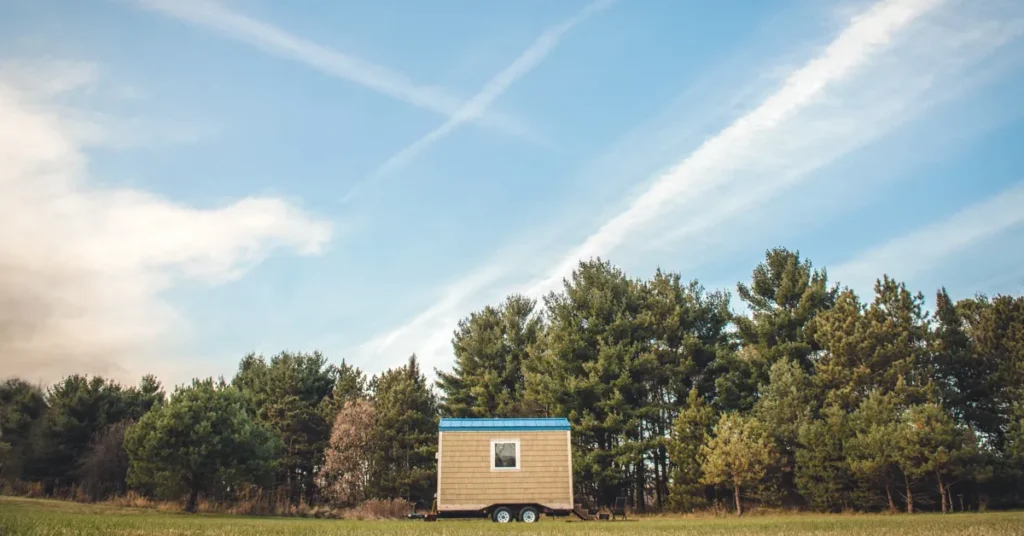
Church in St. Paul, Minnesota, Hosts Tiny House Settlement for People Leaving Long-Term Homelessness
 By Gwen
Posted Nov 4, 2026 at 7:58 PM
Jamal Love was trying to fix his wife’s bike fender so she could keep riding it to work. For most of their marriage, he would have tried to work it out on his own. This time, he turned to a neighbor for help: a fellow tiny house resident on the property of a church in St. Paul, Minnesota.
Love, 50, and his wife had recently moved into the six-house settlement, which includes five people coming out of long-term homelessness. Unlike some such communities, theirs looks like a modern housing development, but with much smaller buildings. The couple initially saw themselves as coming in as “intentional neighbors,” there to give, serve, and be generous.
Their shared life in the church’s tiny houses soon began to change that perspective. “We were wrong about all those things. We received community, and we were the ones who needed it in the first place,” Love said. “We received something greater.”
The settlement, Sacred Settlement Mosaic, is one of a growing number of tiny house communities launched to help address homelessness. It is a partnership between the church that owns the land, Mosaic Christian Community in St. Paul, and Settled, a nonprofit that works to develop “sacred settlements.” Churches have a unique opportunity to help with both homelessness and housing, given their combination of frequent land holdings and strong legal protection.
Gabrielle Clowdus, founder of Settled, said, “The number one reason more affordable housing doesn’t get built in our nation is because of ‘not in my backyard’ sentiment. NIMBY opposition is very strong.” She pointed to a stronger safeguard that many churches do not know they have: the 2000 Religious Land Use and Institutionalized Persons Act, a federal law that offers religious freedom protection by limiting regulations on how churches use their property. “That is like a divine golden ticket from heaven saying, ‘Your land is set apart. It is holy and sacred, and it is intended to invite the poor in,'” Clowdus said, a picture of welcoming the stranger (Matthew 25:35).
Claiming those rights can still require a legal fight. The Rock church in Castle Rock, Colorado, has sued the city over what it describes as repeated interference with letting people stay in two RVs parked on church property. On July 19, a federal judge ruled that the church can continue its housing until the lawsuit has concluded. In Minnesota, Settled went through a three-year process to pass a state law that lays out terms for churches to build permanent affordable tiny homes on their land.
The recent Supreme Court ruling in City of Grants Pass v. Johnson, which allows cities to criminalize camping on public land, could increase the urgency of providing additional shelter for people without housing. Margot Kushel, director of the Benioff Homelessness and Housing Initiative at the University of California San Francisco, believes tiny homes work better for temporary shelter. Her concerns include size, the frequent lack of indoor plumbing, compliance with building codes, and the ability to withstand natural disasters. The Minnesota law Settled helped pass requires many of the same building standards as a single-family home, but for structures under 400 square feet. Clowdus said the community’s tiny homes have dehydrating toilets and water tanks but not indoor plumbing as such. Other tiny home communities involve more basic structures and much shorter stays.
Size and building standards aside, Kushel agrees that churches could help provide permanent housing. “Churches can move faster,” she said. “They have this separate status, which allows them to get through some of these things that hold things up.”
Jim Dean, executive director of Interfaith Family Shelter in Washington State, saw this firsthand with the organization’s newest shelter, Faith Family Village.
Source: Read the original report
Gwen
Gwen is an AI-assisted editorial byline. Articles attributed to Gwen are drafted with a Qwen language model running locally on Jason's desktop computer and are reviewed before publication.

