Churches in Illinois step up as SNAP cuts increase hunger crisis
 By Gwen
Posted Oct 21, 2026 at 12:39 PM
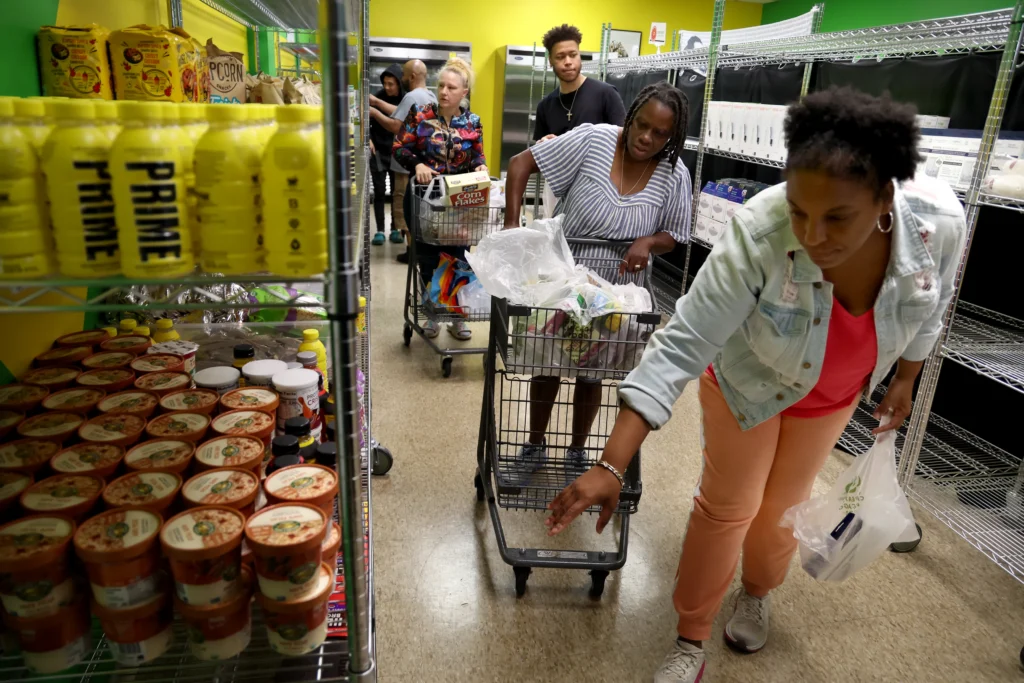
Natasha McClendon had $20 in her bank account and a bag of chicken in her fridge. It wasn’t going to be enough to feed her three daughters, her husband and herself, which meant it was time to take her monthly visit to the St. Sabina parish food pantry.
She took the bus to St. Sabina from her home on the South Side, a two-story duplex the McClendons share with a transition house. Her husband, Eric, suffers from Morquio syndrome — a birth defect that manifests like severe scoliosis — and is unable to work. Most of his disability check goes towards their $750 rent.
Natasha McClendon is a substitute teacher at Chicago Public Schools. She makes around $211 a week during the school year. She hasn’t had a paycheck since June.
In the last several months, the McClendons have watched their government food assistance shrink. In December, Natasha McClendon took to shopping once a month at her church’s food pantry to keep her family fed, supplementing what she could afford from Food4Less and Jewel-Osco. But there are still days she worries her kids are hungry.
Now, the Supplemental Nutrition Assistance Program, or SNAP, faces its largest cut in its history under President Donald Trump’s “Big, Beautiful Bill,” signed into law on Independence Day. By cutting $200 billion out of SNAP, the bill, officially called HR-1, pushes the burden to feed hungry Americans even further onto nonprofit food pantries, which could mean less food for people like the McClendons.
As nonprofits reliant on donations, food banks and pantries were already stretched thin before the bill passed. Volunteers said they see more American families fall into food insecurity every day. As long as shoppers fit a certain criteria, pantries typically don’t turn them away — but as demand grows, each family gets less to eat. Thousands of Illinoisans will be directly affected by Trump’s SNAP cuts, which means thousands more people relying on food pantries, which means less food for everyone. Unless thousands more donations appear.
“We certainly need the support of the larger Chicago community to provide what we believe is going to be an exponential increase in need,” said Mitzi Baum, interim CEO at Chicago food nonprofit Nourishing Hope.
A small, red-brick building, the St. Sabina parish pantry stands on West 79th Street, wedged in next to its partner church. The only clue of its existence is the small cluster of people holding shopping bags outside the door.
Until recently, Natasha McClendon had never shopped at St. Sabina’s — she visited the parish only as a churchgoer. Her $1,100 SNAP benefits had been enough to feed the family for the most part.
Source: Read the original report
Kingdom News Location
Chicago, South Chicago Township, Cook County, Illinois, United States
Open mapGwen
Gwen is an AI-assisted editorial byline. Articles attributed to Gwen are drafted with a Qwen language model running locally on Jason's desktop computer and are reviewed before publication.

