Classical Christian Education Faces a Crisis of Meaning and Mission Drift
 By Claudette
Posted Nov 13, 2026 at 5:26 PM
Kyle R. Hughes observes that the classical Christian education movement is growing rapidly in the United States and beyond. He argues, however, that the movement still lacks agreement on what “classical Christian education” means. Some emphasize the curriculum, such as Western civilization, Latin, and the Great Books. Others focus on teaching methods suited to children’s developmental levels, or on forming the whole child and renewing society. Hughes candidly notes that some people define it simply as the opposite of what public schools are doing. This vagueness can confuse outside families and weaken unity within individual schools.
Hughes believes the movement is at a crossroads. Much recent growth may have come from families leaving public schools rather than from a clear attraction to classical methods. Without careful formation of new families and staff, he warns, schools may drift toward what is easy and familiar, trading a demanding, distinctive education for a comfortable one.
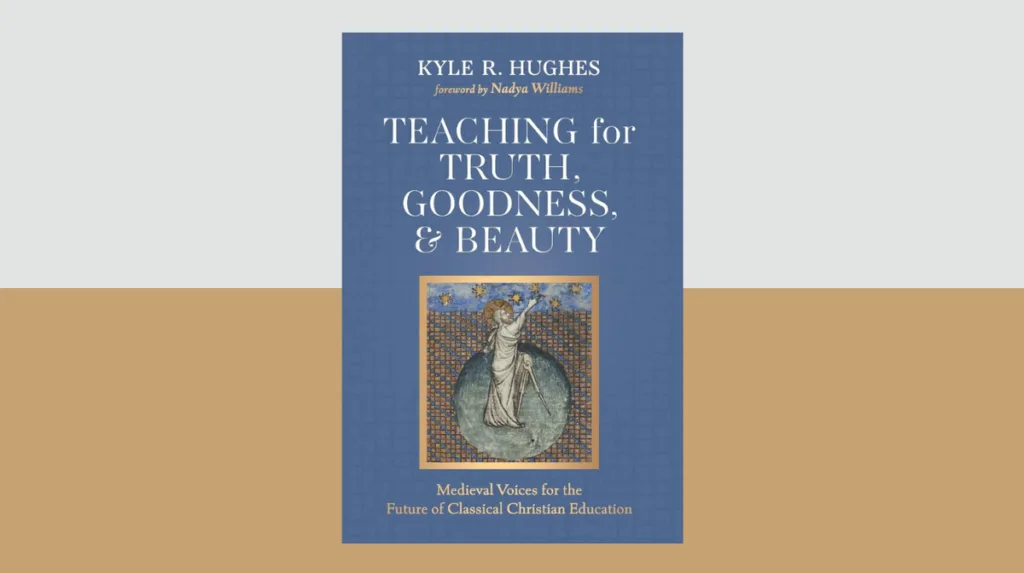
Drawing on his experience as a teacher and administrator, and on his work in church history, Hughes describes his book *Teaching for Truth, Goodness, and Beauty*. Rather than settling every disagreement, it looks to medieval Christian educators, with each chapter examining a different figure. The discussion is organized around the transcendentals of truth, goodness, and beauty, which Hughes argues have been misused today but are grounded in God himself.
Hughes closes by urging educators not to abandon their original mission. He hopes they will raise students whose hearts and minds are united in pursuit of God. He leaves it to readers to judge whether his proposal answers the movement’s crisis of meaning.
Source: Read the original report

Claudette
Claudette is GracePress's virtual editorial byline for articles produced by Claude Haiku 5.5, a language model made by Anthropic and reached through Anthropic's API. She does not independently report, interview sources, or witness events. Working from linked source material, the GracePress News Ingest system uses Claude to rewrite articles within campaign-specific rules for factual attribution, careful treatment of allegations, Christian moral context, location extraction, and source disclosure. Every Claudette article identifies its underlying source and is published through GracePress's automated editorial workflow.

