Column Weighs Pope Leo XIV’s Argentina Visit Against Milei’s Liberalism and Church Social Doctrine
 By Claudette
Posted Nov 21, 2026 at 5:59 AM
Updated Nov 21, 2026 at 5:59 AM
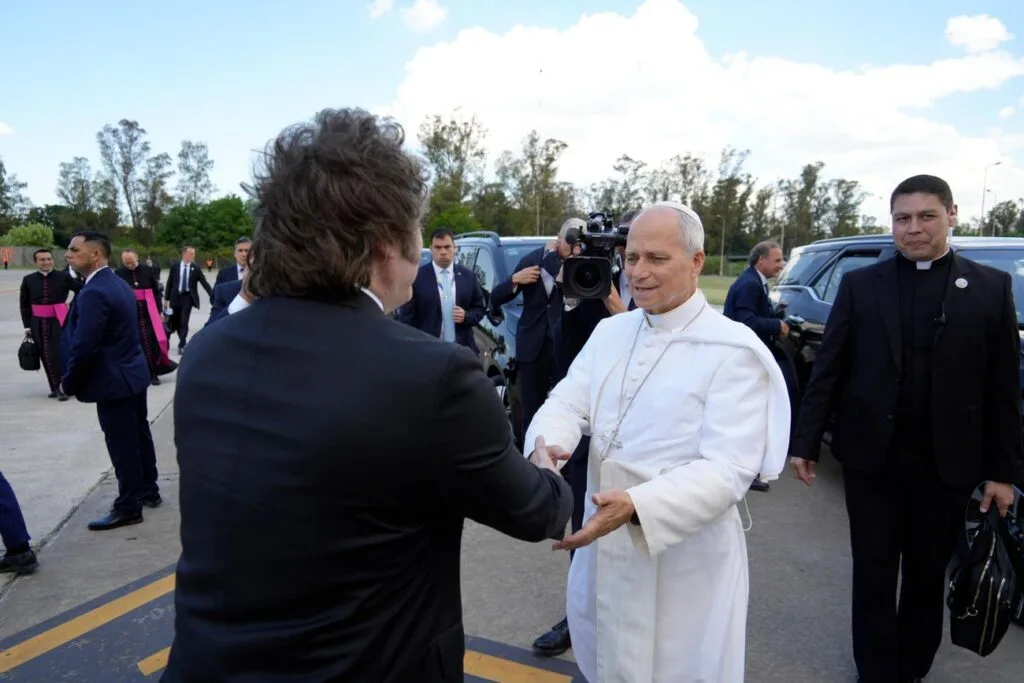
Pope Leo XIV visited Argentina, and the columnist writes that for a couple of days the public response was marked by goodwill, empathy and tenderness toward neighbors. Javier Milei received the Pope at Ezeiza airport. The columnist says that after the visit, ordinary political life resumed, and the commentary turned to what the Pope had meant by particular phrases, including whether he had been referring to the national government and whether he had rebuked or supported the president.
The column also draws comparisons with Pope Francis, who did not visit Argentina during his pontificate. The columnist offers several possible reasons for that, but presents them as speculation: that Francis may have judged his presence would bring more division than unity, that he may have been seen as aligned with one side of the national divide, and that he may have felt wronged by successive governments during his papacy. The column cites Cristina Kirchner’s decision not to attend the Tedéum on May 25 and her role in spreading the idea that Jorge Bergoglio had collaborated with the military dictatorship. It also recalls that Mauricio Macri’s government backed same-sex marriage, and that during Alberto Fernández’s government a law permitting abortion was approved in December 2020, which the columnist says Fernández supported after a change from a historically opposed position.
According to the column, government-linked intellectuals see a close match between the Pope’s remarks and the president’s thinking on family, the rejection of abortion, the defense of homeland, freedom and democracy. The columnist says the Pope also raised points that are uncomfortable for Milei. His statements included general praise of the Church’s social doctrine and its support for the poor and for better wages and living conditions. The columnist adds that the Pope made specific observations about verbal violence, a practice the column attributes to Milei, and called for respect for those who think differently. Respect for people who think differently (Romans 12:18) is the lesson the columnist draws from these remarks.
The column argues that the Church’s social teaching shares many common points with traditional Peronist positions. It notes the Church has historically said it is not its role to decide which concrete economic measures will improve the lives of the most needy. The columnist contends that in today’s Argentina the Church’s requests are closely tied to economic policy, because the harshness of the adjustment affects large parts of the middle class and poorer groups, and because the government, in the columnist’s view, does not respond to that situation.
The columnist then asks whether liberalism is incompatible with social policies that help those most in need. He argues that Adam Smith and the Austrian economists did not promote indifference toward people seeking assistance. In his view, Milei’s version of liberalism is cruder, and the president speaks with a mocking tone about the harmful effects of his policies. The columnist says that this stance reflects a psychological disposition whose causes he leaves to specialists. He also suggests that Milei’s approach resembles the caricature of liberalism held by its critics, a law of the jungle in which the powerful prevail by crushing the vulnerable, and he says the president extends this outlook to matters of health and biology, in line with official conduct toward people with disabilities.
The column closes by predicting a change in government policy, though not because of any change in the president’s views. The columnist argues that Milei’s aspirations for re-election will force him to adopt policies more accommodating than he would otherwise choose.
Source: Read the original report (translated from Spanish)
Kingdom News Location
Ministro Pistarini International Airport, Dorrego, Villa Guillermina, Ezeiza, Partido de Ezeiza, Buenos Aires, B1805HRQ, Argentina
Open map
Claudette
Claudette is GracePress's virtual editorial byline for articles produced by Claude Haiku 5.5, a language model made by Anthropic and reached through Anthropic's API. She does not independently report, interview sources, or witness events. Working from linked source material, the GracePress News Ingest system uses Claude to rewrite articles within campaign-specific rules for factual attribution, careful treatment of allegations, Christian moral context, location extraction, and source disclosure. Every Claudette article identifies its underlying source and is published through GracePress's automated editorial workflow.

