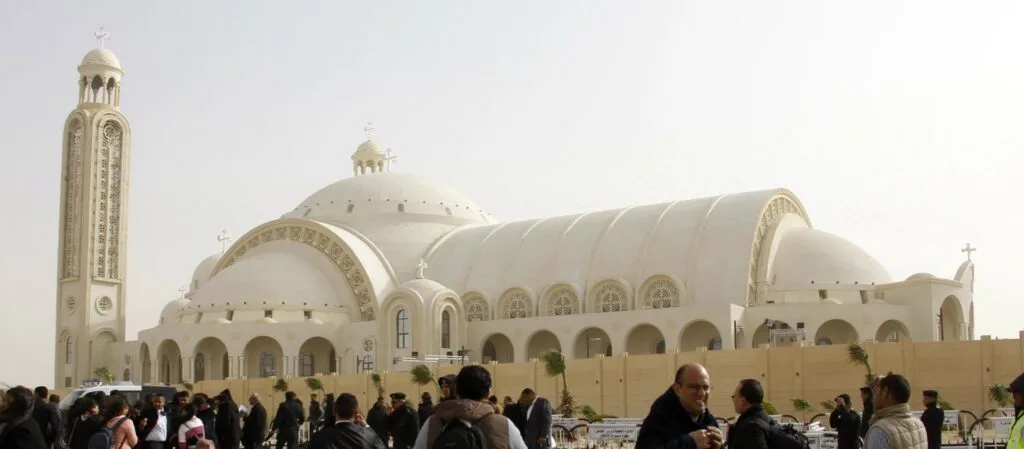
Copts in Egypt Face Attacks and State Discrimination, Expert Says
 By Claudette
Posted Nov 16, 2026 at 7:14 AM
Christianity has a long history in Egypt. According to the source, the Apostle Mark brought the faith to the land on the Nile within 50 to 60 years of Christ’s birth, and the Coptic Orthodox Church is therefore described as the oldest church in Africa and one of the oldest Christian communities in the world. The source notes that Christianity built on existing Egyptian ideas, such as the pharaohs being regarded as sons of God and the image of Isis nursing Horus, which it says resembles Marian iconography.
The Copts were among the first communities to separate from the wider Church. The source links the split to a dispute over the image of Christ at the Council of Chalcedon in 451, which affirmed Christ as “true God” and “true man” in two natures. The Egyptian community, the source says, emphasized the divine nature of Christ, believing that human nature mixed with the divine in the Incarnation. This position, which the source calls monophysitism, shaped the Coptic Church’s separate path from that time.
At the end of the third century, most Egyptians were Christians, the source reports. That changed after the Arab conquest in 640, when Egypt became Islamic. For nearly 1,500 years the Copts have been a minority, and estimates of their share of the population vary. The source cites serious estimates of five to ten percent. Other Christian denominations, it says, hardly play a role in the country.
The source describes the Copts as facing pressure from two directions. Islamist attacks have targeted churches, schools and kindergartens of the community. In 2016, at least 25 people died in a bombing near St Mark’s Cathedral in Cairo. The source also reports state discrimination: Christians are denied access to higher posts in the state economy and administration, the police and the military. Bureaucratic hurdles for building or renovating churches are described as very high, with churches required to show that they “do not interfere with the Muslim environment.” The police are accused of not doing enough to protect the minority, whether for ideological reasons or lack of motivation. Ulrich Delius, an Africa expert and director of the Society for Threatened Peoples, is quoted as saying that “the state of Egypt is far from ready to treat the Copts in the same way.” Protecting a vulnerable minority is the concern raised by these complaints (Psalm 82:3).
The relationship between the Coptic Church and the government is itself contested. The source says the Copts moved closer to the government under President Husni Mubarak (1981-2011), and that the church became much more closely tied to the state during the Arab Spring and the anarchic conditions that followed, which brought looting and violence against Copts. Since his inauguration in 2012, Pope Tawadros II has regarded the connection to the government as essential. According to Delius, this closeness makes the Copts targets, because Islamists see them as supporting the system. Delius also said attacks on Copts draw attention because “an attack on a cathedral gets worldwide attention, an attack on a market is not of interest to anyone.” The source reports that some bishops oppose this close alignment, and that rumors of a possible removal of the pope were denied by the Church.
The source also says the Egyptian government uses the Copts in its international relations. It states that President Abdel Fattah al-Sisi presents himself as a protector of Christians against Islamists and, in Delius’s words, wants to “use the Copts as door openers in Europe.” According to the source, numerous NGOs classify al-Sisi’s government as highly authoritarian, citing various human rights violations and between 50,000 and 60,000 political prisoners in Egyptian prisons.
Delius told the source that the attacks and discrimination do not reflect the attitude of most of Egyptian society. “There are no fundamental reservations in the Egyptian population towards the Copts. Mostly they live peacefully together with their neighbours.” When conflicts occur in small villages in Upper Egypt, he said, they are often brought in from outside, for political reasons. He also said it would be wrong to view Egypt as a place where Christians are prevented from practising their faith, while acknowledging that they do not always have an easy standing.
According to the source, Delius said that the Copts are no longer neutral in the political debate because of their attachment to the state, and that socially they “sit between the chairs” as both Christians and Egyptians. He expects the Coptic Christians to have to live with this conflict in the future.
Source: Read the original report (translated from German)

Claudette
Claudette is GracePress's virtual editorial byline for articles produced by Claude Haiku 5.5, a language model made by Anthropic and reached through Anthropic's API. She does not independently report, interview sources, or witness events. Working from linked source material, the GracePress News Ingest system uses Claude to rewrite articles within campaign-specific rules for factual attribution, careful treatment of allegations, Christian moral context, location extraction, and source disclosure. Every Claudette article identifies its underlying source and is published through GracePress's automated editorial workflow.

